
Back to the illustration

Wildlife - Birds

Yellowhammer

A bright yellow farmland bunting whose song - the famous 'a-little-bit-of-bread-and-no-cheese' - was once the soundtrack of every hedgerow in summer. Yellowhammer numbers have crashed by more than half in the UK since the 1970s with the loss of weedy stubbles, hedgerows and winter seed, and the species is now Red-listed.

Species description adapted from RSPB and BTO references - see links below.

North Yorkshire species profileGo to Wildlife Identification
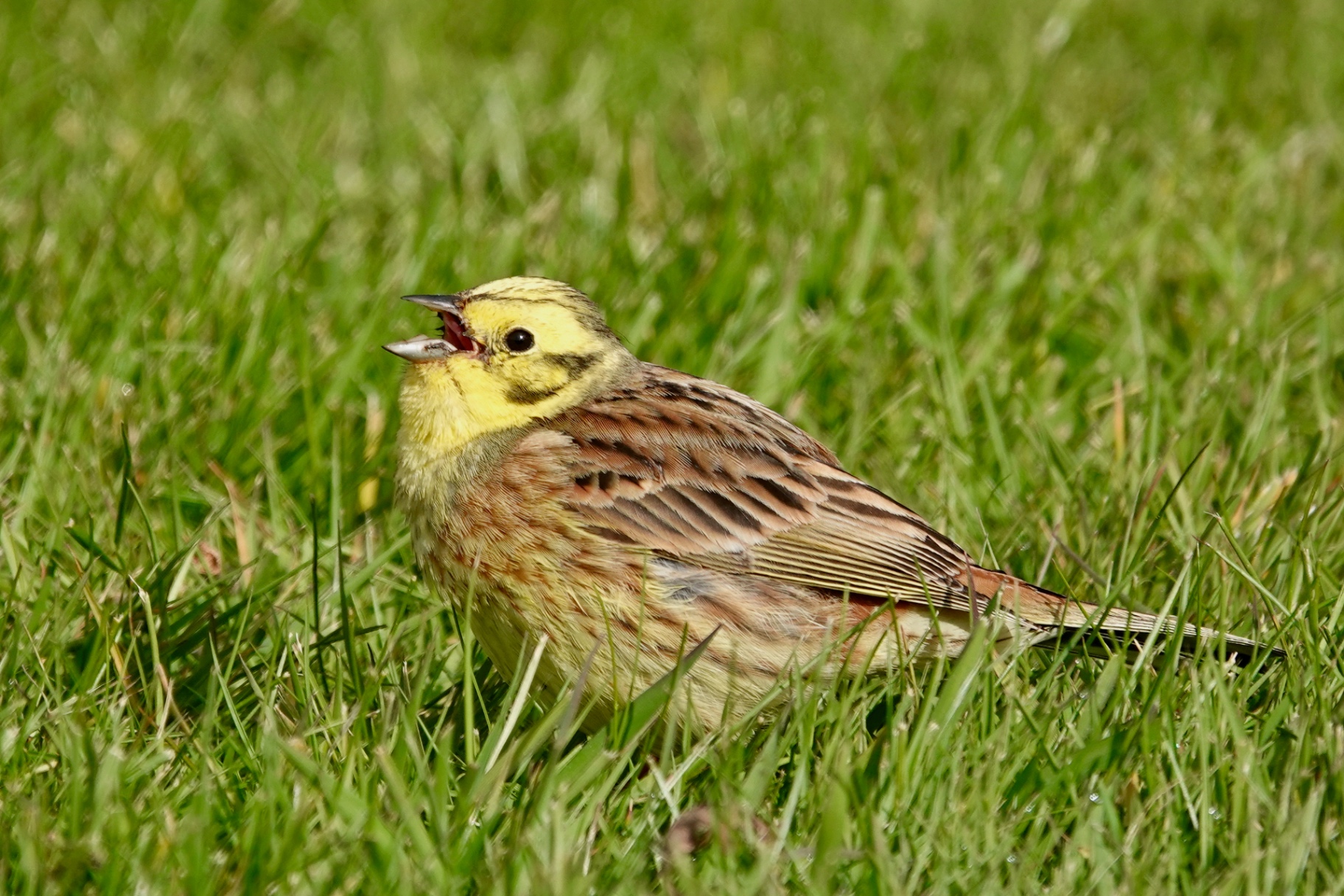
Male Yellowhammer singing from short grass with bright yellow head and breast

Birds - Photo ID

Yellowhammer - photo identification

A bright yellow farmland bunting whose song - the famous 'a-little-bit-of-bread-and-no-cheese' - was once the soundtrack of every hedgerow in summer. Yellowhammer numbers have crashed by more than half in the UK since the 1970s with the loss of weedy stubbles, hedgerows and winter seed, and the species is now Red-listed.

Photographs by Rob - taken in and around the North York Moors.

Male Yellowhammer singing from short grass with bright yellow head and breast

Male in full song

A breeding-plumage male shows the brilliant lemon-yellow head and underparts, dark eye stripe and chestnut-streaked back that make this our most colourful bunting. Males sing the dry, wheezy 'a-little-bit-of-bread-and-no-cheese' phrase from a hedge-top or fence post through spring and summer to advertise their territory.

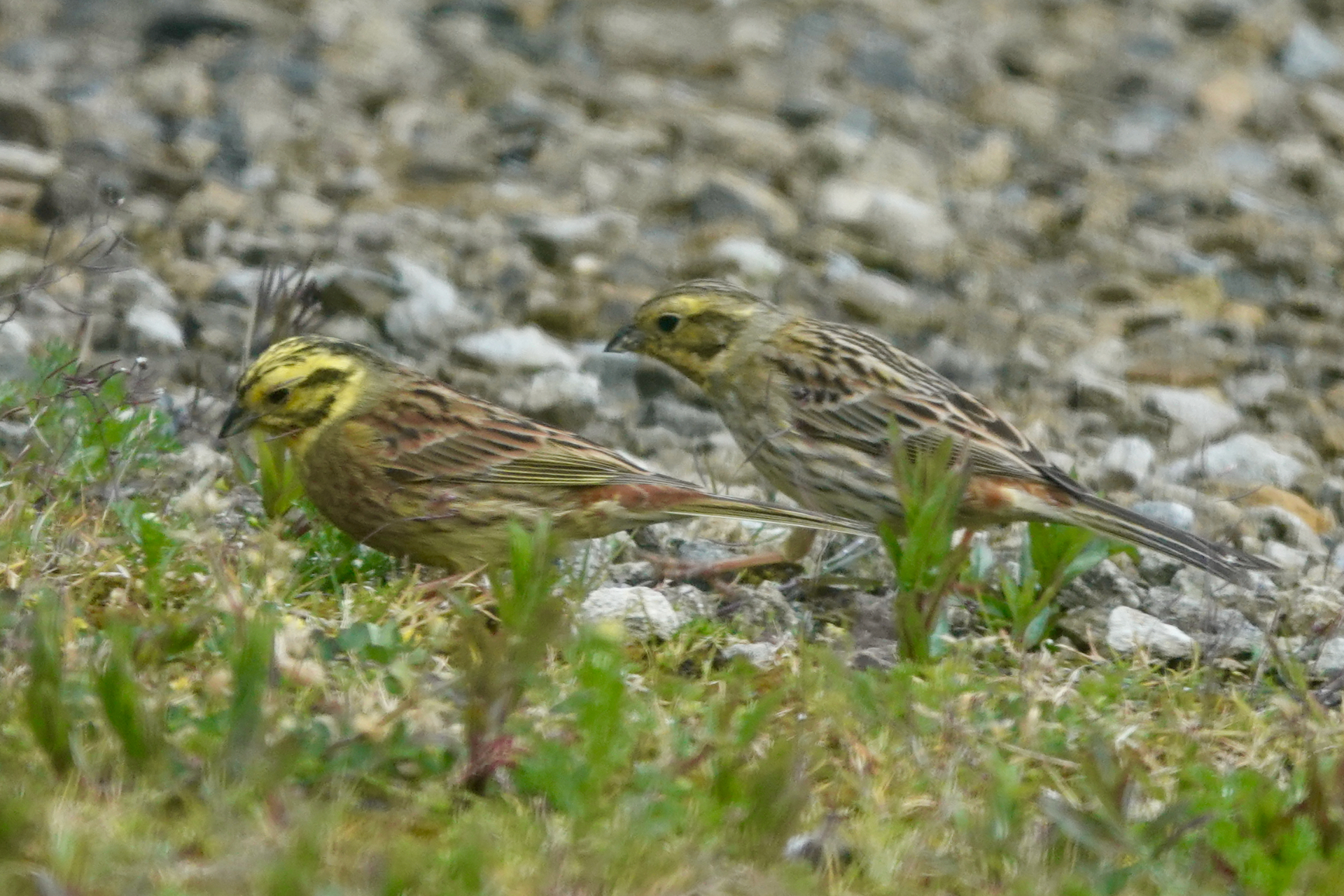
Male and female Yellowhammer feeding together on a stony track

Male (front) and female (behind)

A pair feeding side by side. The male's head is a clean bright yellow; the female (behind) is much duller, with heavier streaking on the face and breast and only a wash of yellow. Yellowhammers feed mainly on seeds and spilt grain in winter and switch to insects to feed their chicks - which is why a mix of seed-rich stubble, weedy field margins and insect-rich grassland is so important to them.

How it fits into North Yorkshire wildlife

This bird is part of the moving life of North Yorkshire, linking coast, woodland, farmland and gardens. Its success depends on enough food, safe nesting places and seasonal timing that still matches the landscape around it.

How it interacts with the wider landscape

Its place in the food web connects insects, seeds, small mammals, shrubs, trees or fish with the larger rhythms of weather and migration.

Seasonal rhythm

Spring and early summer are often the most important months, when breeding, migration and food availability need to line up.

Where to look and what to notice

Look for movement, calls, feeding behaviour and the kind of habitat this bird depends on, such as hedgerow, garden, moorland edge or sea cliff.