Cycling
Cycling - Do It Your Way
A Ride For Life started on two wheels. Here's Rob's story, woven together with why cycling matters for climate, nature and the people you meet along the way.
A first bike
Do you remember when you received your first bike?
Do you remember when you learned to ride, without stabilisers, to keep your balance, and to STOP?
For most of us, riding a bicycle, like being able to tell the time, was a huge achievement, a massive milestone in our growing up process.
Some of us maintained our interest in cycling. Those of us that didn't have foregone a wonderful way to get out and about, see the countryside, breathe the fresh air, keep fit, and go far beyond where most people would or could walk in a day. That's a great shame, but of course it is a choice that people make.
"I was 5 or 6 years old when I was able to pedal properly, balance a bit, and sometimes, stop! With practice, I quickly became better at it, and I even passed my cycling proficiency test at school, and received a badge for it!"
During the National Cycling Proficiency test, all the children in Rob's class learned how to ride a bike properly and how to ride on the road. They learned about the rules of the road, road signs and road markings and what they meant. They also learned about how to be courteous to other road users and about hand signals and where and when to use them. "It was very interesting and enjoyable."
Why cycling matters
Two wheels, big impact
Cycling is one of the lowest-carbon, highest-joy ways to move through the natural world.
~0 g
Operational CO₂e per mile of pedalling - by far the lowest of any wheeled transport
38.63%
UK emissions from transport - the single biggest sector. Every car trip swapped helps.
Daily
A short ride a day improves heart, lungs, mood and sleep - free of charge
1992 - the Marin years
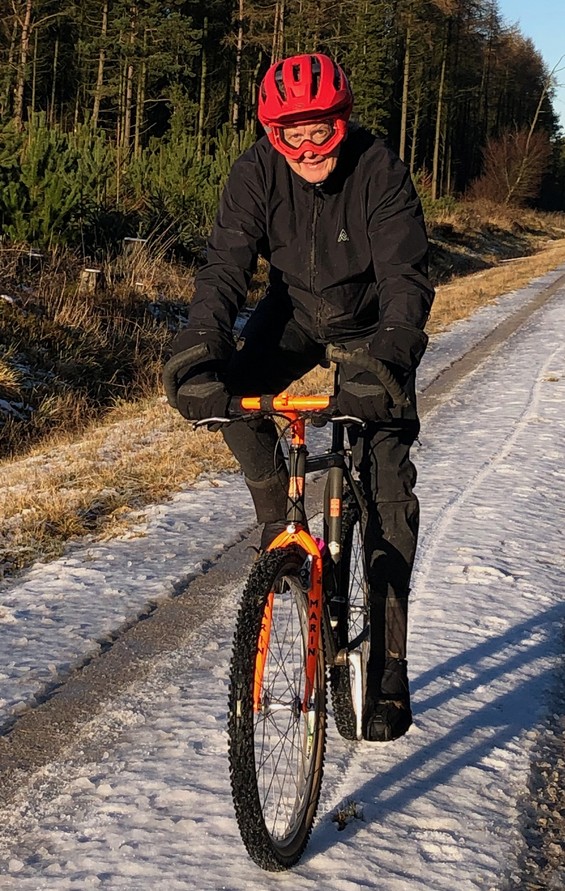
A Marin Pine Mountain on the North York Moors
Twenty-eight years on one frame.
For a few years during his teenage and years in the following decade, Rob didn't cycle very much. And he missed it. Until 1992, he had been cycling on the road. Then, the traffic wasn't so heavy and the air along the roads was not so polluted with vehicle exhaust gasses. In those days, there was no such thing as a gravel bike and he was just beginning to learn about Mountain Bikes.
"For a reason that to this day, escapes me, while I was in my local bike shop, I was attracted to a Marin Pine Mountain bike. The bike had been used a little, but it was in excellent condition. After some negotiation with the shop keeper, I purchased it."
"I used to ride it on the Forest tracks around the North York Moors National Park. I am not a technical rider, but I enjoyed riding my Pine Mountain bike fast, but sympathetically. I must have been very careful, because I never had a puncture in all the years that I rode this bike, and I went on some rough and rocky tracks, in all weathers."
2020 - Forest Rips
From Marin to Forest Rips
A second mountain bike in 28 years.
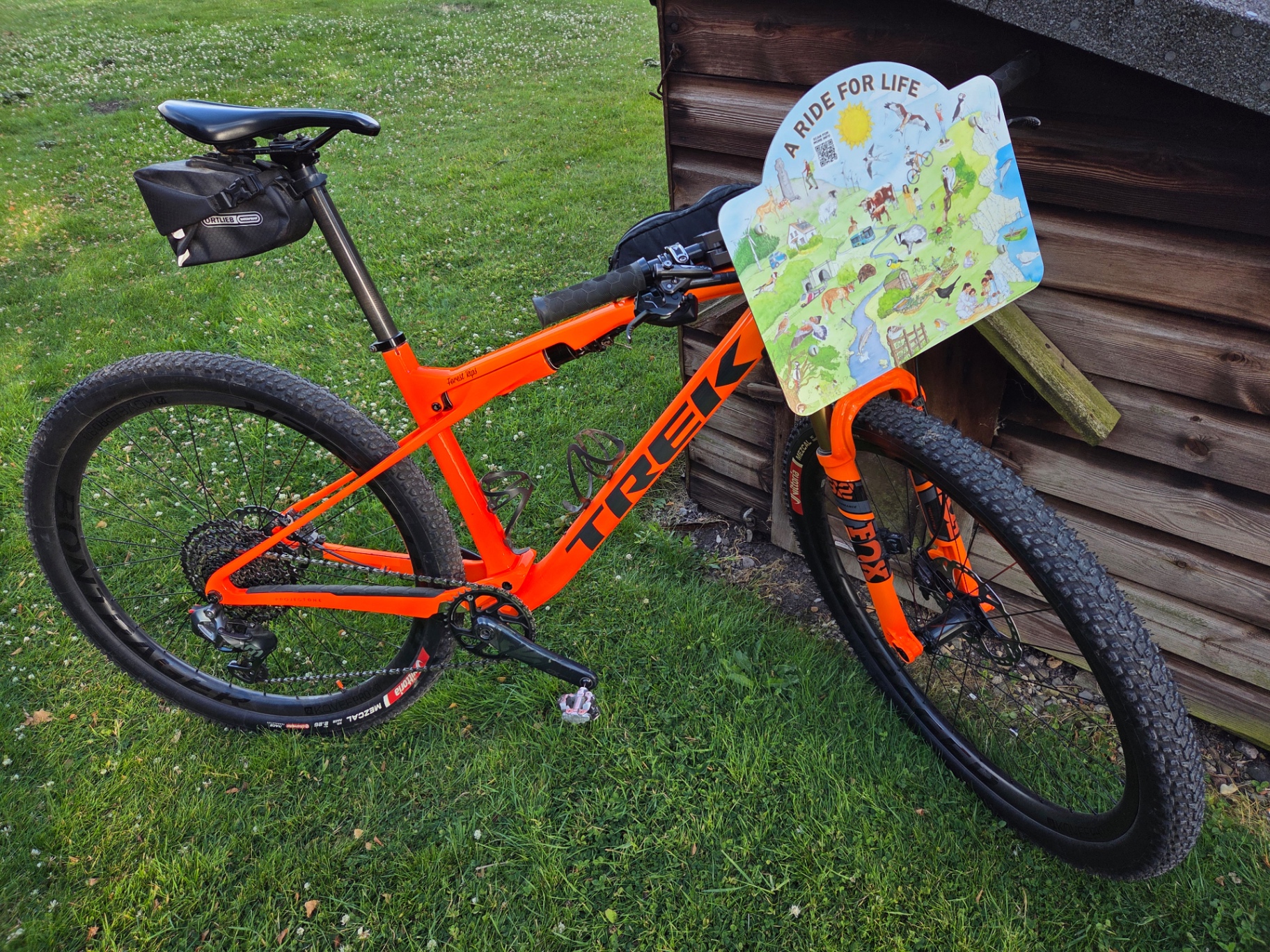
"28 years after purchasing my Marin Pine Mountain bike, it was still in good condition, but my bones and posterior were yearning for a bike with some suspension." Rob hadn't been keeping up with developments in mountain bike technology, so he did some research and visited some bike shops to check things out. How bikes had changed - and so had the terminology too.
"The type of bike I needed for my style of riding, was a cross country version of a mountain bike. Ok, that's it then, I thought, I'll buy one of those. Hmm, not that simple, there are scores of cross-country bikes to choose from and I was beginning to wonder if I would ever make a decision. But then a bike arrived on the market that just seemed right to me. I called it Forest Rips. This was going to be only my second mountain bike in 28 years, so I thought my carbon footprint would allow the purchase, especially if I kept it as long as my Marin bike. I have not regretted it, although it took me several hundred miles of riding to get used to it."
"I called my new bike Forest Rips, because I continue to ride on the forest and moor tracks. My desire for speed hasn't waned much, even though my ability to turn the pedals as quickly has reduced. But the new bike made up for any shortfalls in my physical ability. On Forest Rips, in perfect weather, on the steepest downhill part of a forest track that I know well, my speed during the descent reached 49.7mph. I was disappointed not to have reached 50mph!"
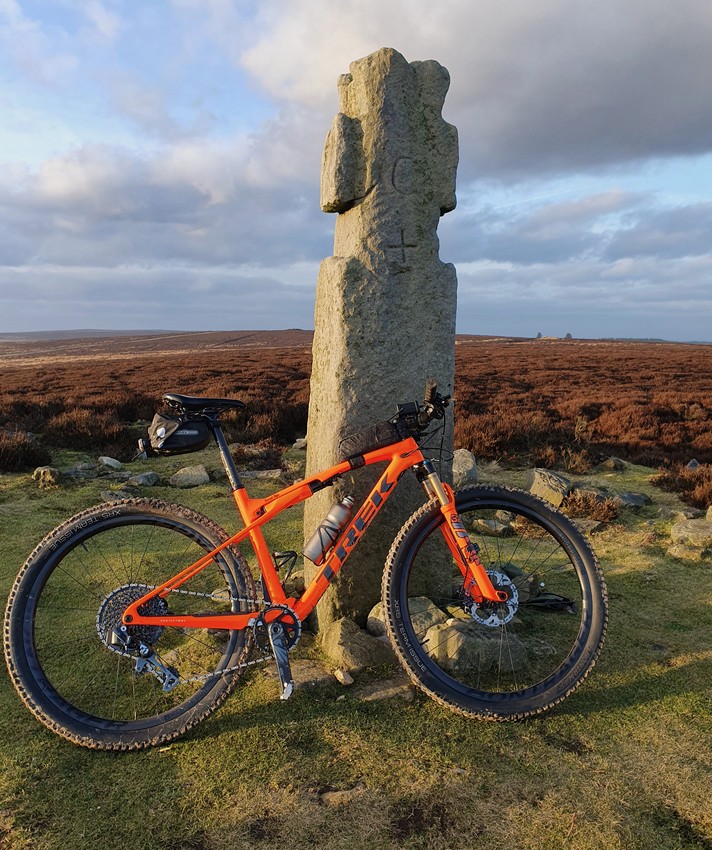
"I enjoy cycling in challenging conditions, and the North York Moors delivers in spades, especially during Winter."
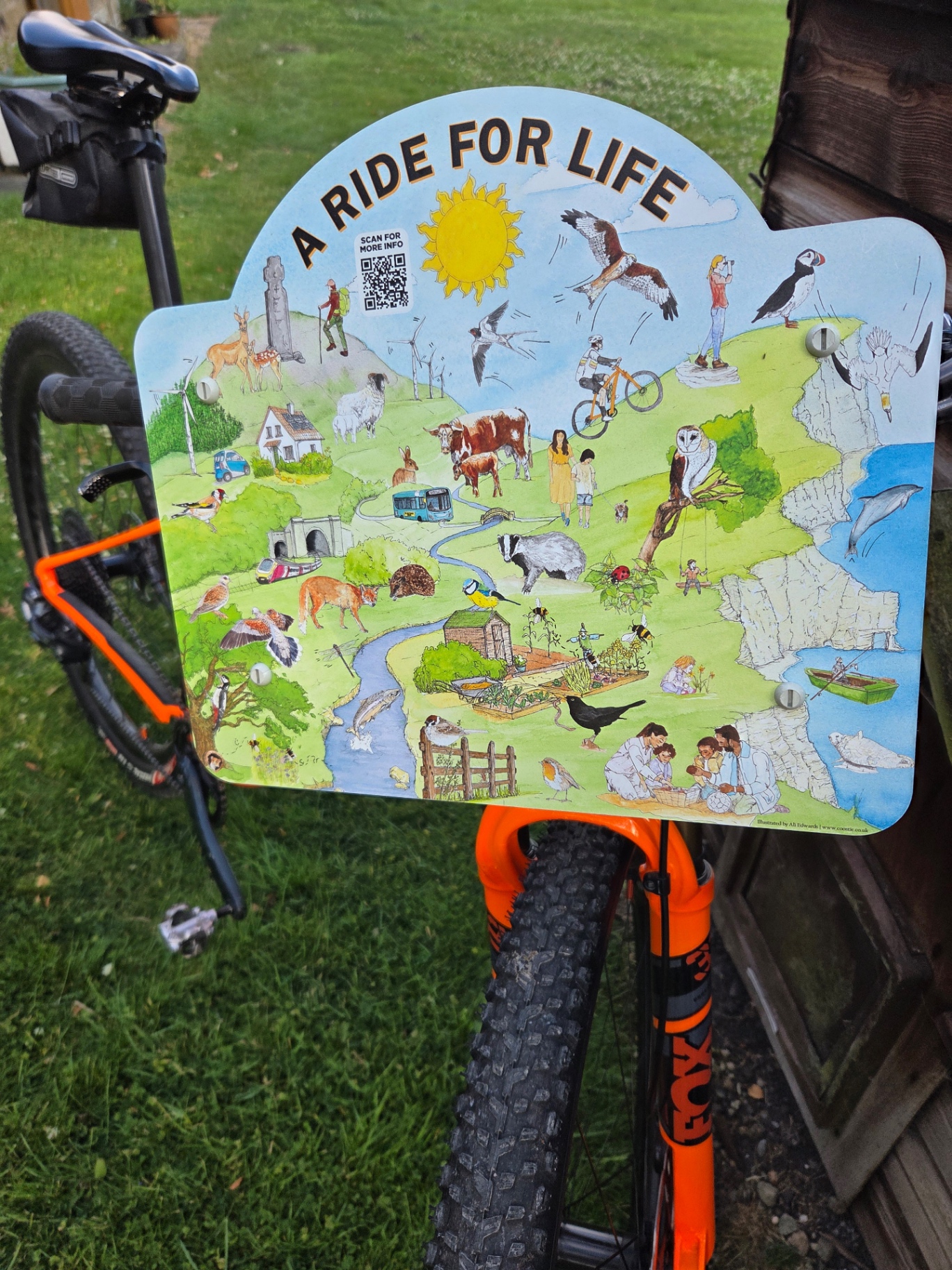
Spring 2021
The Captain Tom 100 Challenge
"Do It Your Way" - the slogan that started everything.
100 miles
The original Challenge target - cycled around Dalby Forest
£2,800
Raised in the original 4-day event for three children's mental-health charities
212.2 mi
Actual distance ridden over the four days
"In Spring 2021, I enrolled to raise money for charity in the Captain Tom 100 Challenge. Sir Tom Moore was an armed forces veteran who inspired many people during the Covid 19 lockdown, to battle on and keep going. At 100 years old, Captain Tom walked 100 laps of his home for charity. He was the inspiration of people around the world. The Captain Tom 100 Challenge enabled people to choose for themselves 100 things they could do to raise money for their chosen charity."
The Challenge slogan was "DO IT YOUR WAY"
"I enrolled and My Way, was to cycle 100 miles around Dalby Forest in the North York Moors National Park, to raise £2,500 for three charities that help children with mental health issues - a situation that Covid 19 lockdown was making worse. The charities are A Place To Be, The Mix & Young Minds."
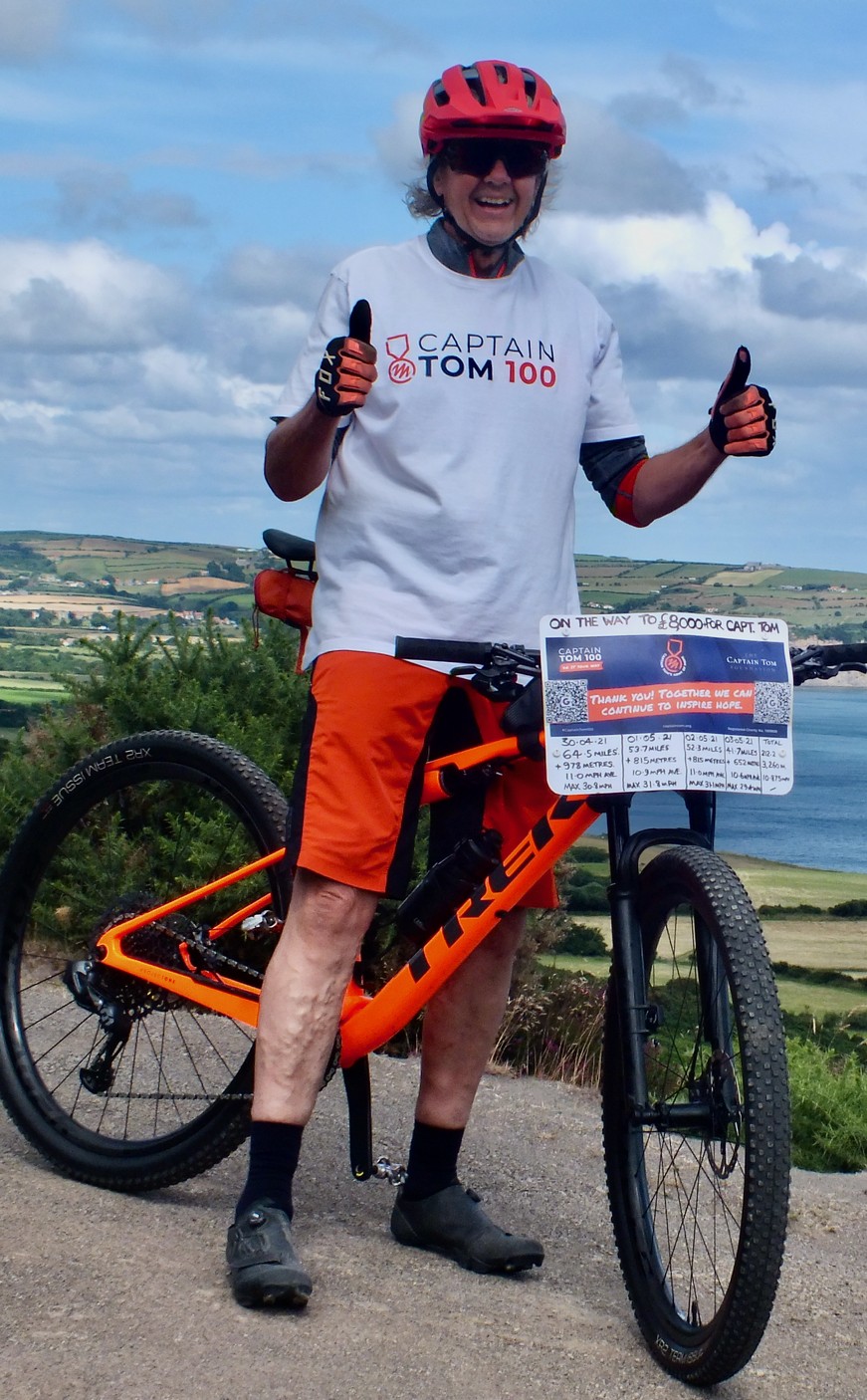
"The Captain Tom 100 Challenge was held on 30th April - 3rd May 2021, to celebrate the anniversary of Sir Captain Tom's 100th birthday. During my Captain Tom 100 Challenge, I met hundreds of lovely, generous people as I cycled around Dalby Forest. By 1pm on the second day, I had completed my 100 miles challenge, but I kept riding for the remainder of the 4-day event, and cycled 212 miles by the end. When all of the donations had been received, the total was almost £2,800 raised for the charities."
| Day | Miles | Climb (m) | Avg mph | Max mph |
|---|---|---|---|---|
| 30 Apr 2021 | 64.5 | 978 | 11.0 | 30.8 |
| 1 May 2021 | 53.7 | 815 | 10.9 | 31.8 |
| 2 May 2021 | 52.3 | 815 | 11.0 | 31.1 |
| 3 May 2021 | 41.7 | 652 | 10.6 | 29.4 |
| Total | 212.2 | 3,260 | 10.9 | 31.8 |
One year on - 4th May 2022
3,019 miles - £13,002 raised
Our Captain Tom 100 Challenge Fund Has Closed.
3,019 mi
Cycled around the North York Moors
£13,002
Donated for children with mental health issues due to Covid lockdown - THANK YOU!
1,000+
Estimated supporters - 392 on JustGiving, plus many cash donors
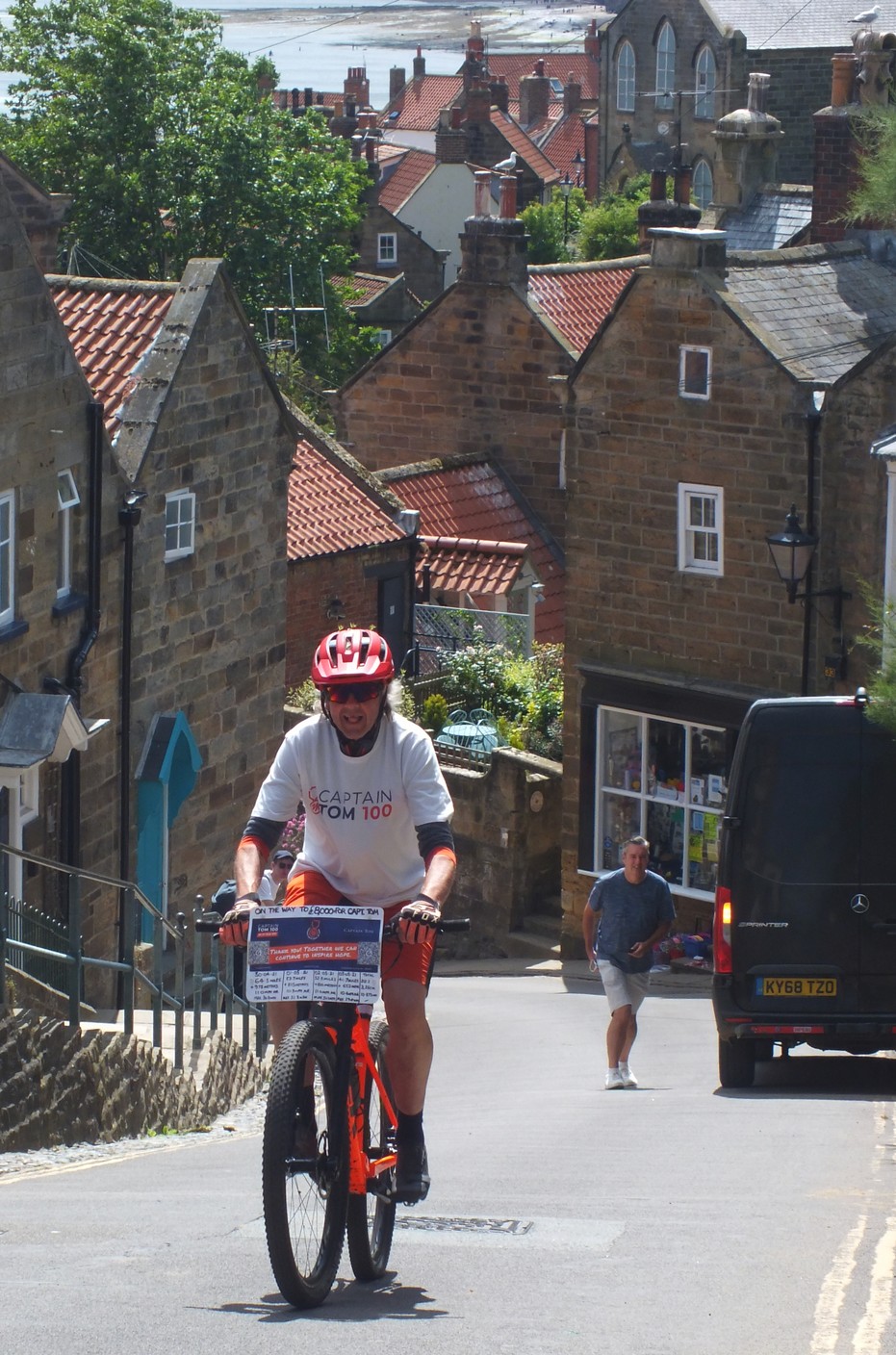
"I had enjoyed the fundraising and the cycling so much, that I decided to keep going. Riding around the North York Moors National Park is always a great pleasure, but doing it for good causes, and stopping to meet and chat to so many people that are enjoying the great outdoors, made it really special. The target total kept increasing, and had to be modified several times on the sign."
"I would ride when I could, 1 or 2 days each week. The miles kept clocking up and the money kept coming in, so what was there to stop for? I continued riding for the Captain Tom 100 Challenge on and off, for a full year."
Note: The JustGiving page states that 392 people supported the fundraising, but many people donated cash, which is not recognised in the supporter numbers. It is difficult to be sure, but Rob would estimate that well over 1,000 people made kind and generous donations to the charities.
Cycling for wildlife
What you see when you slow down
Bikes are wildlife-friendly transport. Ride with eyes, ears and respect.
From Rob to you
Do It Your Way
The Challenge that started A Ride For Life.
"The Captain Tom 100 'Do It Your Way' Challenge, together with Sir David Attenborough's kind wishes of encouragement, motivated me to start the A Ride For Life environmental, carbon footprint and nature enhancement awareness campaign. I hope that, as I continue to ride around the North York Moors National Park, you - the people I meet and chat to - will be inspired to address the issues highlighted in this website, and Do It Your Way."
What's your favourite cycle journey or trail? We'd love to hear about it - and to feature your story. Tell us on the Contact page.