
Back to the illustration

Wildlife - Insects

Vapourer Moth Caterpillar

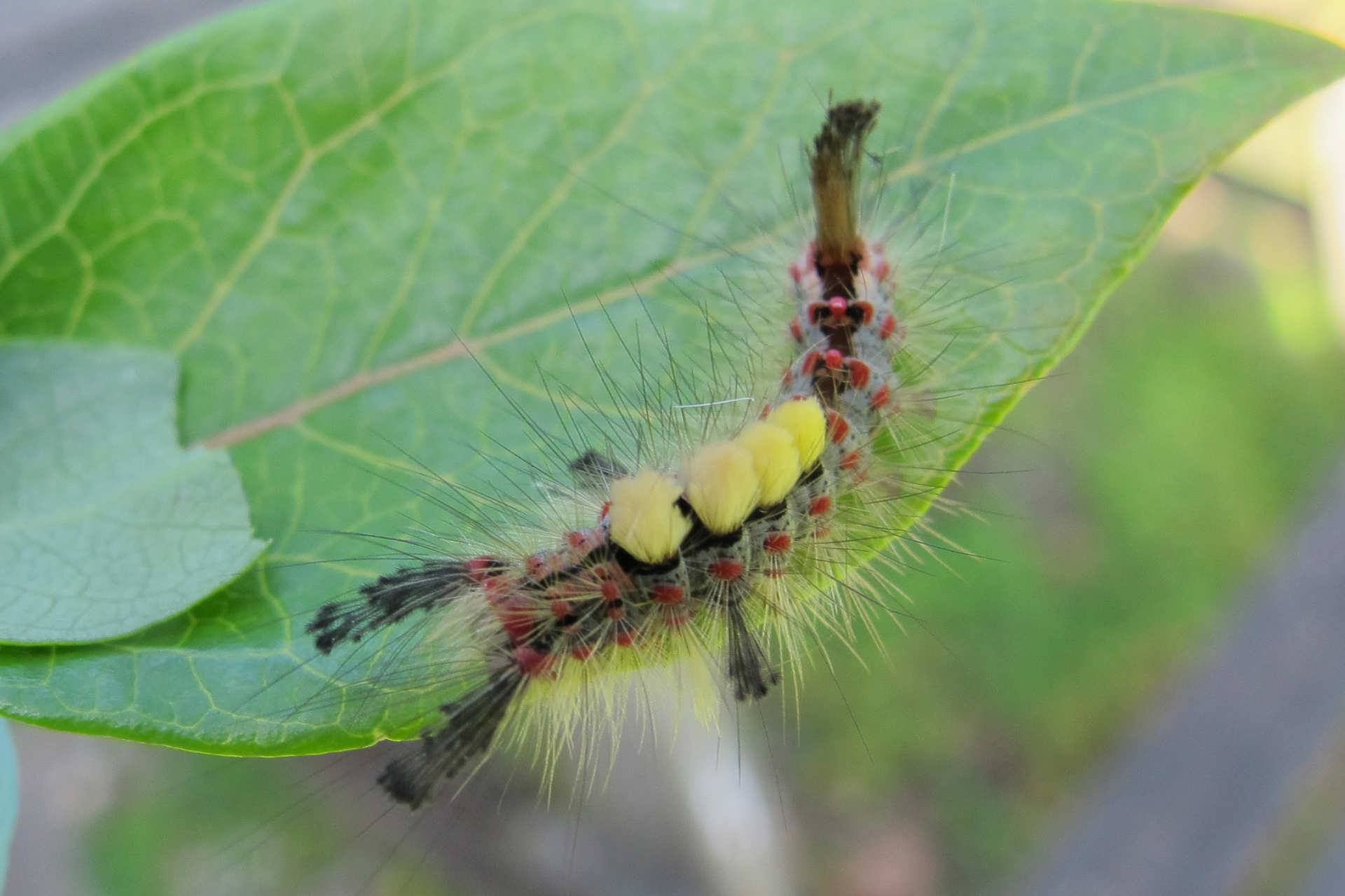
The unmistakable caterpillar of the Vapourer Moth (Orgyia antiqua) is one of the most striking caterpillars found in UK gardens and hedgerows. Four bright yellow tufts on the back, red spots, and long black hair pencils make it look almost cartoon-like.

Species description adapted from RSPB and BTO references - see links below.

North Yorkshire species profileGo to Wildlife Identification
A brightly coloured Vapourer Moth caterpillar with yellow tufts and red spots on a green leaf

Insects - Photo ID

Vapourer Moth Caterpillar - photo identification

The unmistakable caterpillar of the Vapourer Moth (Orgyia antiqua) is one of the most striking caterpillars found in UK gardens and hedgerows. Four bright yellow tufts on the back, red spots, and long black hair pencils make it look almost cartoon-like.

Photographs by Rob - taken in and around the North York Moors.

A brightly coloured Vapourer Moth caterpillar with yellow tufts and red spots on a green leaf

Vapourer Moth caterpillar feeding on a leaf

Despite the warning colours, these caterpillars are harmless to handle for most people, though the hairs can irritate sensitive skin. They feed on a wide range of trees and shrubs including oak, hawthorn, birch and bramble. The adult female is wingless and never leaves her cocoon - she releases pheromones to attract the day-flying males.

How it fits into North Yorkshire wildlife

This insect is one of the small workers keeping North Yorkshire alive. Insects pollinate flowers, recycle nutrients and feed birds, bats and other wildlife, so even tiny species can have an outsized effect.

How it interacts with the wider landscape

It supports pollination, pest control or freshwater balance, and in turn becomes food for birds, mammals and amphibians.

Seasonal rhythm

Warmth, flowering cycles and clean water or shelter all affect how strongly this species can appear from one season to the next.

Where to look and what to notice

Look around flowers, ponds, field margins and sunny sheltered spots where insects can feed, hunt or breed.