
Back to the illustration

Wildlife - Birds

Tree Sparrow

Tree sparrows are small farmland birds that depend on seed-rich margins, nest holes and insect life close to mixed countryside.

Species description adapted from RSPB and BTO references - see links below.

Status: Red listed (serious decline)North Yorkshire species profileGo to Wildlife Identification
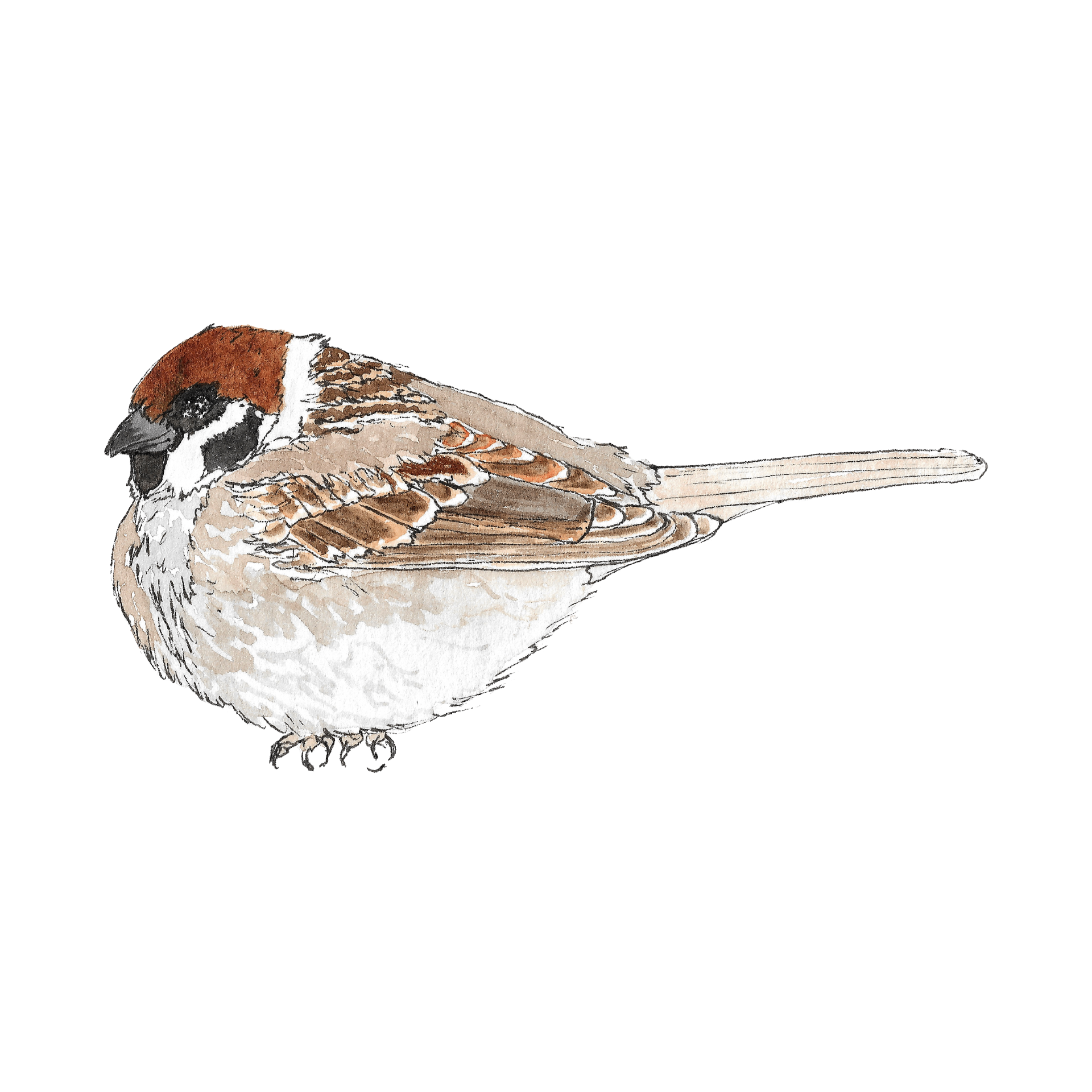
Watercolour illustration of a tree sparrow perched in profile

Birds - Photo ID

Tree Sparrow - photo identification

The Tree Sparrow is the country cousin of the House Sparrow - smaller, neater, and now far rarer after a catastrophic population crash of more than 90% since the 1970s. Both sexes look the same: a chestnut-brown cap (not grey like the male House Sparrow), a clean white cheek with a distinct black spot in the middle, and a small black bib. They nest in holes - tree cavities, old walls, and especially nest boxes - and stay loyal to a good site, often raising two or three broods of chicks a season.

Photographs by Rob - taken in and around the North York Moors.

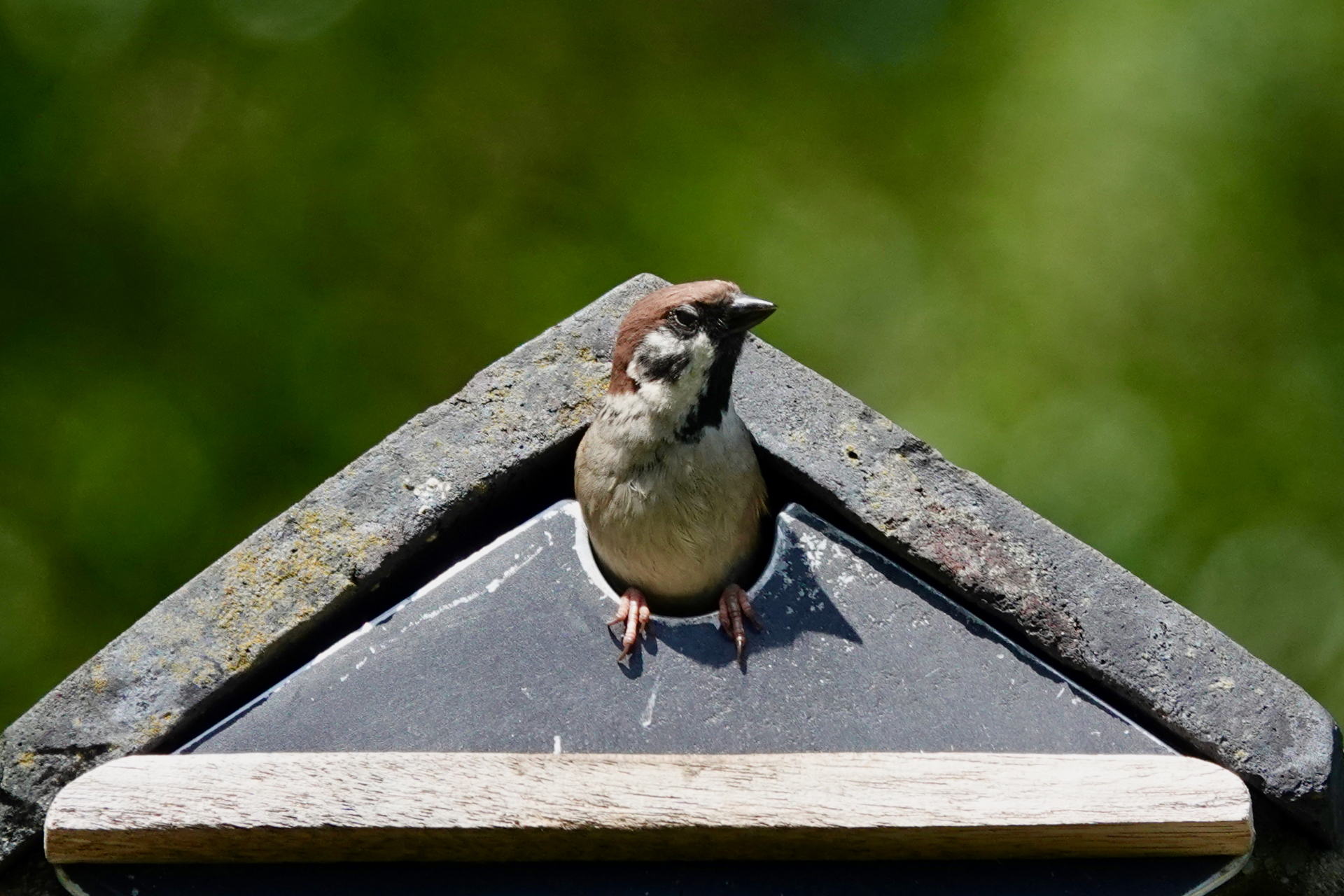
A Tree Sparrow looking out from the apex of a stone-roofed nest box

Checking it is safe to leave the nest

A Tree Sparrow pauses at the entrance of its nest box before flying off to find more food for the chicks inside. You can clearly see the two key Tree Sparrow features: the chestnut-brown cap (House Sparrow males have a grey crown) and the bold black cheek-spot on an otherwise clean white face. Both male and female Tree Sparrows look identical, which is unusual among British sparrows.

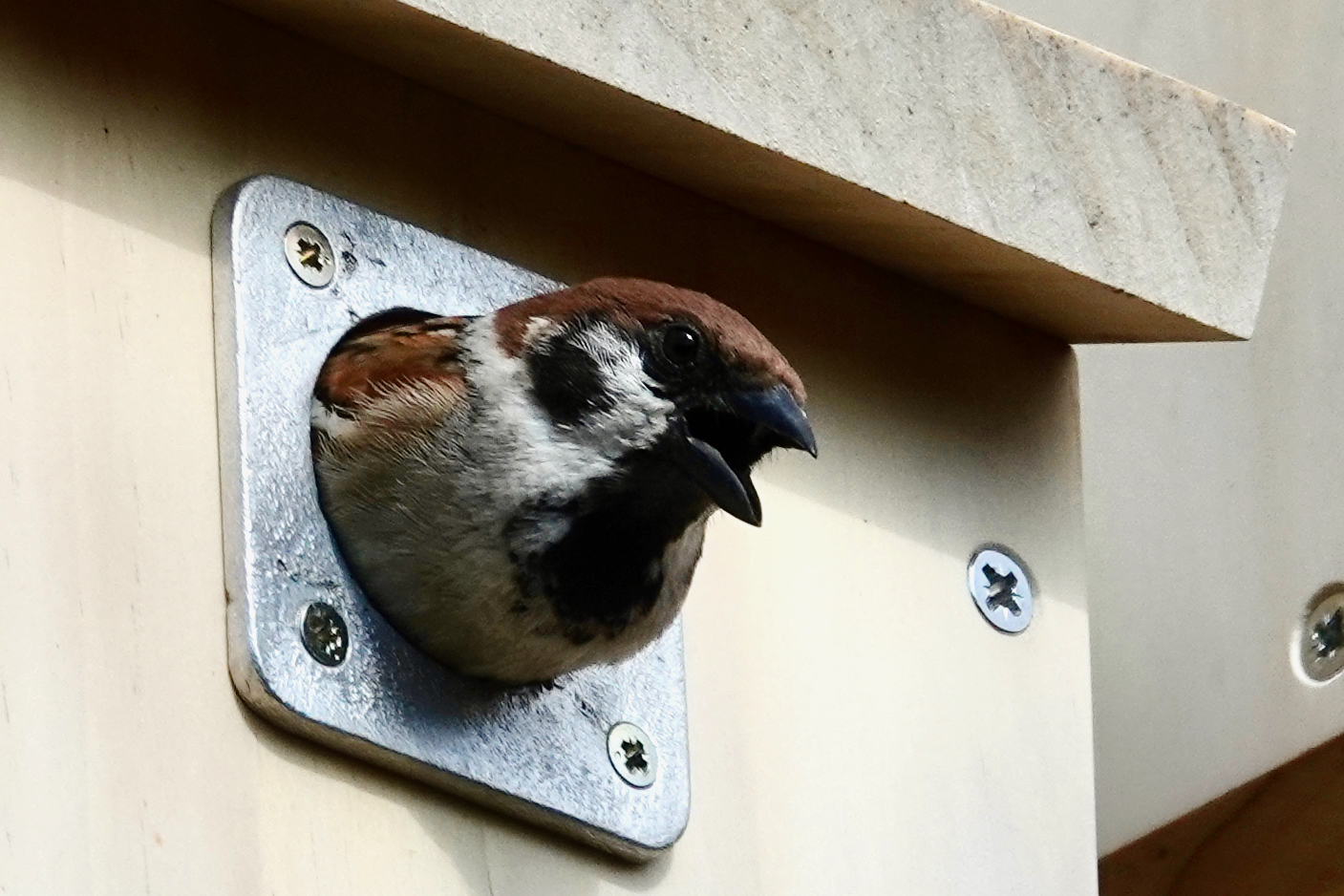
Close-up of a Tree Sparrow at a metal-plated nest box hole calling out

Parent at the nest box hole

A parent Tree Sparrow looks out of the nest box hole after delivering food to the chicks inside. The metal plate around the entrance is a simple but effective defence - it stops Great Spotted Woodpeckers and squirrels from chiselling the hole larger to reach the brood. Tree Sparrows will use the same well-defended box year after year.

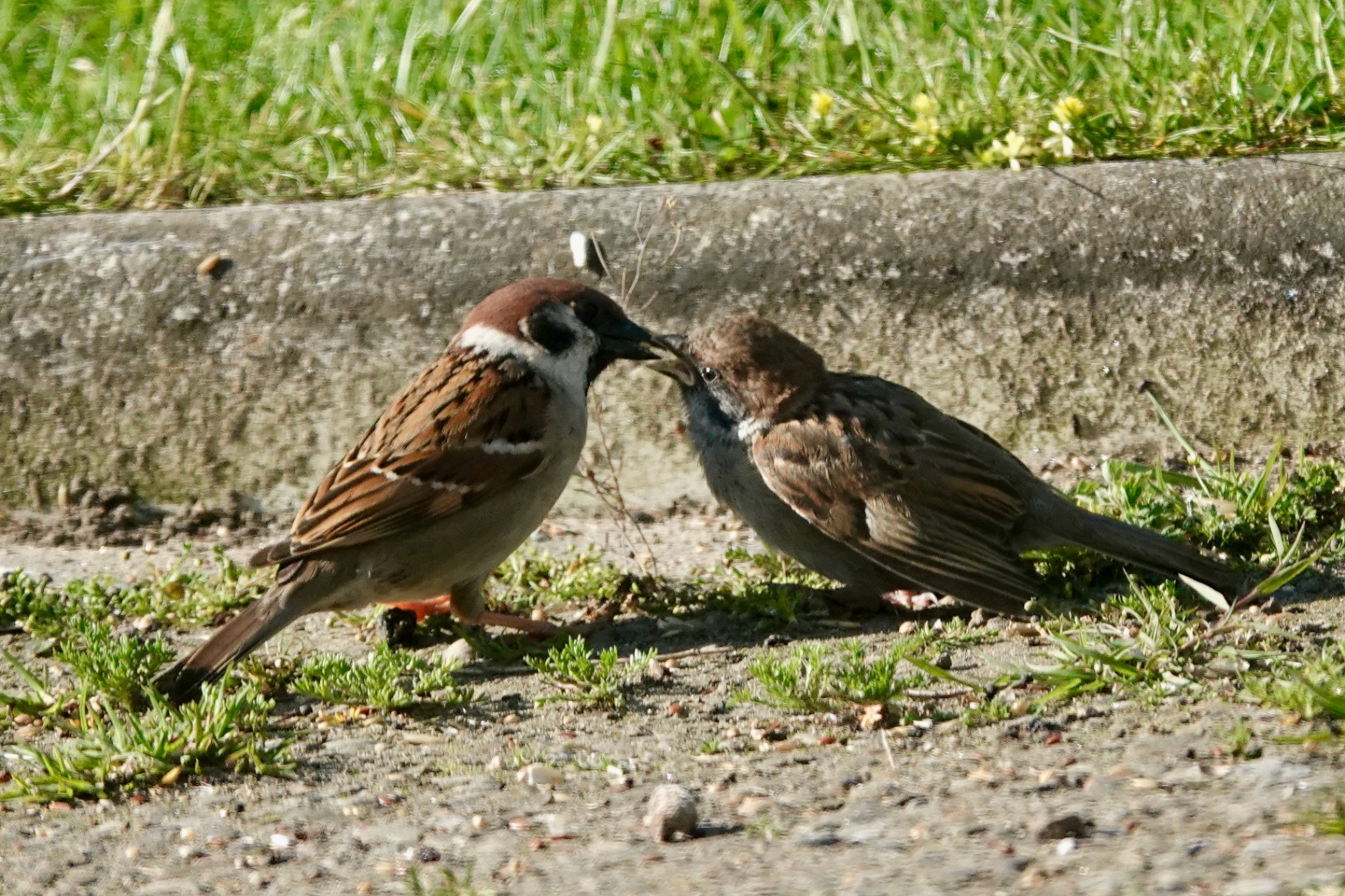
An adult Tree Sparrow feeding a fledgling on a concrete kerb

Feeding a fledgling

An adult (left) passes food to a recently-fledged youngster (right). The juvenile is a duller, washed-out version of its parent - the cap is browner, the cheek-spot fainter and the bib smudged. Fledglings beg loudly from their parents for a couple of weeks after leaving the nest before learning to forage for seeds and insects themselves.

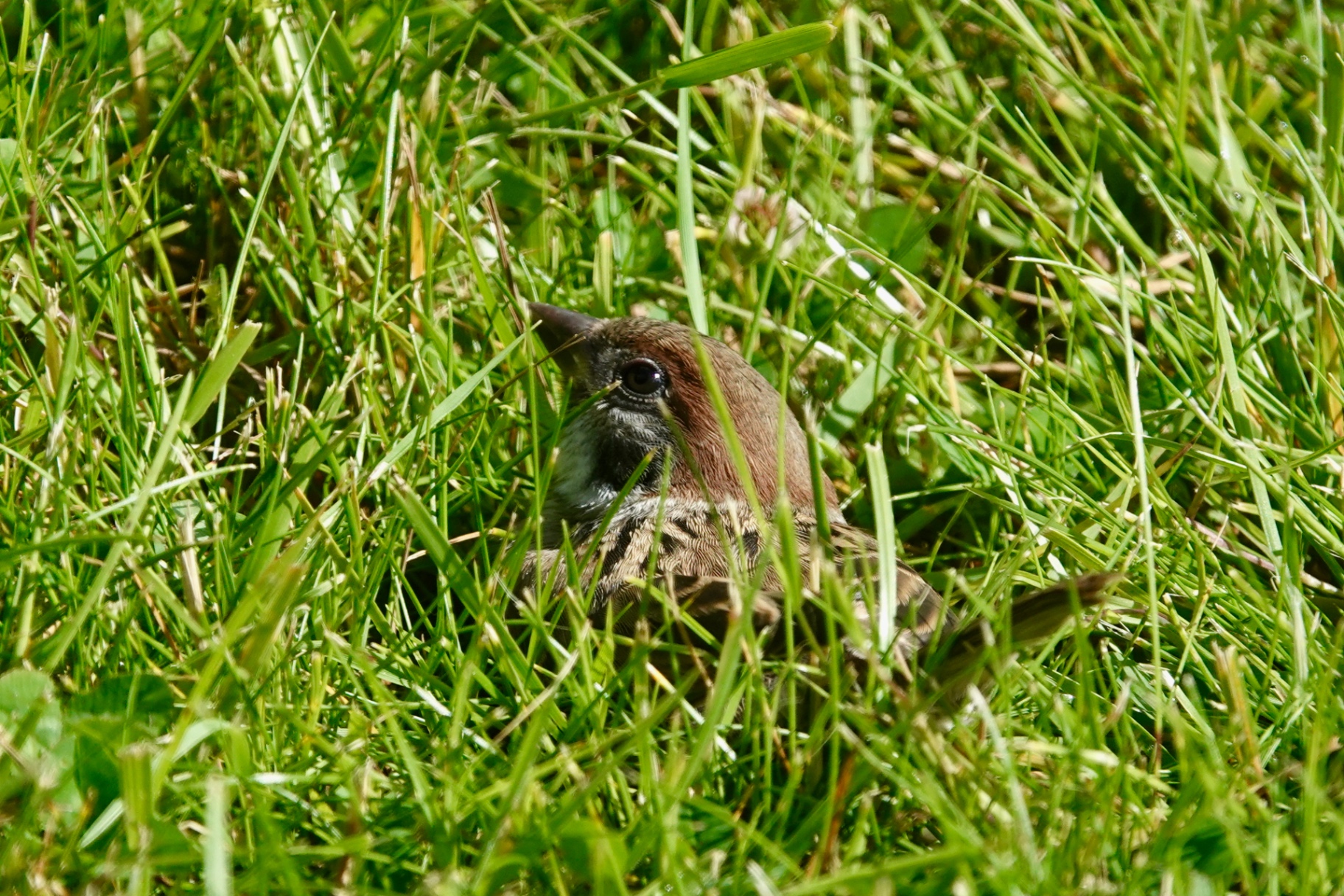
A fledgling Tree Sparrow tucked down in long grass

Fledgling hiding in the lawn

A newly-fledged Tree Sparrow hunkers down in long grass on the lawn. Leaving part of the lawn unmown gives fledglings somewhere to hide from Sparrowhawks and cats during the vulnerable first days out of the nest, while parents continue to feed them. Long grass is one of the simplest things any garden can offer.

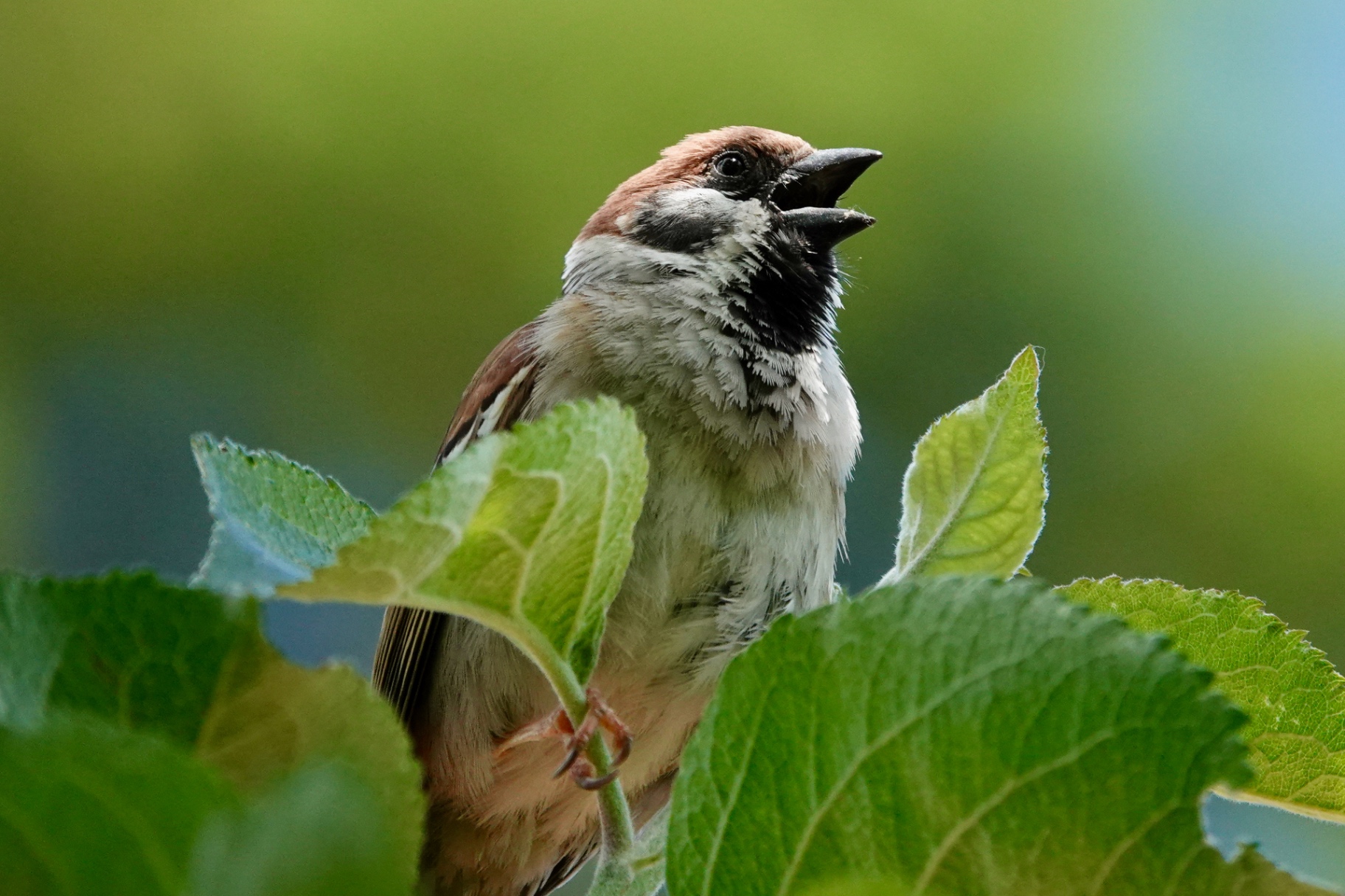
A Tree Sparrow calling loudly from an apple tree

Calling from the apple tree

A Tree Sparrow gives its hard 'tek-tek' contact call from an apple tree - not really a song but a constant chatter that helps the small flock stay in touch. Fruit trees, hedges and nest boxes within a few yards of each other are the perfect Tree Sparrow set-up: safe nest sites, perches for keeping watch, and insects on the leaves for the chicks.

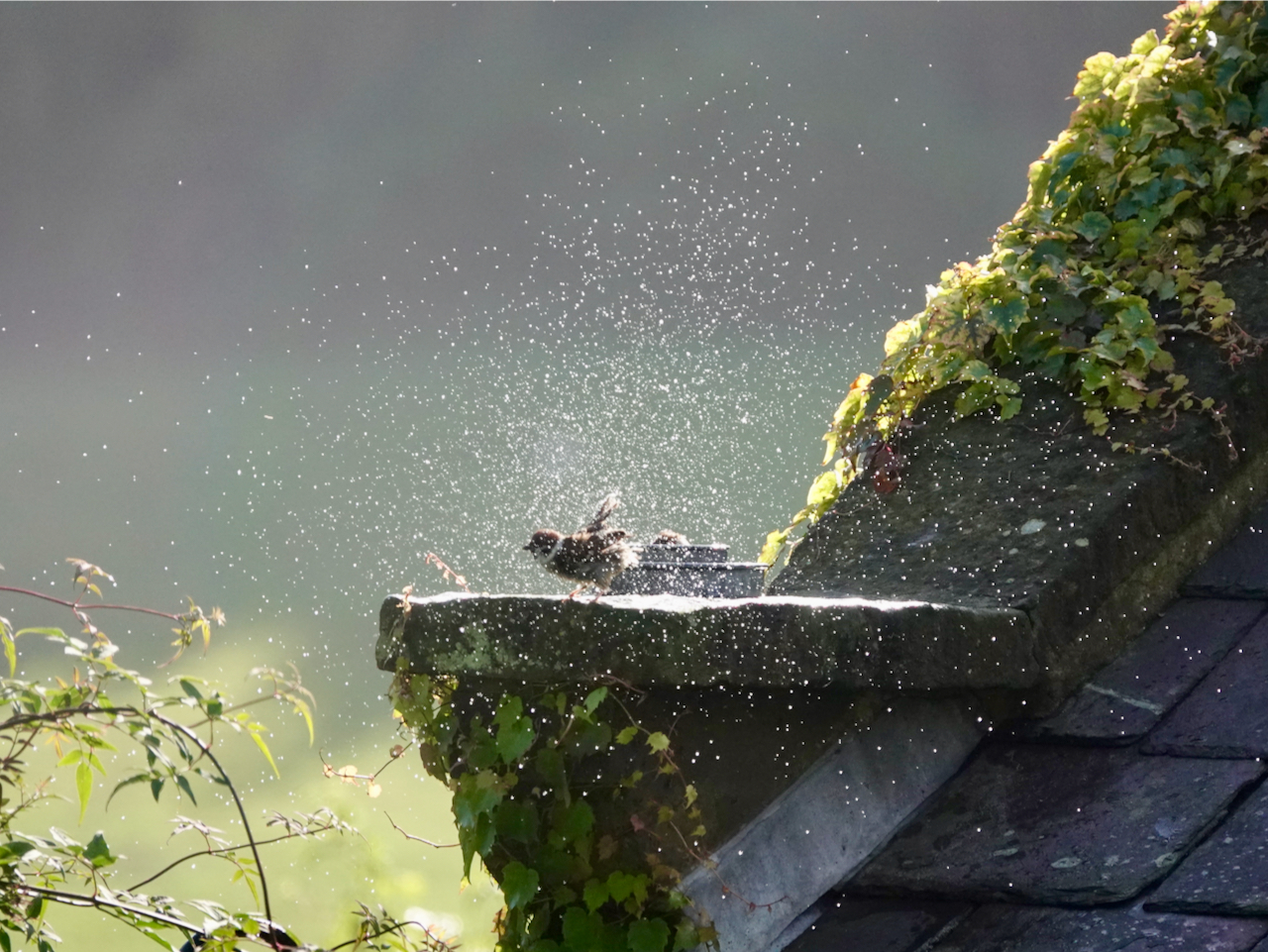
A Tree Sparrow shaking off water in a fountain of droplets on a stone roof

Bathtime

Caught mid-shake in a sunlit explosion of water droplets. Tree Sparrows bathe enthusiastically and often - a shallow stone trough, an upturned dustbin lid, or any safe puddle will do. Bathing keeps the feathers clean and the insulating layer of down working properly, which matters all year round but especially in winter.

How it fits into North Yorkshire wildlife

Tree sparrows belong to the farmed edges of North Yorkshire where old buildings, hedges and mixed fields still provide food and shelter.

How it interacts with the wider landscape

They rely on seeds for much of the year, then switch to insects for raising chicks, tying them closely to both winter seed supply and summer invertebrate life.

Seasonal rhythm

They can be seen year-round, but breeding season reveals how strongly they depend on insect-rich farmland.

Where to look and what to notice

Look for chestnut caps, black cheek spots and small flocks around hedges, feeders and old nest holes.