
Back to the illustration

Wildlife - Birds

Tawny Owl

The Tawny Owl is Britain's most common and widespread owl, but also one of the hardest to see - strictly nocturnal and superbly camouflaged against tree bark. It is the bird responsible for the classic 'twit-twoo' duet (actually a female 'ke-wick' answered by the male's tremulous 'hoo-hoo-oooo'). Tawnies hunt small mammals, especially wood mice and voles, from a low perch.

Species description adapted from RSPB and BTO references - see links below.

North Yorkshire species profileGo to Wildlife Identification
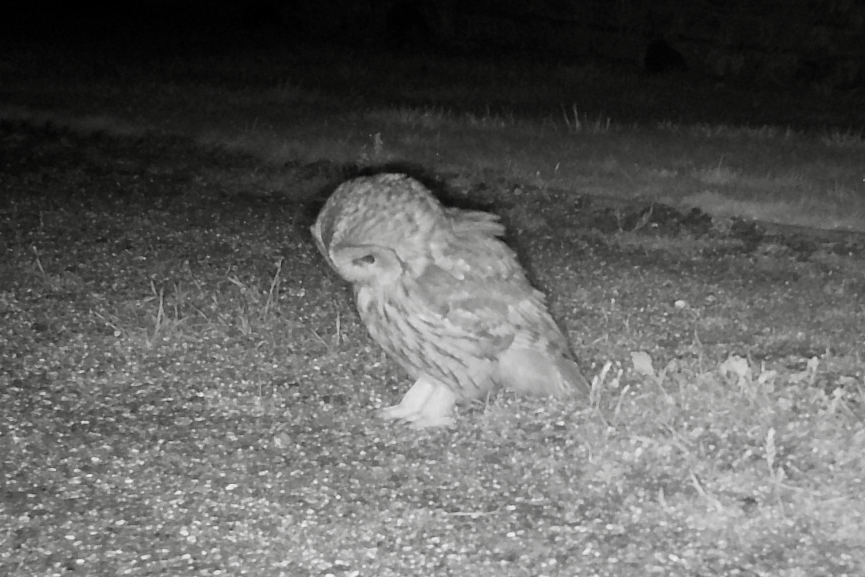
A Tawny Owl photographed at night on the ground by a trail camera

Birds - Photo ID

Tawny Owl - photo identification

The Tawny Owl is Britain's most common and widespread owl, but also one of the hardest to see - strictly nocturnal and superbly camouflaged against tree bark. It is the bird responsible for the classic 'twit-twoo' duet (actually a female 'ke-wick' answered by the male's tremulous 'hoo-hoo-oooo'). Tawnies hunt small mammals, especially wood mice and voles, from a low perch.

Photographs by Rob - taken in and around the North York Moors.

A Tawny Owl photographed at night on the ground by a trail camera

Tawny Owl caught on a trail camera

Trail cameras are one of the few reliable ways to see what is moving around at night. This Tawny Owl has dropped down onto open ground - probably onto prey - and the infrared flash has frozen it mid-action. You can just make out the rounded head, dark eyes set forward in the face, and the heavily streaked, dappled brown plumage that lets a roosting Tawny vanish against a tree trunk during the day.

How it fits into North Yorkshire wildlife

This bird is part of the moving life of North Yorkshire, linking coast, woodland, farmland and gardens. Its success depends on enough food, safe nesting places and seasonal timing that still matches the landscape around it.

How it interacts with the wider landscape

Its place in the food web connects insects, seeds, small mammals, shrubs, trees or fish with the larger rhythms of weather and migration.

Seasonal rhythm

Spring and early summer are often the most important months, when breeding, migration and food availability need to line up.

Where to look and what to notice

Look for movement, calls, feeding behaviour and the kind of habitat this bird depends on, such as hedgerow, garden, moorland edge or sea cliff.