
Back to the illustration

Wildlife - Insects

Small Tortoiseshell Butterfly

One of Britain's best-known butterflies - bright orange wings edged in black with a striking row of electric-blue crescents around the border. Once one of our most abundant garden butterflies, numbers have fallen sharply in the south since the 1990s, though it remains a common sight in northern gardens with plenty of nectar-rich flowers.

Species description adapted from RSPB and BTO references - see links below.

North Yorkshire species profileGo to Wildlife Identification
A Small Tortoiseshell butterfly with orange and black wings feeding on yellow silver ragwort flowers

Insects - Photo ID

Small Tortoiseshell Butterfly - photo identification

One of Britain's best-known butterflies - bright orange wings edged in black with a striking row of electric-blue crescents around the border. Once one of our most abundant garden butterflies, numbers have fallen sharply in the south since the 1990s, though it remains a common sight in northern gardens with plenty of nectar-rich flowers.

Photographs by Rob - taken in and around the North York Moors.

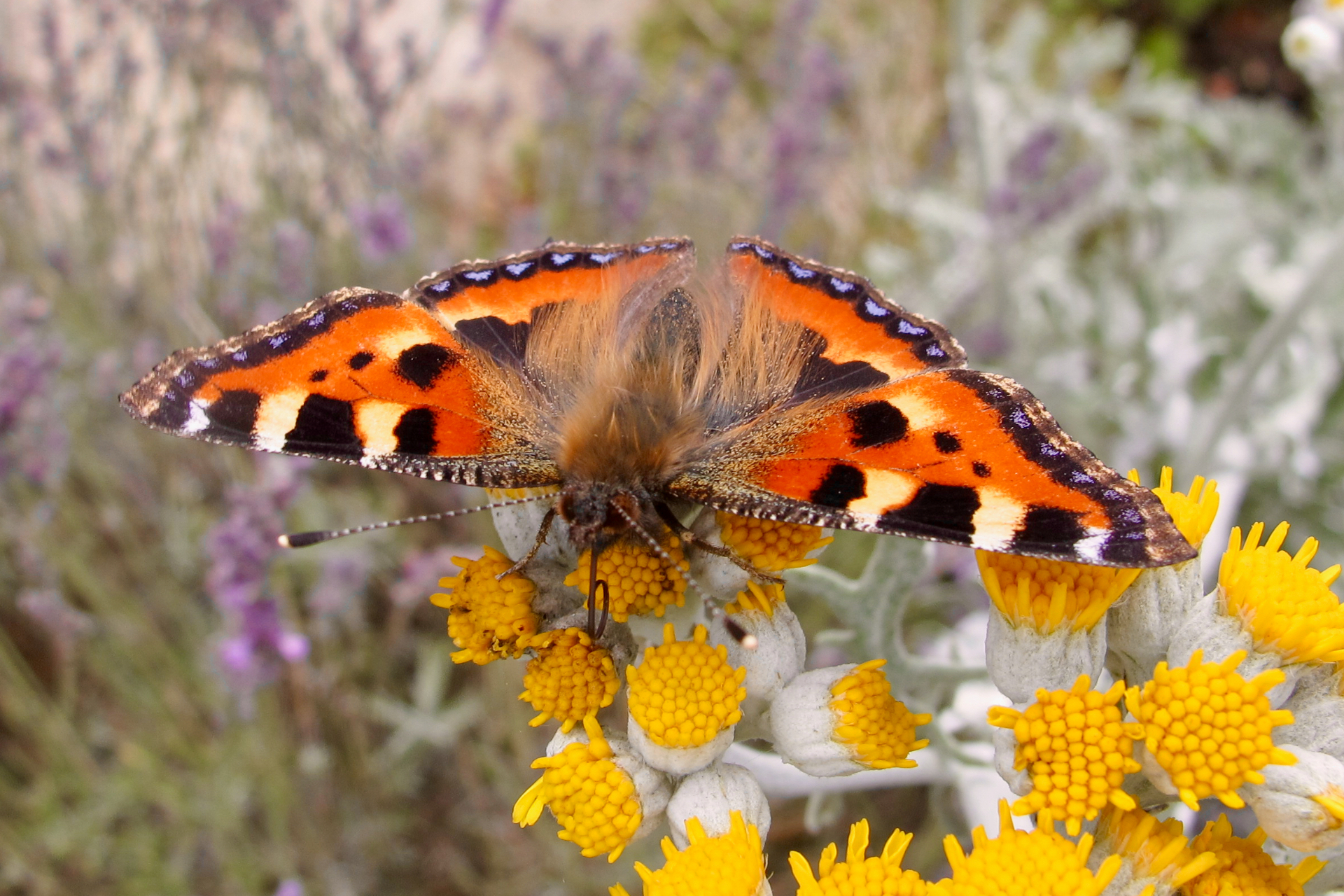
A Small Tortoiseshell butterfly with orange and black wings feeding on yellow silver ragwort flowers

Small Tortoiseshell (Aglais urticae) nectaring on silver ragwort

Look for the orange wings with three large black patches on the forewing, the yellow spots between them, and the diagnostic ring of blue crescents around the entire wing border. This one is feeding on silver ragwort (sometimes sold as cineraria) - a hardy garden plant whose bright yellow late-summer flowers are magnets for butterflies and bees.

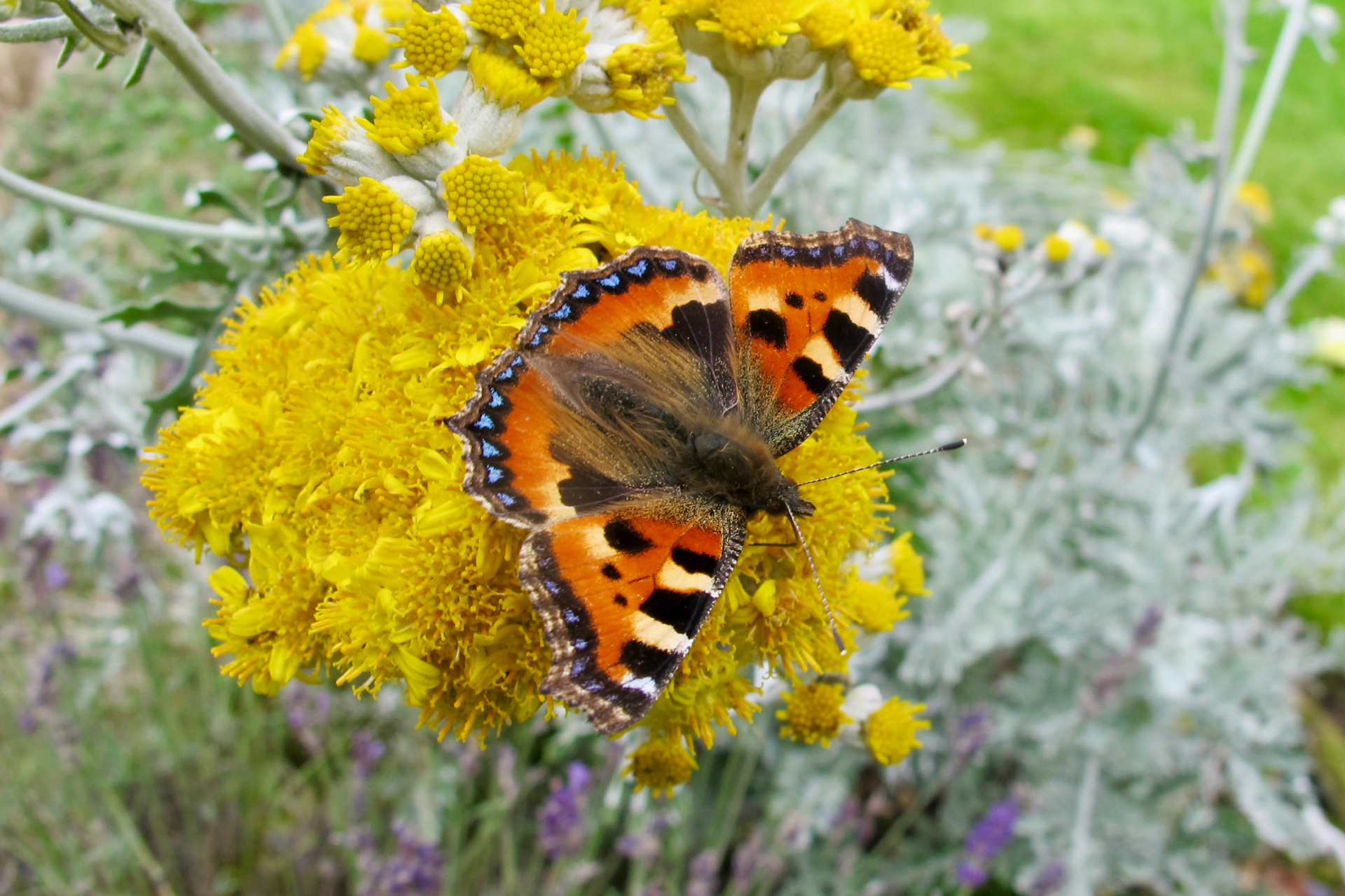
A Small Tortoiseshell butterfly seen from above with wings fully open on a cluster of yellow flowers

Wings open - showing the full pattern

Small Tortoiseshell caterpillars feed exclusively on stinging nettles, so leaving a patch of nettles in a sunny corner is one of the most useful things a garden can do for this species. Adults overwinter as butterflies, often tucked into sheds, garages and porches - if you find one indoors in autumn, gently move it somewhere cool and dry where it can sleep undisturbed until spring.

How it fits into North Yorkshire wildlife

This insect is one of the small workers keeping North Yorkshire alive. Insects pollinate flowers, recycle nutrients and feed birds, bats and other wildlife, so even tiny species can have an outsized effect.

How it interacts with the wider landscape

It supports pollination, pest control or freshwater balance, and in turn becomes food for birds, mammals and amphibians.

Seasonal rhythm

Warmth, flowering cycles and clean water or shelter all affect how strongly this species can appear from one season to the next.

Where to look and what to notice

Look around flowers, ponds, field margins and sunny sheltered spots where insects can feed, hunt or breed.