
Back to the illustration

Farm & Countryside

Upland Sheep

Sheep have grazed the North York Moors for thousands of years, maintaining the open heather moorland characteristic of the landscape.

Species description adapted from RSPB and BTO references - see links below.

North Yorkshire species profileGo to Wildlife Identification
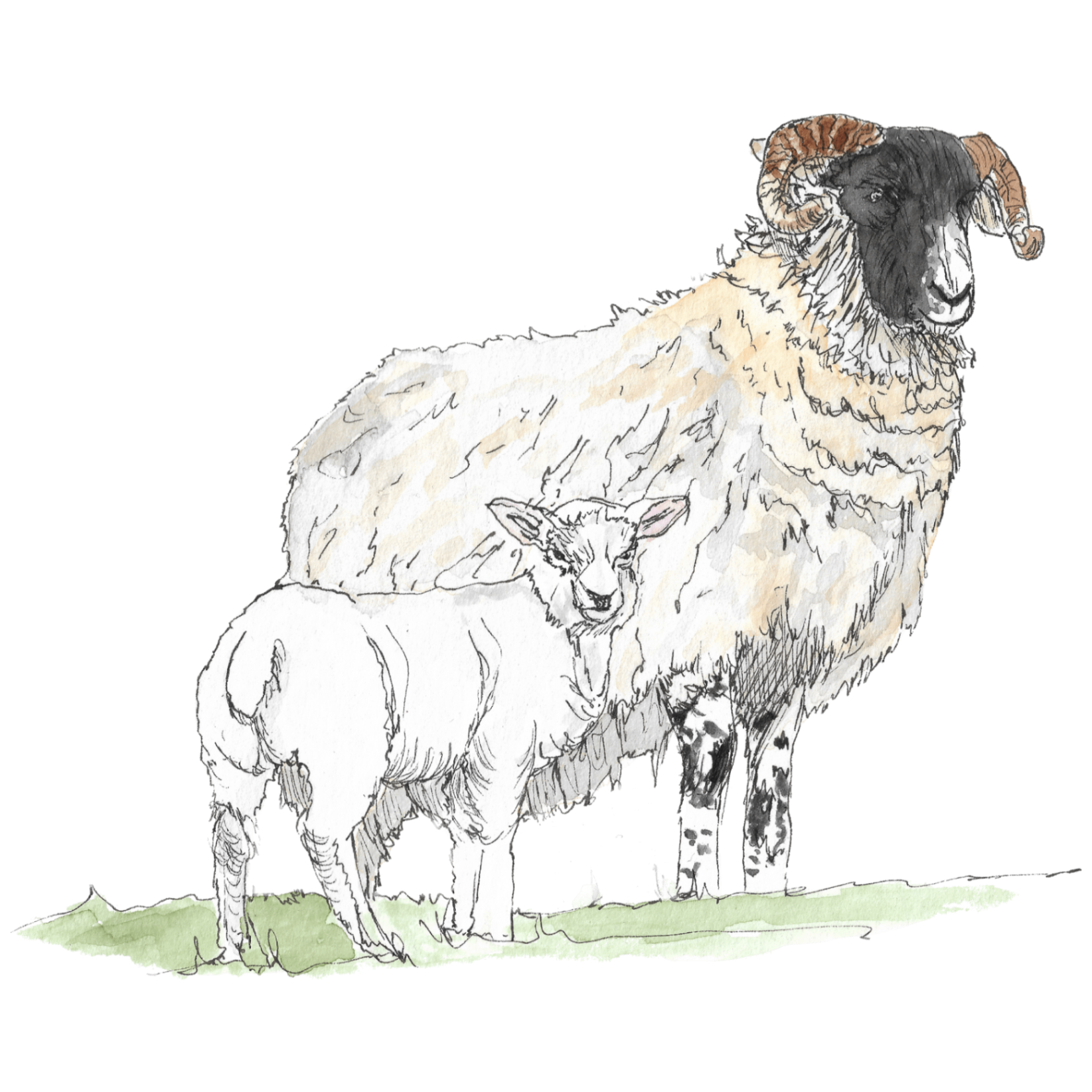
Watercolour illustration of a Swaledale ewe with lamb

Farm - Photo ID

Swaledale Sheep - photo identification

The iconic hardy sheep of the Yorkshire Dales and North York Moors. Black face with a white muzzle, curled horns on both sexes, and a thick grey-white fleece built to shrug off moorland weather. Lambing on the high ground in late April and early May is one of the great signs of spring.

Photographs by Rob - taken in and around the North York Moors.

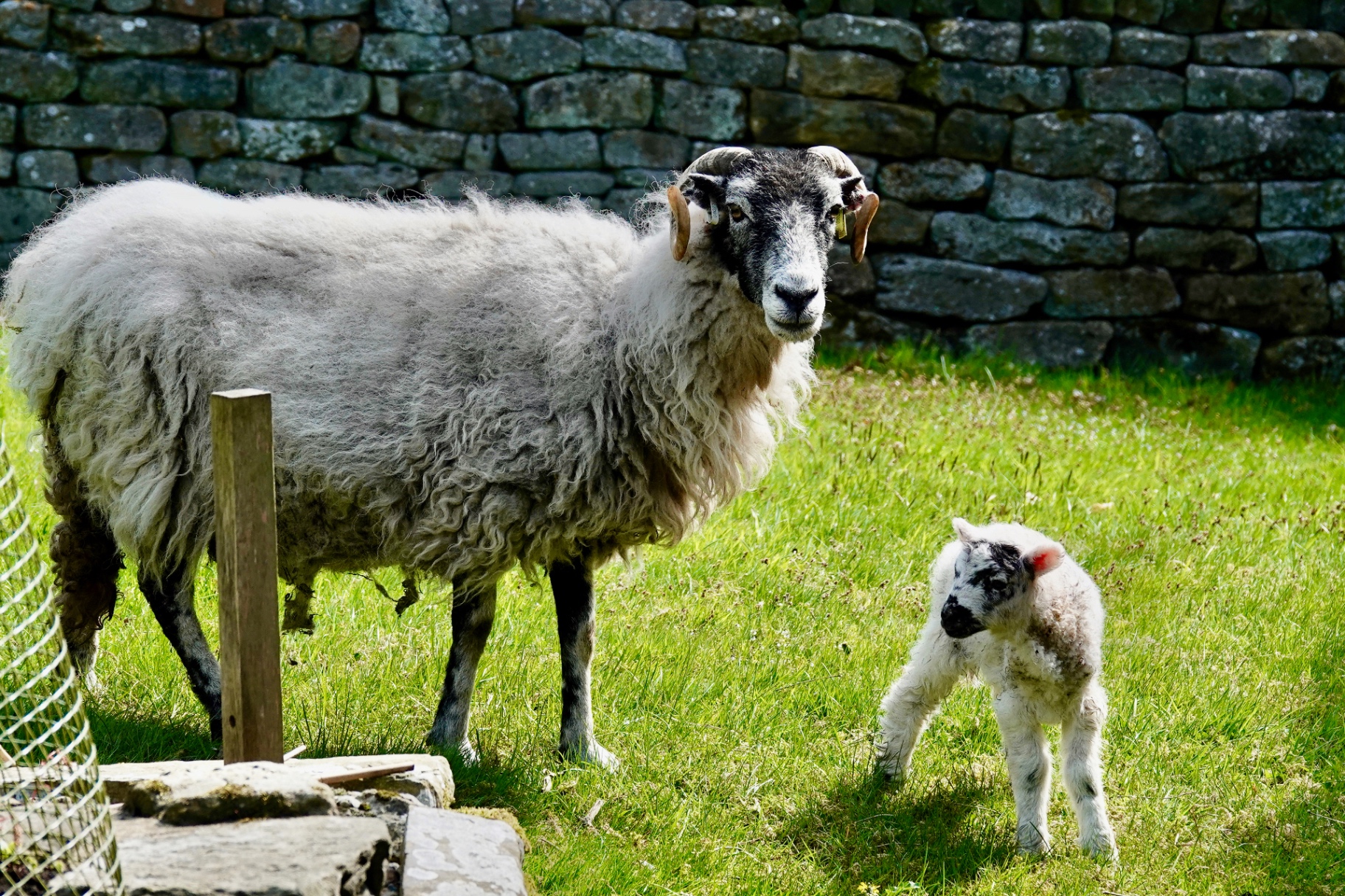
A Swaledale ewe standing beside her newborn lamb in front of a drystone wall

Ewe and newborn lamb

A Swaledale lamb is up on its feet within minutes of being born and feeding within the hour. The ewe imprints on her lamb's smell and call almost immediately - on a fellside with hundreds of sheep, she will always find her own. The drystone walls behind them are themselves a habitat: wrens, wheatears and slow-worms all use the wall as cover.

How it fits into North Yorkshire wildlife

This animal is part of the managed countryside of North Yorkshire. The way it is bred, grazed and woven into farming can either strengthen wildlife-rich landscapes or push them under pressure.

How it interacts with the wider landscape

UK lamb has a relatively low carbon footprint compared to imported beef. Buying local, pasture-raised British lamb is one of the better meat choices for the environment.

Seasonal rhythm

Its seasonal role is shaped by pasture growth, breeding cycles and the way the surrounding land is managed through the grazing year.

Where to look and what to notice

Look at the effect on the land itself: grass height, flower cover, dung insects, ground disturbance and the birds using the pasture.