Back to the illustration

Wildlife - Birds

Robin

Voted the UK's national bird in a public poll, the robin is a bold, inquisitive resident of gardens, hedgerows, and woodland edges throughout the year.

Species description adapted from RSPB and BTO references - see links below.

Status: Green (stable)North Yorkshire species profileGo to Wildlife Identification
Illustration coming soon for this species.

Illustration update coming soon - the artwork currently associated with this species is a close cousin you might easily confuse it with!

Birds - Photo ID

Robin - photo identification

One of the UK's best-loved and most easily recognised birds - a small, round, plump songbird with a bright orange-red face and breast, warm brown back and wings and a pale belly. Robins are fiercely territorial, sing beautifully almost year-round (including on winter nights under streetlights) and are among the tamest of our garden birds, quickly learning to follow a gardener for freshly turned worms.

Photographs by Rob - taken in and around the North York Moors.

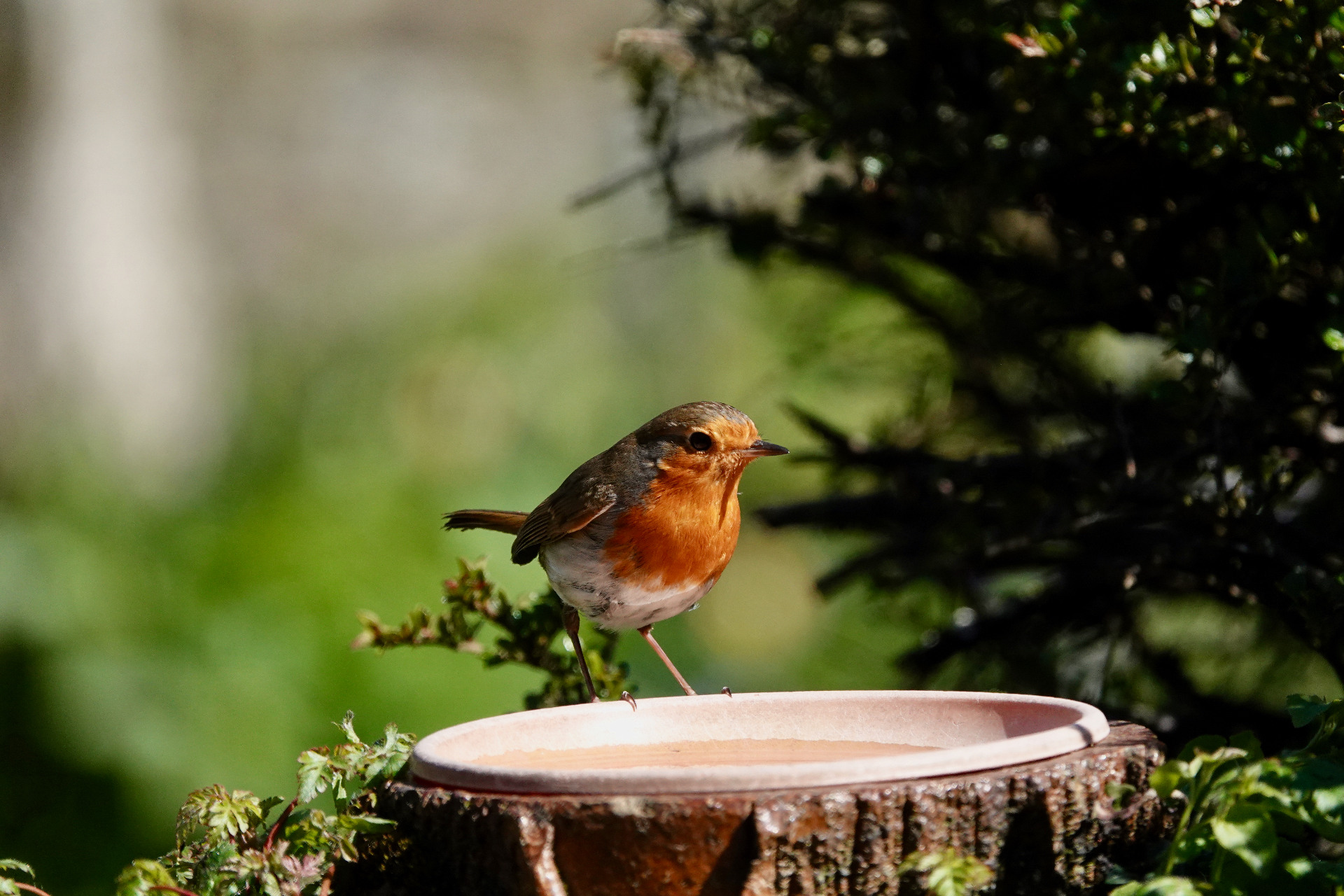
A Robin perched on the rim of a shallow terracotta water dish set on a log, with dappled sunlight and dark green foliage behind

Robin at the garden water dish

A shallow dish of clean water is one of the simplest and most valuable things you can offer garden birds. Robins bathe often - splashing water through their feathers keeps their plumage in top condition, which is essential for insulation in cold weather and for efficient flight year-round. Note the classic Robin field marks: the vivid orange-red face and breast bordered by a soft blue-grey stripe, warm olive-brown upperparts and the alert, upright stance. Top the dish up regularly, keep it clean, and put it somewhere with cover close by so birds can dart into a bush if a Sparrowhawk appears.

How it fits into North Yorkshire wildlife

This bird is part of the moving life of North Yorkshire, linking coast, woodland, farmland and gardens. Its success depends on enough food, safe nesting places and seasonal timing that still matches the landscape around it.

How it interacts with the wider landscape

Robins are ground feeders, dependent on healthy soil teeming with worms and invertebrates. A robin in your garden is a sign of good soil ecology.

Seasonal rhythm

Spring and early summer are often the most important months, when breeding, migration and food availability need to line up.

Where to look and what to notice

Look for movement, calls, feeding behaviour and the kind of habitat this bird depends on, such as hedgerow, garden, moorland edge or sea cliff.