
Back to the illustration

Wildlife - Birds

Ring-necked Parakeet

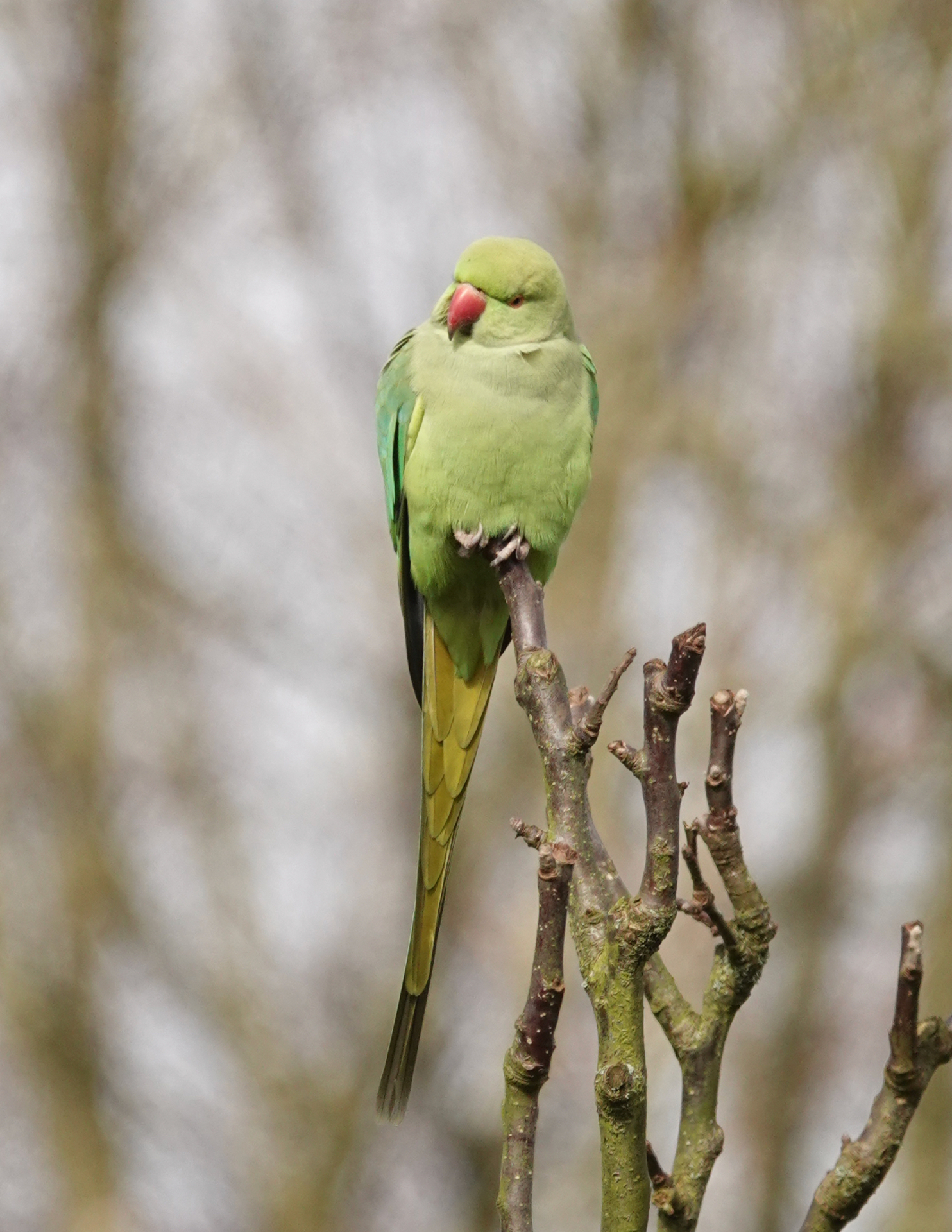
The Ring-necked (or Rose-ringed) Parakeet is a bright lime-green parrot with a long tapering tail, a hooked red beak and - in adult males - a black-and-pink ring around the neck. Once an escaped cage bird, it has now established large feral populations across the UK, especially in the south-east.

Species description adapted from RSPB and BTO references - see links below.

North Yorkshire species profileGo to Wildlife Identification
A bright green Ring-necked Parakeet perched on a bare branch

Birds - Photo ID

Ring-necked Parakeet - photo identification

The Ring-necked (or Rose-ringed) Parakeet is a bright lime-green parrot with a long tapering tail, a hooked red beak and - in adult males - a black-and-pink ring around the neck. Once an escaped cage bird, it has now established large feral populations across the UK, especially in the south-east.

Photographs by Rob - taken in and around the North York Moors.

A bright green Ring-necked Parakeet perched on a bare branch

Escaped parakeet - happy to be free again

This individual was almost certainly an escaped pet. Ring-necked Parakeets have been breeding wild in the UK since the 1970s and are now one of our most familiar non-native birds, particularly around London. They are noisy, social, and surprisingly hardy in British winters. They nest in tree cavities and can compete with native cavity-nesters such as Nuthatches, Starlings and woodpeckers - one of the reasons their spread is closely monitored.

How it fits into North Yorkshire wildlife

This bird is part of the moving life of North Yorkshire, linking coast, woodland, farmland and gardens. Its success depends on enough food, safe nesting places and seasonal timing that still matches the landscape around it.

How it interacts with the wider landscape

Its place in the food web connects insects, seeds, small mammals, shrubs, trees or fish with the larger rhythms of weather and migration.

Seasonal rhythm

Spring and early summer are often the most important months, when breeding, migration and food availability need to line up.

Where to look and what to notice

Look for movement, calls, feeding behaviour and the kind of habitat this bird depends on, such as hedgerow, garden, moorland edge or sea cliff.