
Back to the illustration

Wildlife - Insects

Red Admiral Butterfly

One of the most striking and instantly recognisable UK butterflies - velvety black wings crossed by bold scarlet-orange bands and finished with white spots at the wing tips. Once mainly a summer migrant from southern Europe, Red Admirals are now increasingly overwintering in the UK as our climate warms, and can be seen on the wing from early spring right through to late autumn.

Species description adapted from RSPB and BTO references - see links below.

North Yorkshire species profileGo to Wildlife Identification
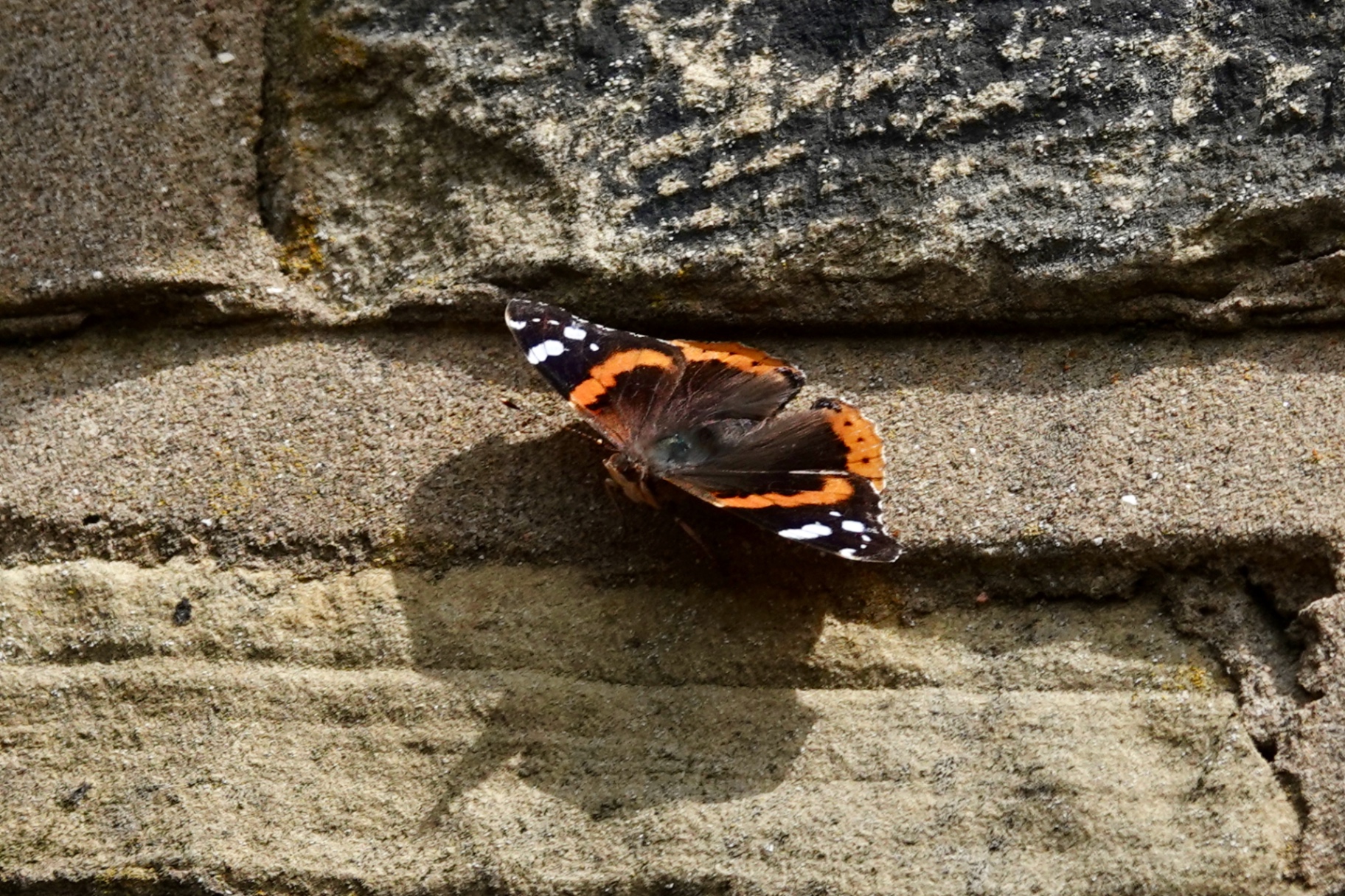
A Red Admiral butterfly with wings fully open resting on a sunlit sandstone garage wall, showing bold black wings with orange bands and white spots

Insects - Photo ID

Red Admiral Butterfly - photo identification

One of the most striking and instantly recognisable UK butterflies - velvety black wings crossed by bold scarlet-orange bands and finished with white spots at the wing tips. Once mainly a summer migrant from southern Europe, Red Admirals are now increasingly overwintering in the UK as our climate warms, and can be seen on the wing from early spring right through to late autumn.

Photographs by Rob - taken in and around the North York Moors.

A Red Admiral butterfly with wings fully open resting on a sunlit sandstone garage wall, showing bold black wings with orange bands and white spots

Red Admiral basking on the garage wall

Wings held wide open like this means the butterfly is basking - warming its flight muscles in the sun before taking off again. Note the diagnostic features: velvety black ground colour, a broad red-orange band across each forewing, another curving band around each hindwing, and a scatter of crisp white spots near the wing tips. This is the classic 'unmistakable' Red Admiral view. Warm south-facing walls and stones are favourite basking spots on cooler days.

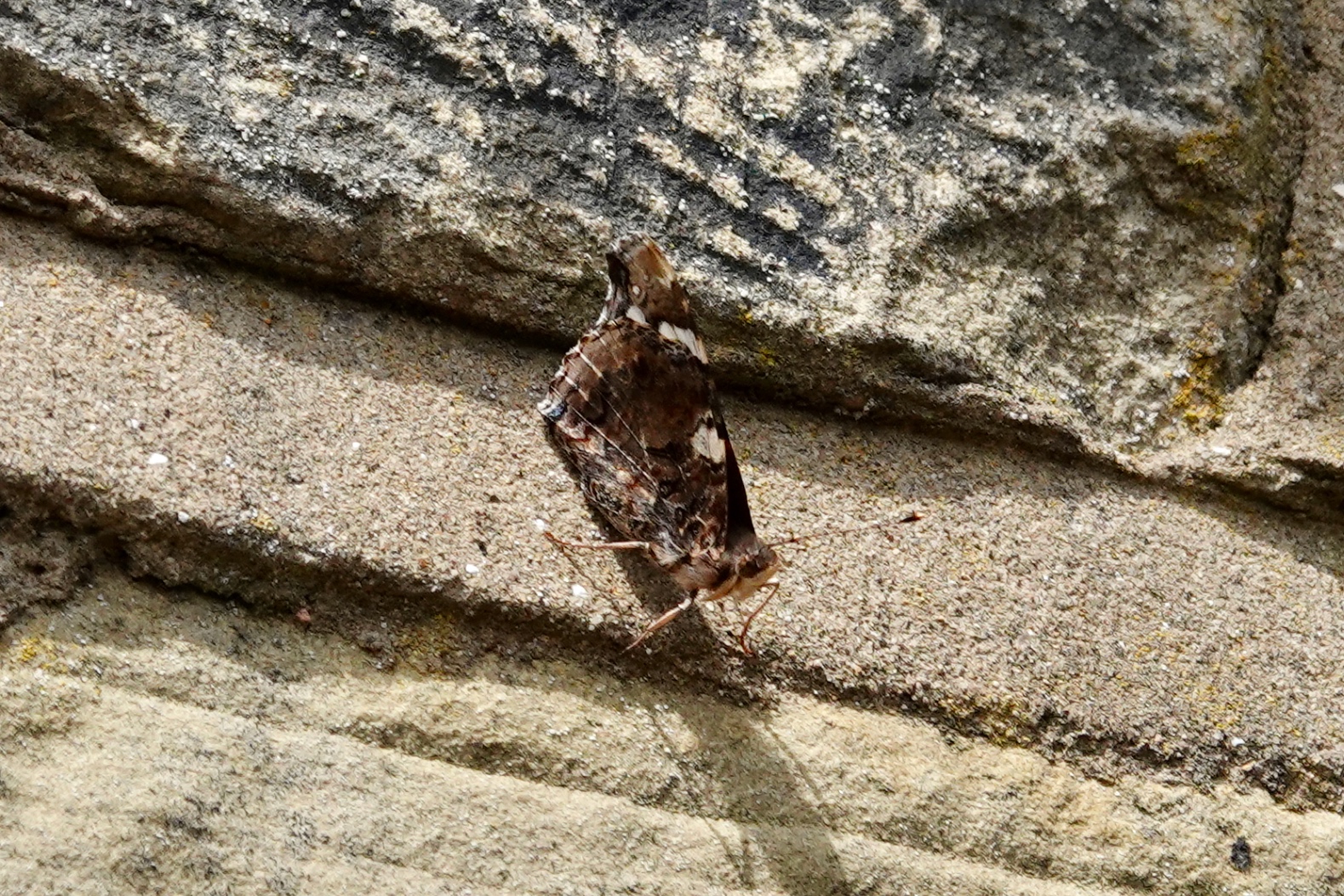
A Red Admiral butterfly with wings closed on a sandstone wall, showing intricate brown, grey and cream underwing patterning that blends into the stone

Wings closed - perfectly camouflaged against stone

The same butterfly moments later with its wings folded up. The underside is a completely different world - marbled browns, greys and creams that mimic bark and weathered stone almost perfectly. This dual identity is a brilliant survival strategy: dazzling and unmistakable when the wings are open in flight or basking, then near-invisible the moment they close on a wall, tree trunk or rock. Red Admiral caterpillars, like Small Tortoiseshells, feed on stinging nettles - another good reason to leave a wild nettle patch in a sunny corner of the garden.

How it fits into North Yorkshire wildlife

This insect is one of the small workers keeping North Yorkshire alive. Insects pollinate flowers, recycle nutrients and feed birds, bats and other wildlife, so even tiny species can have an outsized effect.

How it interacts with the wider landscape

It supports pollination, pest control or freshwater balance, and in turn becomes food for birds, mammals and amphibians.

Seasonal rhythm

Warmth, flowering cycles and clean water or shelter all affect how strongly this species can appear from one season to the next.

Where to look and what to notice

Look around flowers, ponds, field margins and sunny sheltered spots where insects can feed, hunt or breed.