
Back to the illustration

Wildlife - Mammals

Rabbit

Rabbits are familiar grazers of fields, banks and rough grassland, shaping the land with both their feeding and their burrows.

Species description adapted from RSPB and BTO references - see links below.

Status: Widespread, but locally variableNorth Yorkshire species profileGo to Wildlife Identification
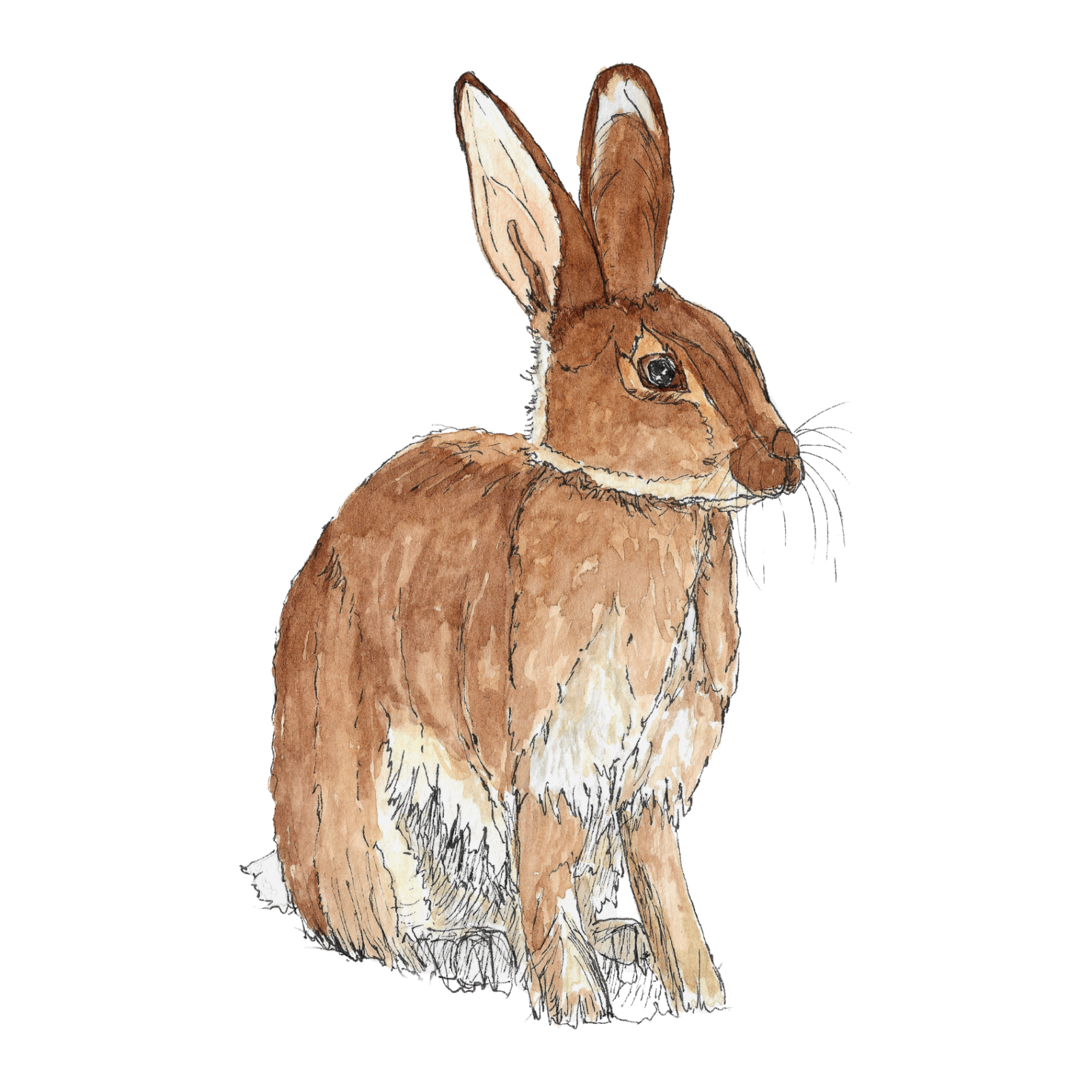
Watercolour illustration of a rabbit sitting upright

Mammals - Photo ID

Rabbit - photo identification

The European Rabbit is a small grey-brown grazing mammal with long ears, a short white tail and powerful hind legs. Once abundant across the UK countryside, rabbit numbers have fallen sharply in recent decades due to disease (myxomatosis and RHD) and habitat change, but they remain a familiar sight on grassland, dunes, field edges and scrubby corners.

Photographs by Rob - taken in and around the North York Moors.

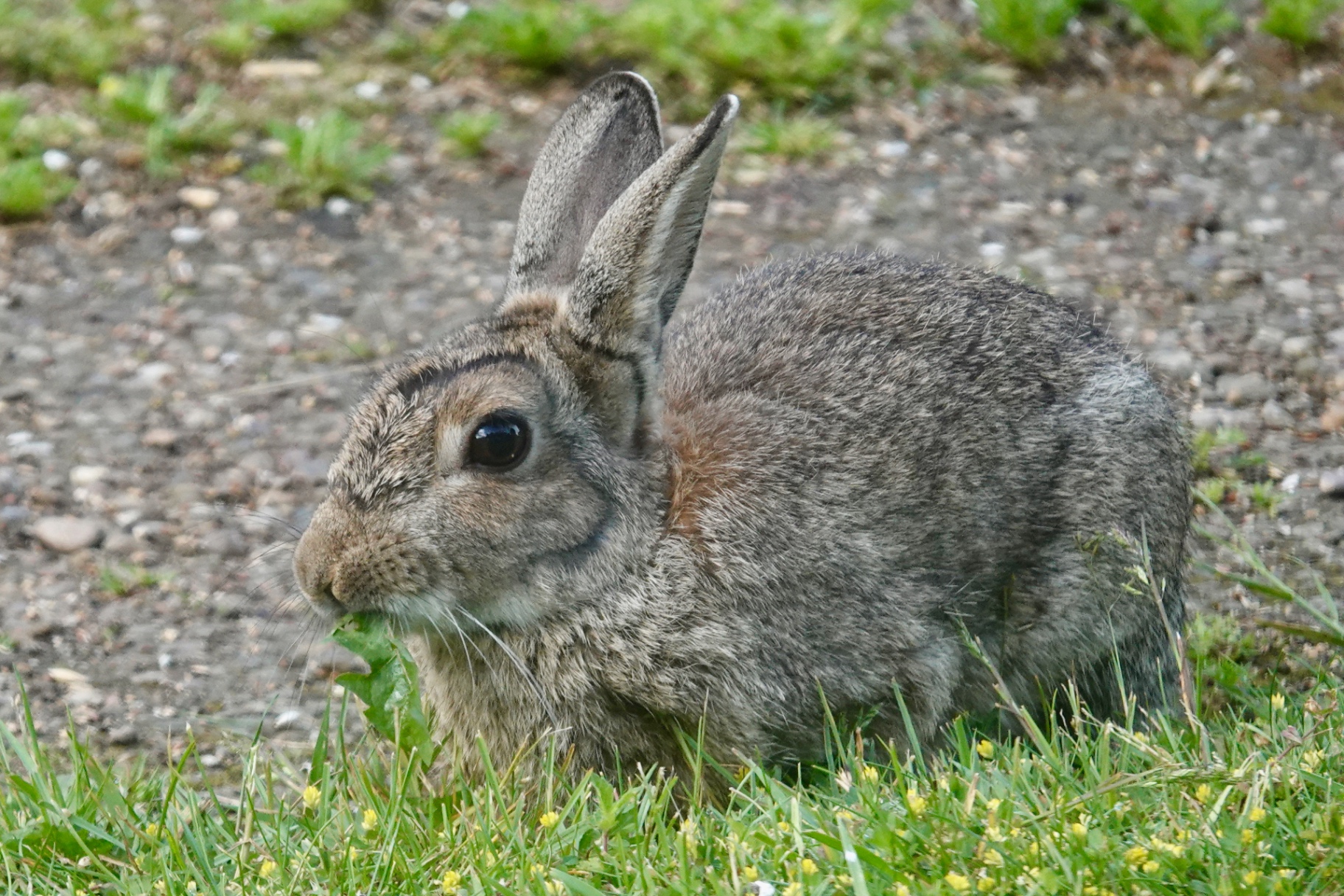
A wild rabbit sitting in short grass chewing on a dandelion leaf

Rabbit tucking into a dandelion

Dandelions are a rabbit favourite - leaves, flowers and all. Rabbits are pure grazers, feeding on a wide range of grasses, wildflowers and herbs, and their close cropping helps create the short turf that many rare wildflowers, ground-nesting birds and butterflies depend on. Notice the classic rabbit shape: compact body, upright ears listening in every direction, and that large dark eye positioned high on the side of the head for near 360-degree vision - essential when almost everything larger than you wants to eat you.

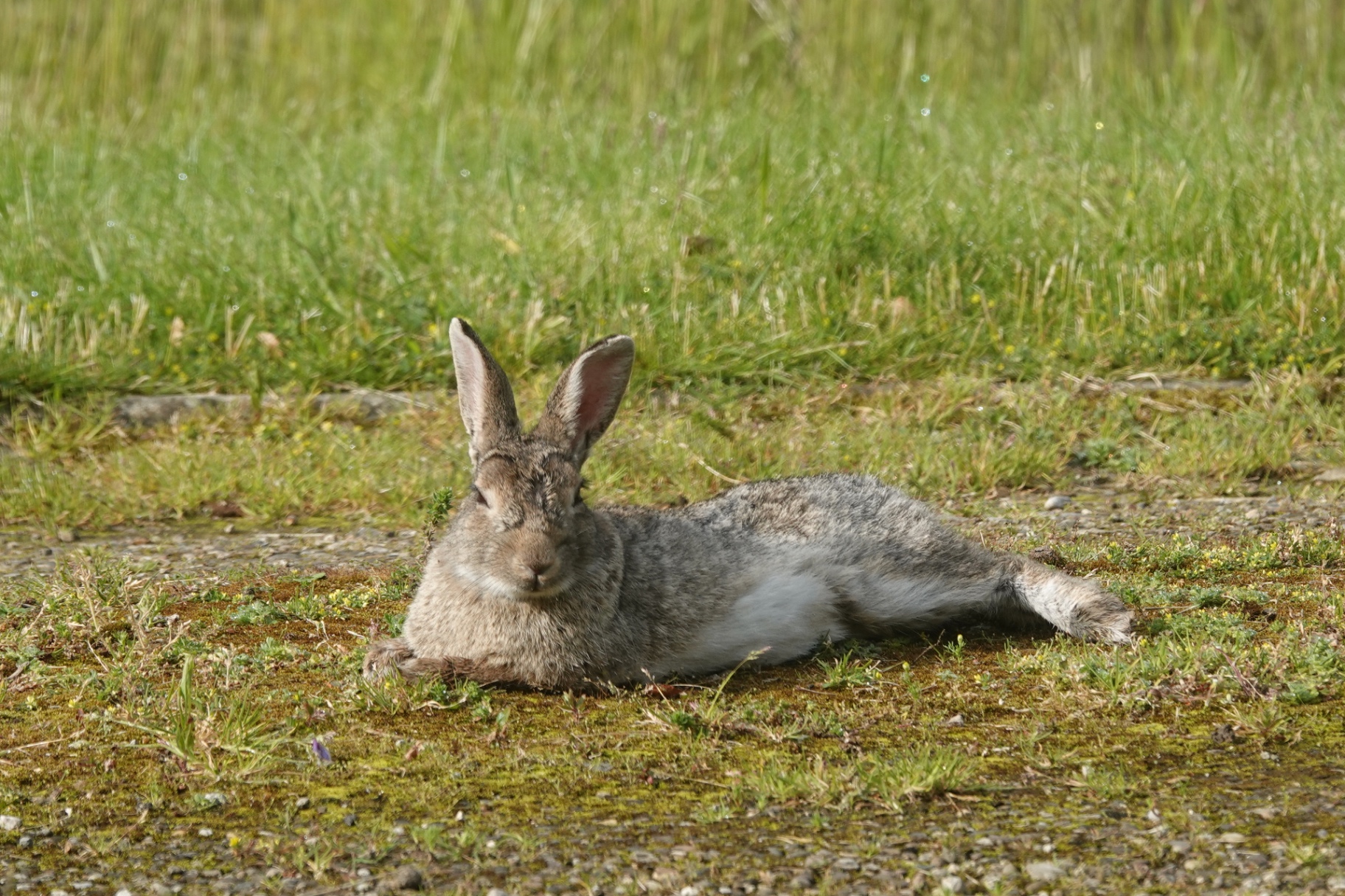
A wild rabbit lying stretched out on a patch of moss in warm sunshine with eyes half closed

Rabbit sunbathing - stretched out and relaxed

A rabbit lying flat out like this - back legs stretched behind, eyes half closed - is a wonderful sign of a truly relaxed animal. Rabbits will 'flop' onto their side or belly to sunbathe and rest when they feel safe, often in a favourite spot near the entrance to their burrow so they can bolt underground at the first hint of danger. It is a reminder that wild spaces are not just about survival - given peace and quiet, wildlife rests, plays and enjoys the sun just as we do.

How it fits into North Yorkshire wildlife

Rabbits are part of the short-grass story of North Yorkshire, especially on banks, rough pasture, dunes and field edges where grazing and burrowing reshape the ground. They are familiar animals, but they have a surprisingly strong effect on the habitats around them.

How it interacts with the wider landscape

By cropping grass and digging warrens, rabbits create short turf, bare patches and shelter that other plants and animals can use. They are also a key prey species for foxes, stoats, owls and other predators.

Seasonal rhythm

They are active through the year, with the busiest breeding periods in spring and summer when young rabbits become a major food source for many predators.

Where to look and what to notice

Look for clipped grass, burrow entrances, droppings and quick dashes into cover where scrub, banks and open feeding ground meet.