
Back to the illustration

Wildlife - Birds

Pheasant

A long-tailed gamebird, brought to Britain by the Romans and now one of our most familiar countryside birds. Males are unmistakable - iridescent copper and bottle-green with a red face wattle and a long barred tail. Females (hens) are a beautifully camouflaged mottled brown, which they need for nesting on the ground.

Species description adapted from RSPB and BTO references - see links below.

North Yorkshire species profileGo to Wildlife Identification
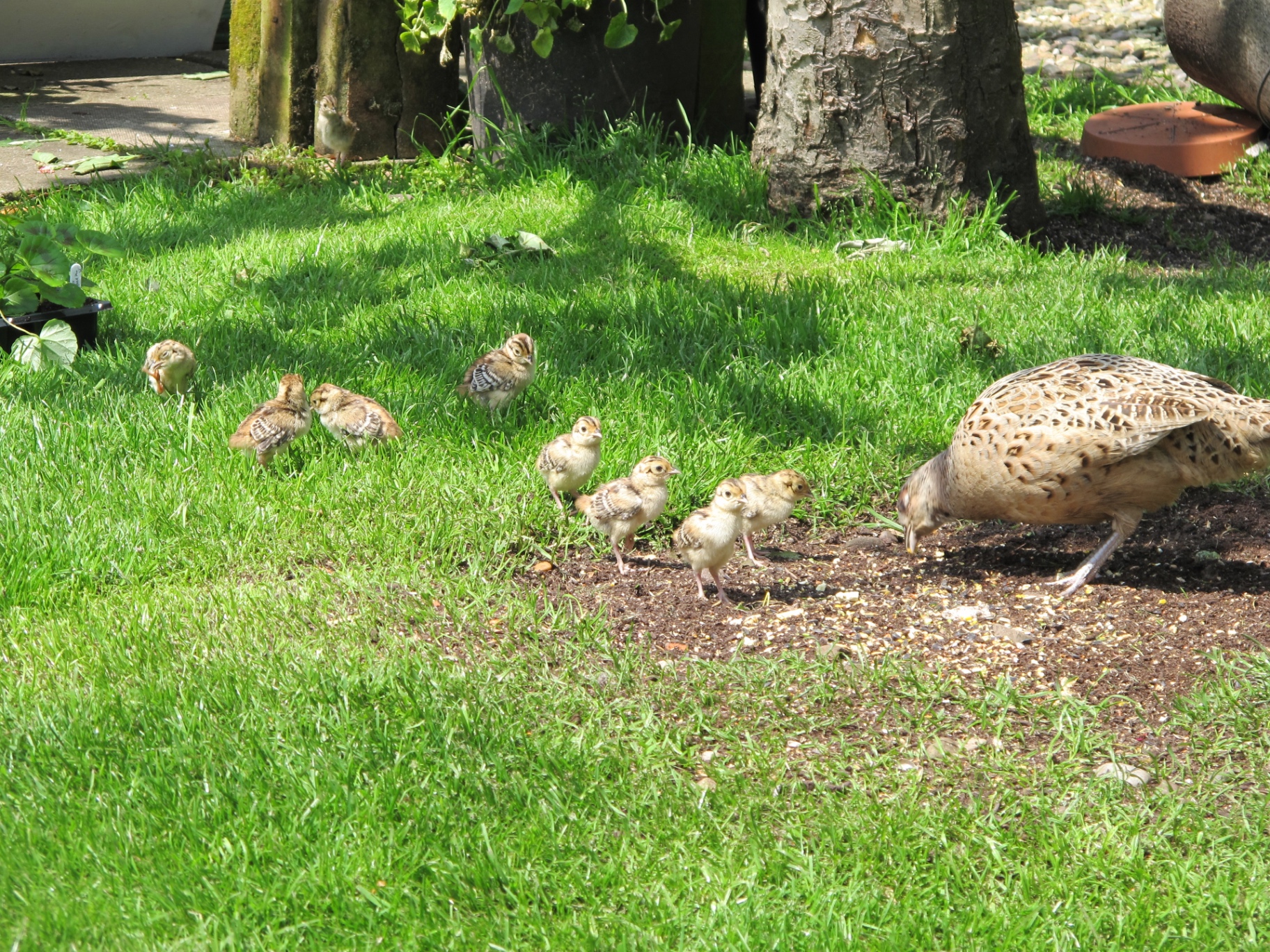
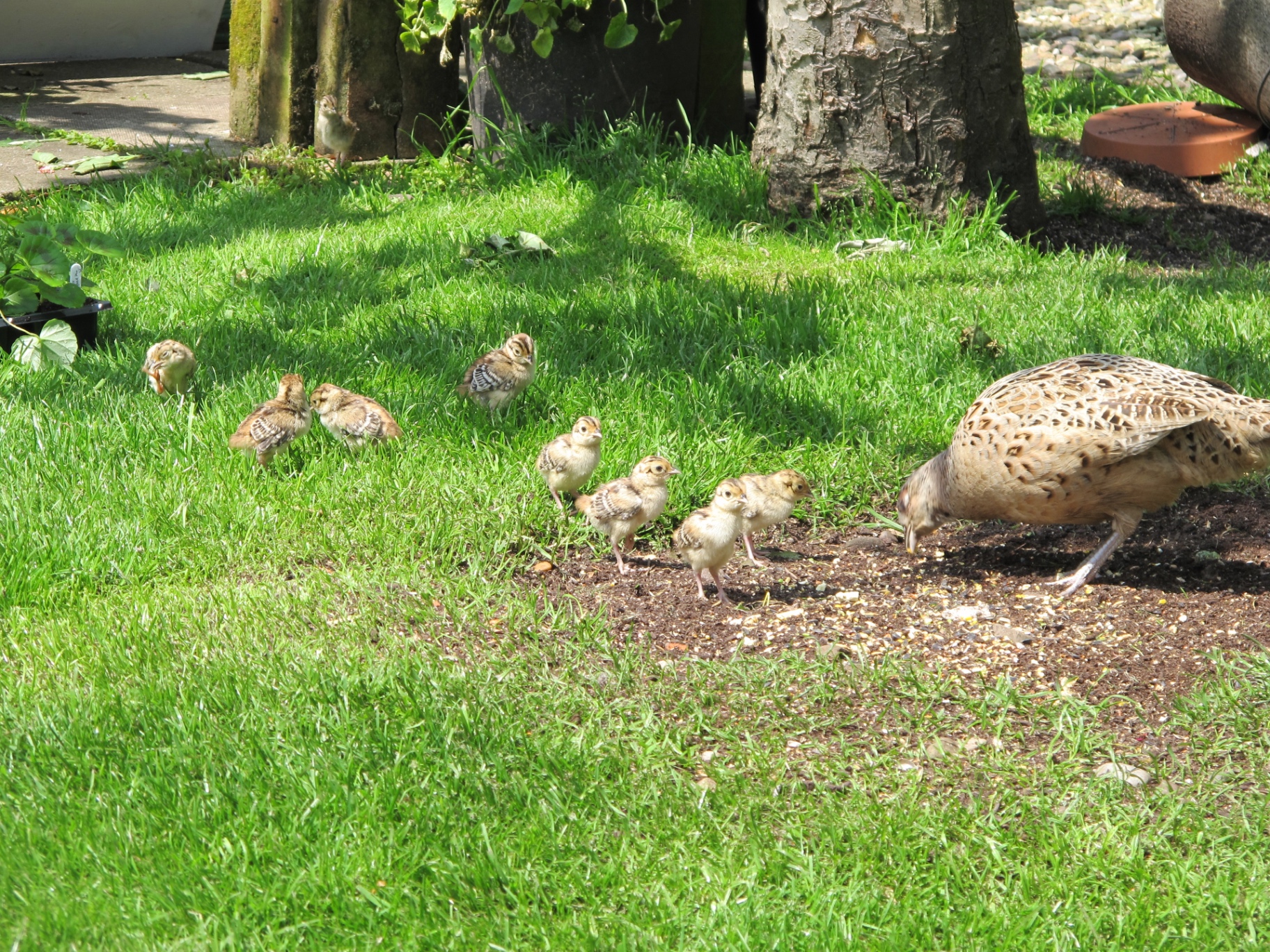
A female pheasant leading a brood of small striped chicks across a sunny lawn

Birds - Photo ID

Pheasant - photo identification

A long-tailed gamebird, brought to Britain by the Romans and now one of our most familiar countryside birds. Males are unmistakable - iridescent copper and bottle-green with a red face wattle and a long barred tail. Females (hens) are a beautifully camouflaged mottled brown, which they need for nesting on the ground.

Photographs by Rob - taken in and around the North York Moors.

A female pheasant leading a brood of small striped chicks across a sunny lawn

Hen pheasant with her brood of chicks

Female pheasants nest on the ground in long grass, hedge bottoms or field margins, laying 8-15 eggs which she incubates for about 24 days. The chicks are precocial - up and running within hours of hatching - and follow their mother across gardens, tracks and grassland for the first few weeks. She calls them constantly, both to keep the family together and to warn of danger. Ground-nesting birds like pheasants are extremely vulnerable to disturbance and to being caught by dogs off the lead between March and July, so keeping dogs on a short lead near hedges and rough grass during the breeding season really matters.

A hen pheasant on bare earth surrounded by eight tiny striped chicks pecking on a sunny lawn

The whole brood together in the garden

A wider view of the same kind of family group - one watchful hen and a scattering of tiny stripy chicks, each one no bigger than a golf ball in the first days. The pale head-stripe and dark eye-stripe are classic gamebird chick markings that break up their outline in dappled grass. Broods this size (eight or more) are typical, but survival rates are low - cold wet weather, predators and disturbance take a heavy toll, so it is common to see a hen with fewer chicks each week.

How it fits into North Yorkshire wildlife

This bird is part of the moving life of North Yorkshire, linking coast, woodland, farmland and gardens. Its success depends on enough food, safe nesting places and seasonal timing that still matches the landscape around it.

How it interacts with the wider landscape

Its place in the food web connects insects, seeds, small mammals, shrubs, trees or fish with the larger rhythms of weather and migration.

Seasonal rhythm

Spring and early summer are often the most important months, when breeding, migration and food availability need to line up.

Where to look and what to notice

Look for movement, calls, feeding behaviour and the kind of habitat this bird depends on, such as hedgerow, garden, moorland edge or sea cliff.