
Back to the illustration

Wildlife - Birds

Peregrine Falcon

The Peregrine Falcon is the world's fastest animal, reaching over 200mph in a hunting stoop. Blue-grey above with a barred white underside and a bold black 'moustache' below the eye, it is a powerful, broad-shouldered falcon of cliffs, quarries and increasingly city centres.

Species description adapted from RSPB and BTO references - see links below.

North Yorkshire species profileGo to Wildlife Identification
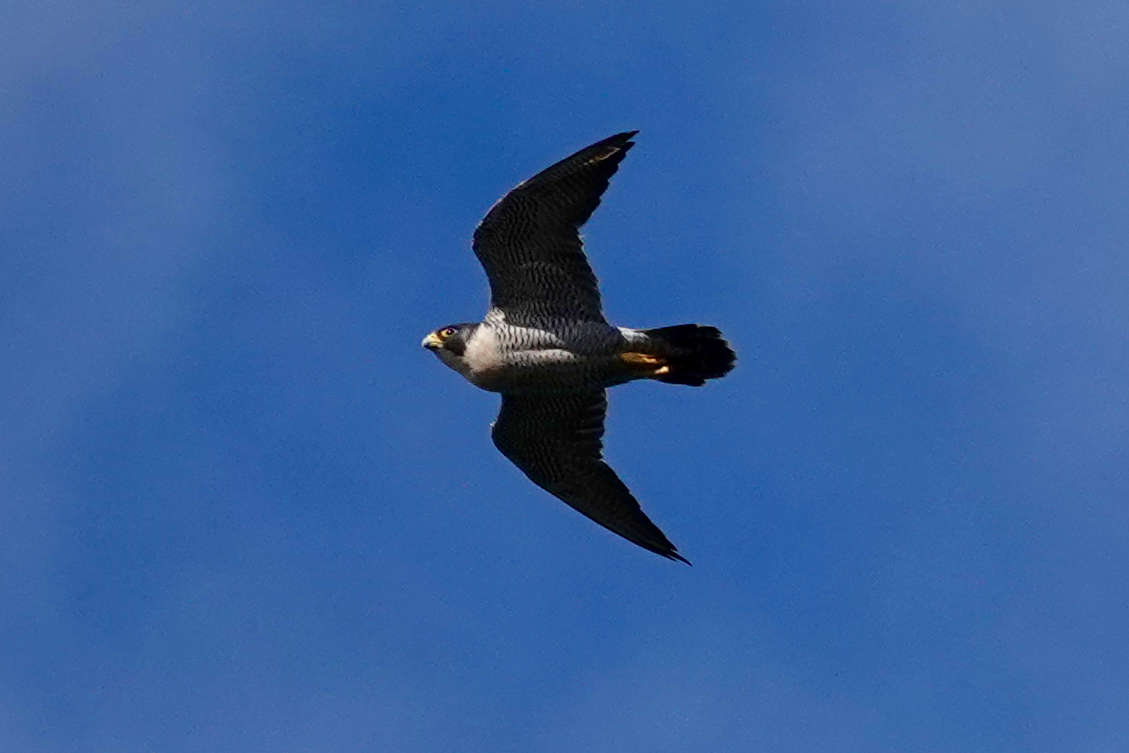
A Peregrine Falcon in flight against a deep blue sky at Bempton Cliffs

Birds - Photo ID

Peregrine Falcon - photo identification

The Peregrine Falcon is the world's fastest animal, reaching over 200mph in a hunting stoop. Blue-grey above with a barred white underside and a bold black 'moustache' below the eye, it is a powerful, broad-shouldered falcon of cliffs, quarries and increasingly city centres.

Photographs by Rob - taken in and around the North York Moors.

A Peregrine Falcon in flight against a deep blue sky at Bempton Cliffs

Peregrine Falcon at Bempton Cliffs

Bempton Cliffs on the Yorkshire coast is a brilliant place to see Peregrines hunting along the seabird colonies. Note the slate-grey upperparts, sharply pointed wings and the dark hood with its distinctive moustachial stripe. Peregrines have made a remarkable recovery in the UK since the DDT crash of the mid-20th century and are now found across much of the country, nesting on sea cliffs, crags and tall buildings.

How it fits into North Yorkshire wildlife

This bird is part of the moving life of North Yorkshire, linking coast, woodland, farmland and gardens. Its success depends on enough food, safe nesting places and seasonal timing that still matches the landscape around it.

How it interacts with the wider landscape

Its place in the food web connects insects, seeds, small mammals, shrubs, trees or fish with the larger rhythms of weather and migration.

Seasonal rhythm

Spring and early summer are often the most important months, when breeding, migration and food availability need to line up.

Where to look and what to notice

Look for movement, calls, feeding behaviour and the kind of habitat this bird depends on, such as hedgerow, garden, moorland edge or sea cliff.