
Back to the illustration

Wildlife - Birds

Magpie

A bold, unmistakable corvid - crisp black-and-white plumage with a long tail that flashes iridescent blue, green and purple in good light. Magpies are intelligent, sociable and curious, and you'll often hear their loud rattling chatter before you see them.

Species description adapted from RSPB and BTO references - see links below.

North Yorkshire species profileGo to Wildlife Identification
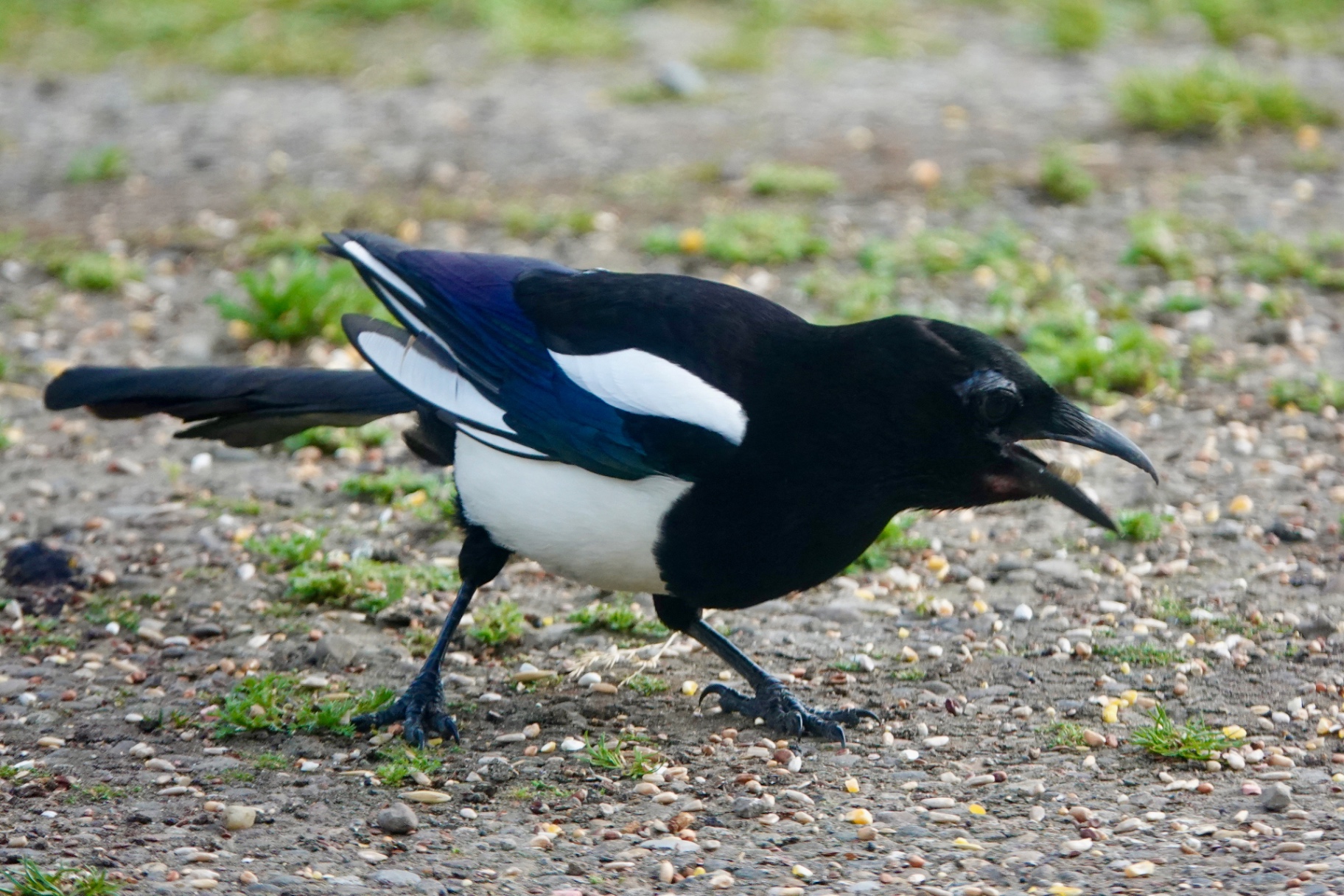
A Magpie on a gravel path with its beak open, eating

Birds - Photo ID

Magpie - photo identification

A bold, unmistakable corvid - crisp black-and-white plumage with a long tail that flashes iridescent blue, green and purple in good light. Magpies are intelligent, sociable and curious, and you'll often hear their loud rattling chatter before you see them.

Photographs by Rob - taken in and around the North York Moors.

A Magpie on a gravel path with its beak open, eating

Magpie eating on the ground

Up close the 'black' on a Magpie is anything but - the wings shimmer deep blue and purple, the tail flashes bottle-green, and the white shoulder patches and belly are razor-sharp. They forage on the ground for insects, worms, seeds and scraps, and that loud chacker-chacker-chacker call is a classic countryside alarm signal.

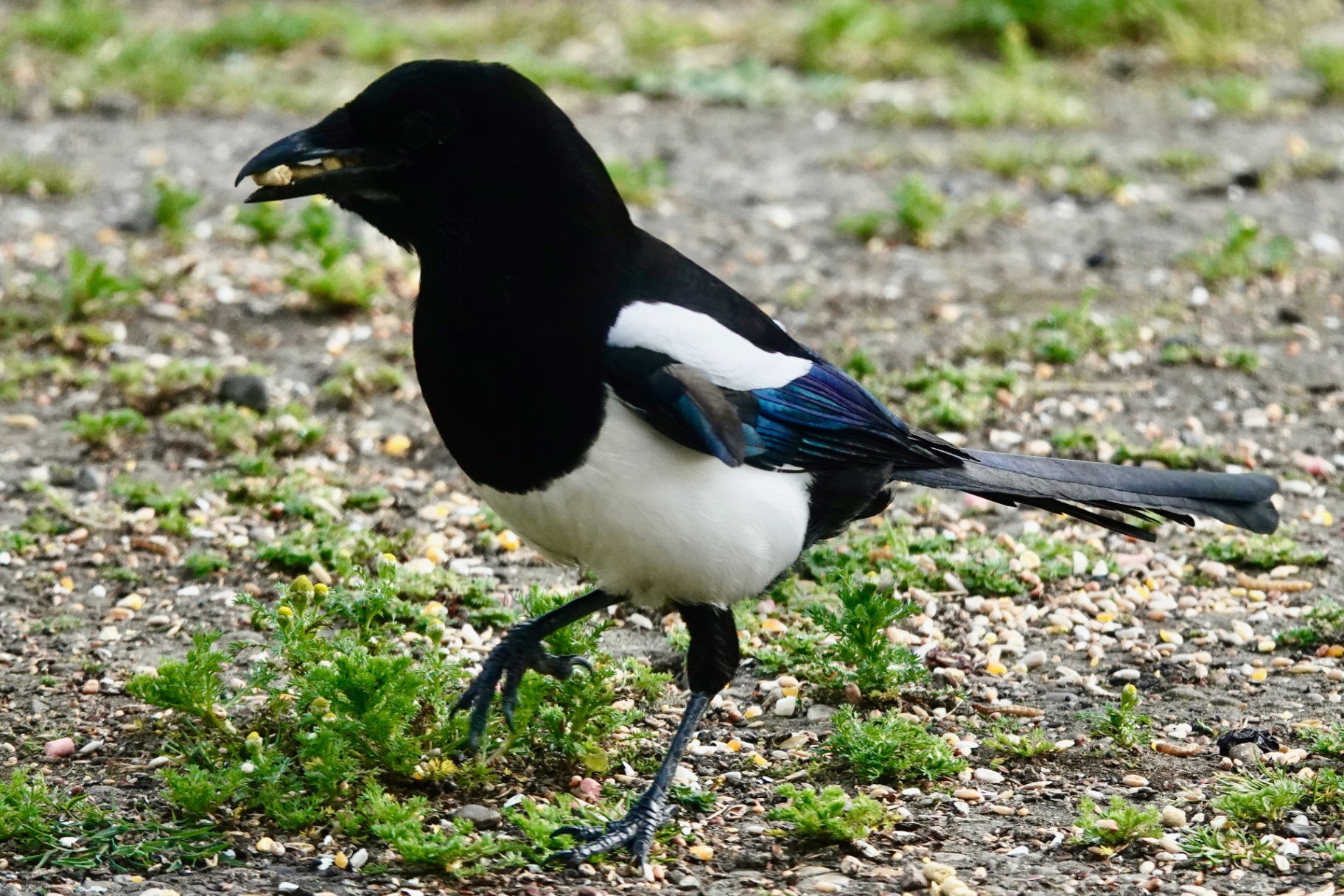
A Magpie walking on gravel with food held in its beak

Carrying a beakful of food

Magpies are members of the crow family (Corvidae) and among the most intelligent birds in Britain - capable of using tools, recognising themselves in mirrors and caching food for later. They build big domed stick nests with a roof, often high in a tree, and are fiercely loyal to a single mate for life.

How it fits into North Yorkshire wildlife

This bird is part of the moving life of North Yorkshire, linking coast, woodland, farmland and gardens. Its success depends on enough food, safe nesting places and seasonal timing that still matches the landscape around it.

How it interacts with the wider landscape

Its place in the food web connects insects, seeds, small mammals, shrubs, trees or fish with the larger rhythms of weather and migration.

Seasonal rhythm

Spring and early summer are often the most important months, when breeding, migration and food availability need to line up.

Where to look and what to notice

Look for movement, calls, feeding behaviour and the kind of habitat this bird depends on, such as hedgerow, garden, moorland edge or sea cliff.