
Back to the illustration

Wildlife - Mammals

Grey Squirrel

An introduced North American mammal now widespread across England and Wales. Grey-brown above, pale below, with a long bushy tail and prominent ears. Agile, bold and a constant visitor to garden feeders - and an occasional raider of nest boxes.

Species description adapted from RSPB and BTO references - see links below.

North Yorkshire species profileGo to Wildlife Identification
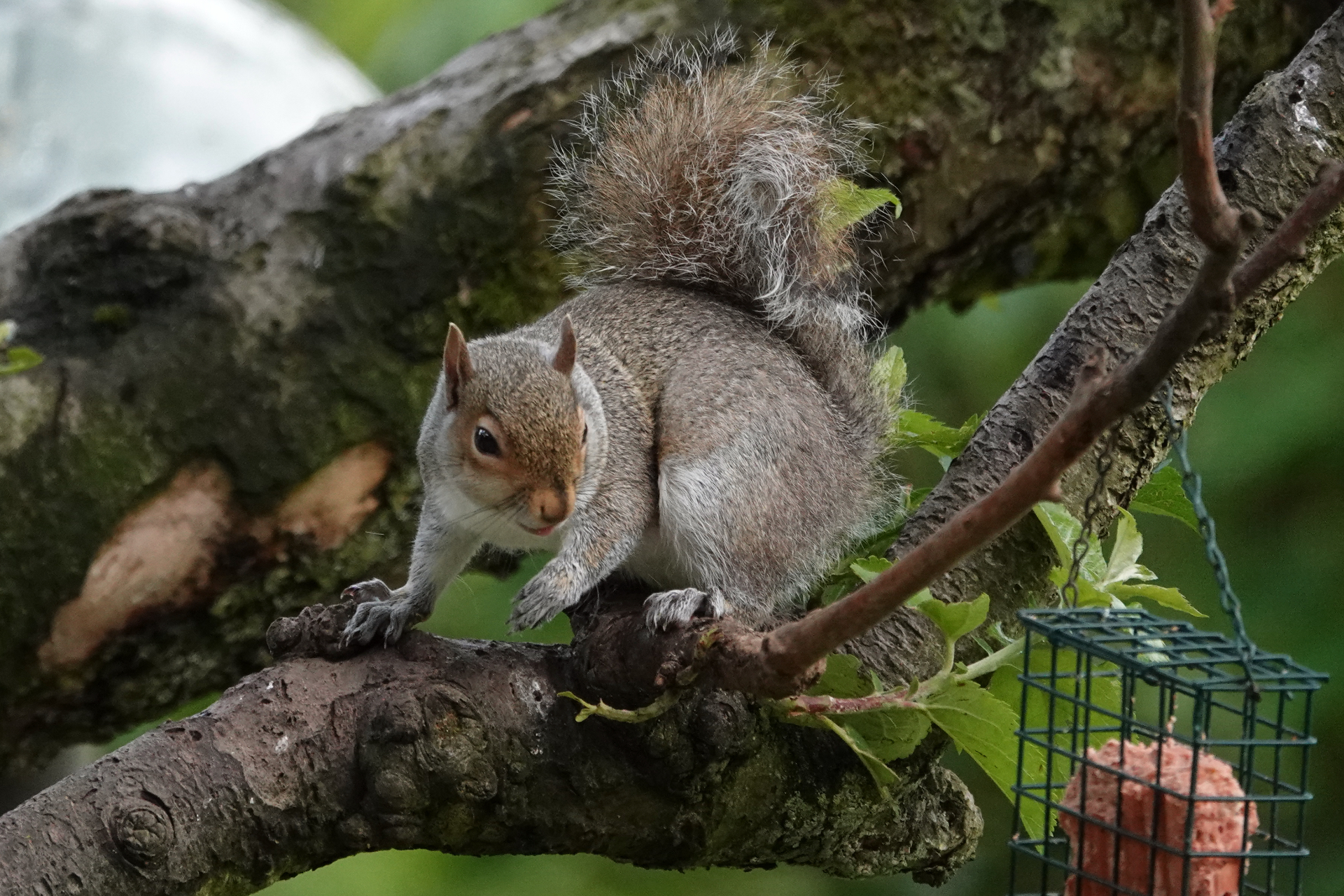
A Grey Squirrel crouched on an apple tree branch beside a suet feeder

Mammals - Photo ID

Grey Squirrel - photo identification

An introduced North American mammal now widespread across England and Wales. Grey-brown above, pale below, with a long bushy tail and prominent ears. Agile, bold and a constant visitor to garden feeders - and an occasional raider of nest boxes.

Photographs by Rob - taken in and around the North York Moors.

A Grey Squirrel crouched on an apple tree branch beside a suet feeder

Grey Squirrel raiding the apple tree

A typical garden Grey - grey body with warm rusty tones along the flanks and face, white underside, and that big silvery tail used for balance and signalling. They are brilliant climbers and will work out any feeder given time. Sadly they out-compete our native Red Squirrel and carry squirrelpox, which is harmless to them but devastating to Reds; this is why Reds now survive mainly in the far north of England, Scotland and a few island strongholds.

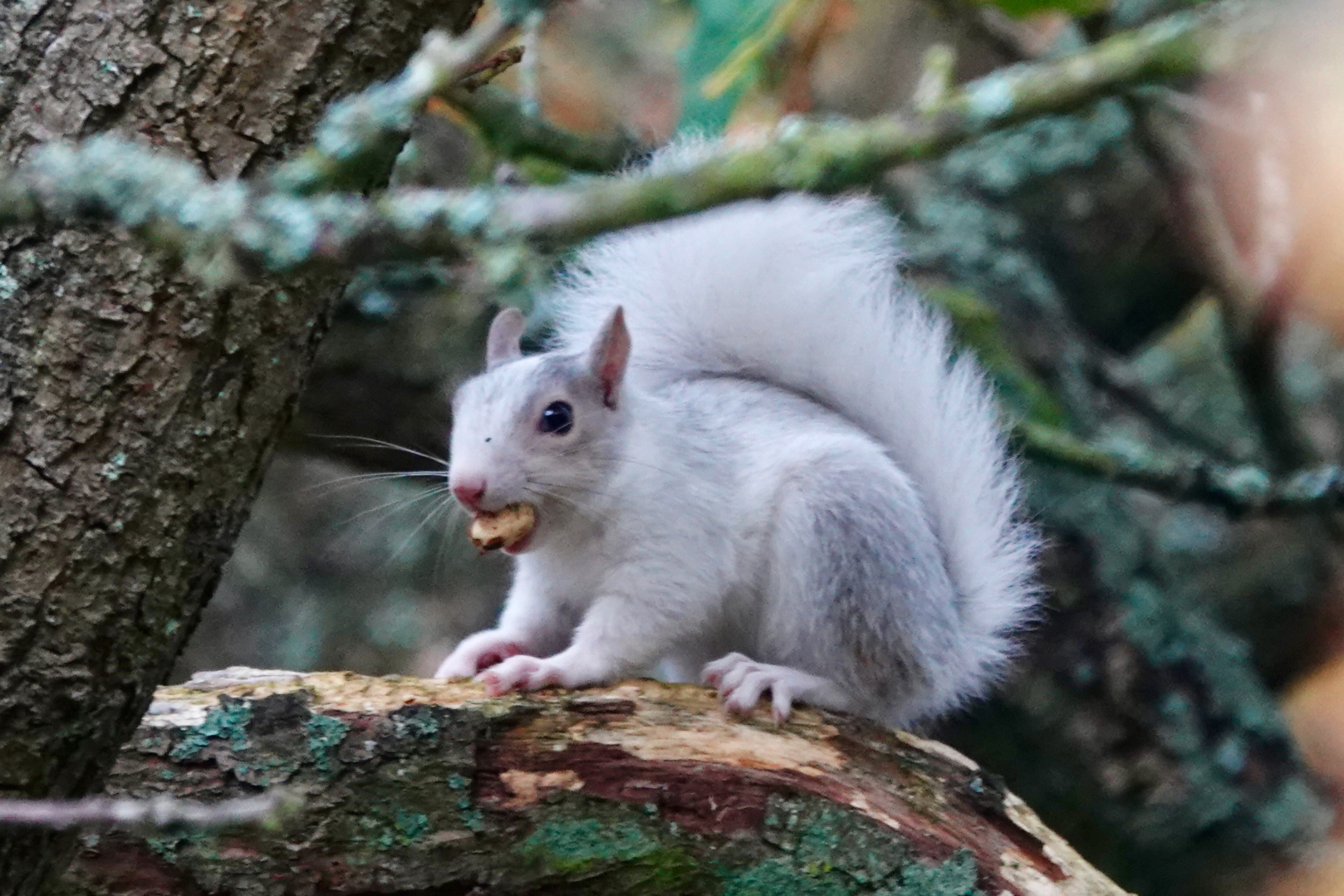
A pure-white leucistic Grey Squirrel eating a nut on a lichen-covered branch

'Snowie' - a leucistic Grey Squirrel

This striking white squirrel is not an albino - the eyes are dark, not pink. It is leucistic, a genetic condition that reduces pigment in the fur but not in the eyes. Leucistic Greys turn up occasionally across the UK and tend to be very conspicuous to predators, so seeing the same individual repeatedly is always a small wildlife event.

How it fits into North Yorkshire wildlife

This mammal helps shape North Yorkshire from the ground up, whether by grazing, digging, dispersing seed or feeding larger predators. It is part of the quiet structure of the countryside, not just a sighting for lucky visitors.

How it interacts with the wider landscape

It interacts with soil, vegetation and predator-prey balance, helping shape what other species can live nearby.

Seasonal rhythm

Dawn, dusk and the change between seasons often reveal this species best, especially when food and cover shift across the landscape.

Where to look and what to notice

Look for tracks, droppings, feeding signs, paths through vegetation and the edges of habitats where cover meets open ground.