
Back to the illustration

Wildlife - Birds

Gannet

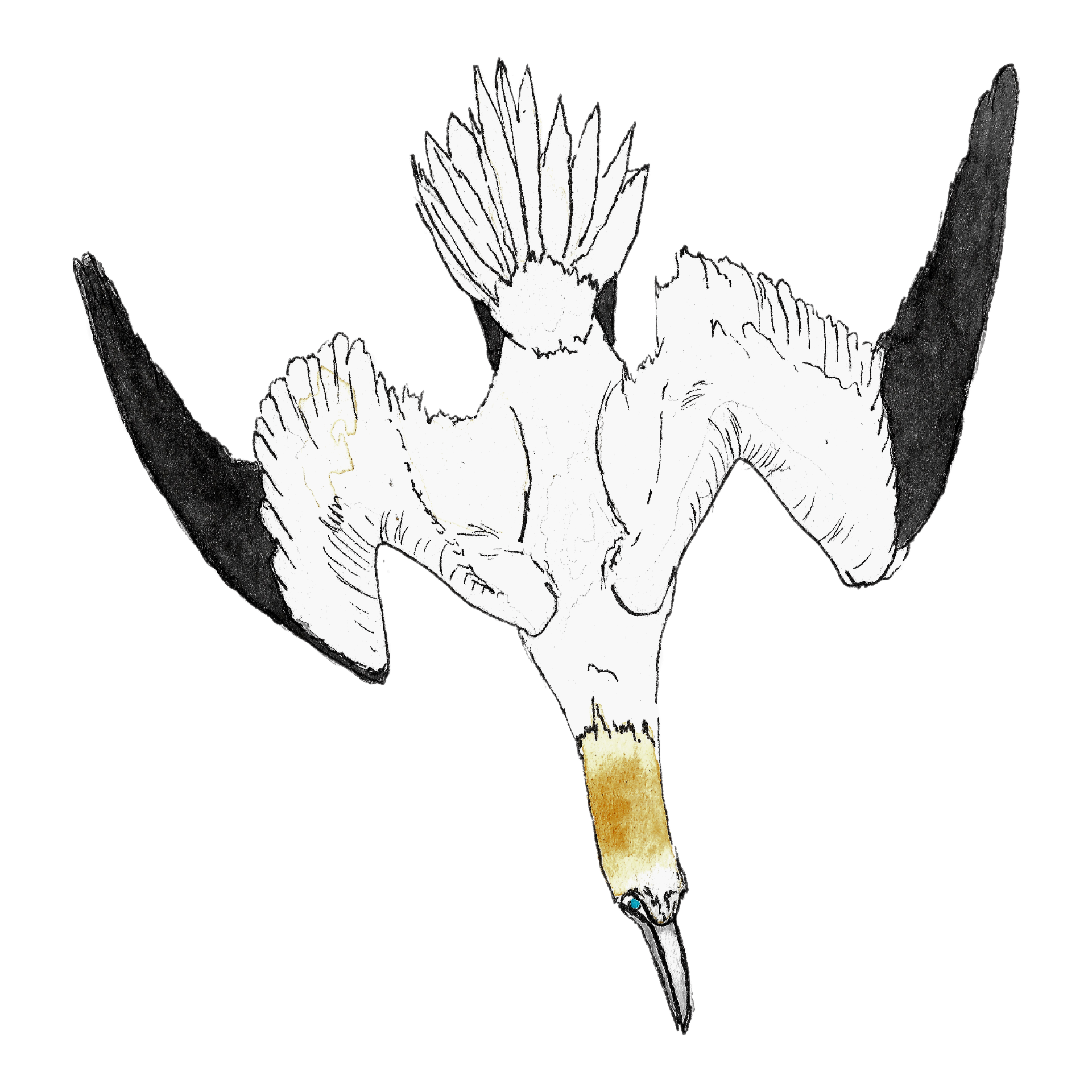
Gannets are the UK's largest seabird, with a wingspan of nearly 2 metres. They hunt by plunging into the sea from heights of up to 30 metres, reaching speeds of 60mph on impact.

Species description adapted from RSPB and BTO references - see links below.

Status: AmberNorth Yorkshire species profileGo to Wildlife Identification
Watercolour illustration of a gannet diving with wings spread

Birds - Photo ID

Northern Gannet - photo identification

The UK's largest seabird - brilliant white with black wingtips, a butter-yellow head and piercing blue-rimmed eyes. A 2-metre wingspan and a dagger-like beak make the Gannet unmistakable. Bempton Cliffs on the Yorkshire coast holds the largest mainland gannetry in the UK, with thousands of pairs nesting on the chalk ledges from March to October.

Photographs by Rob - taken in and around the North York Moors.

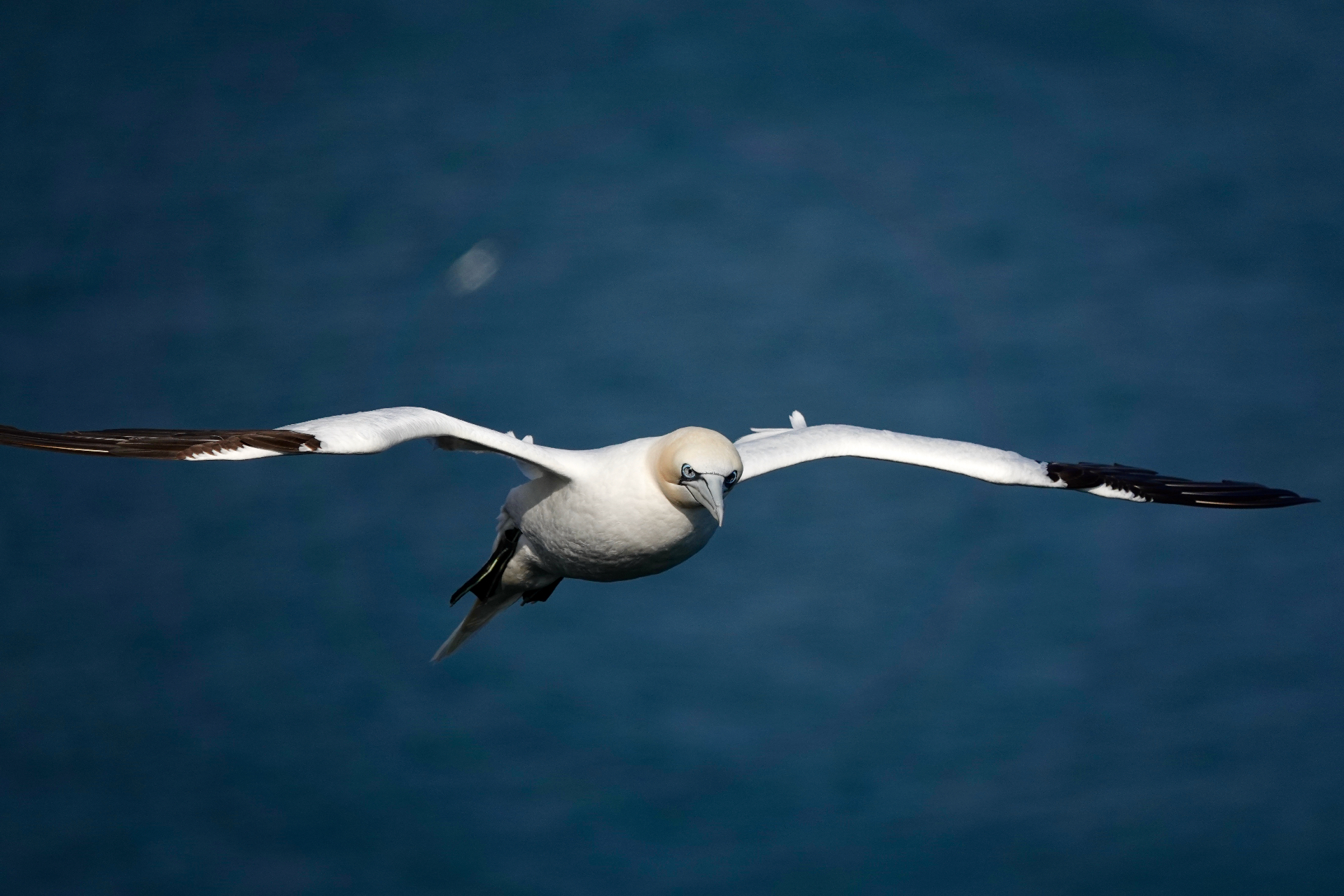
A Northern Gannet gliding low over a dark blue sea

In flight - 2-metre wingspan, black-tipped wings

Gannets glide for hours on stiff, narrow wings, scanning the sea for shoals of mackerel and herring. When they spot prey they fold their wings back and plunge-dive from 30 metres up, hitting the water at over 60mph. Air sacs in the face and chest cushion the impact.

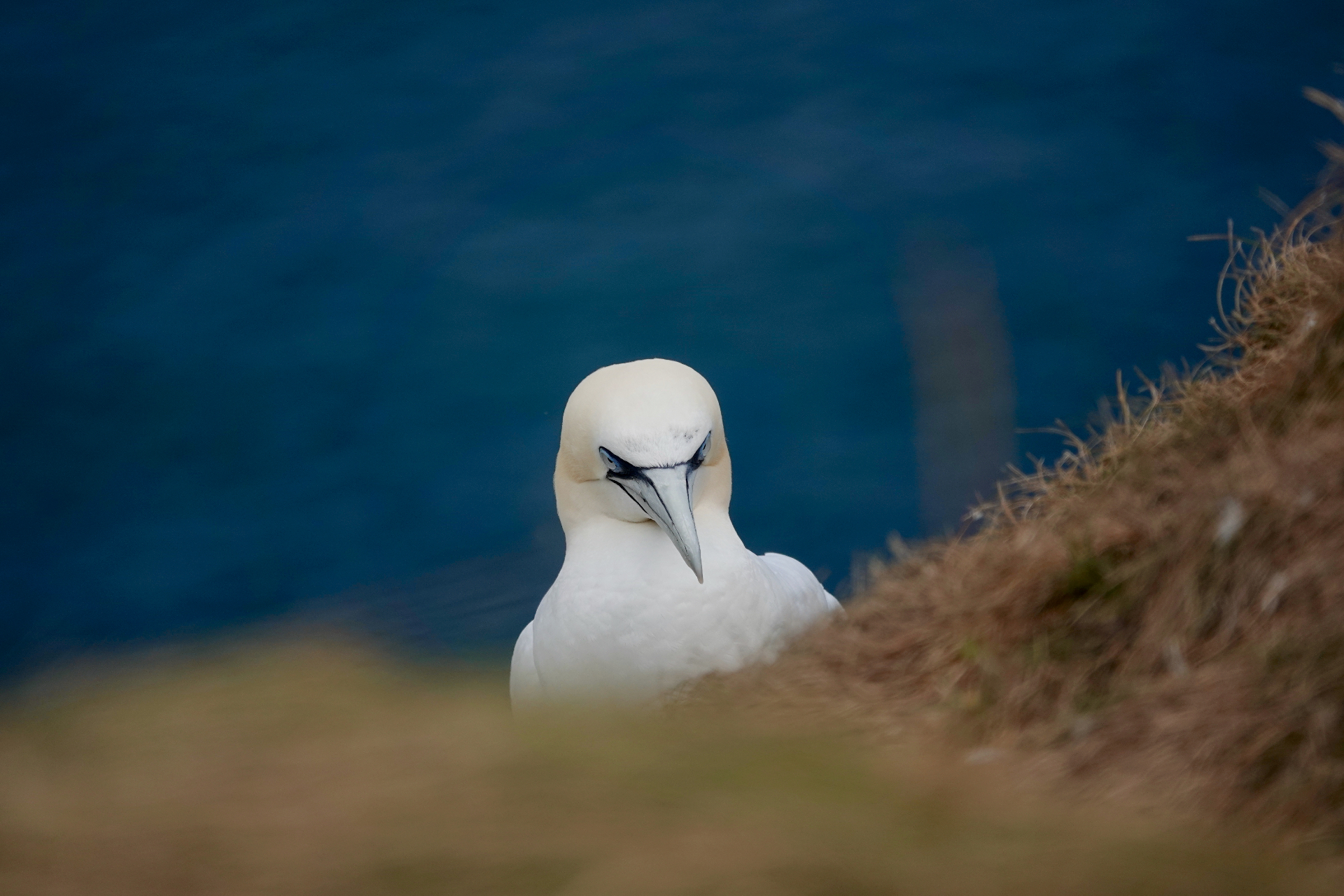
A Northern Gannet sitting on grassy clifftop at Bempton

On the cliff at RSPB Bempton

Bempton Cliffs is the only mainland gannet colony in England. Pairs return to the exact same ledge year after year and mate for life, greeting each other with elaborate bill-fencing displays after every fishing trip.

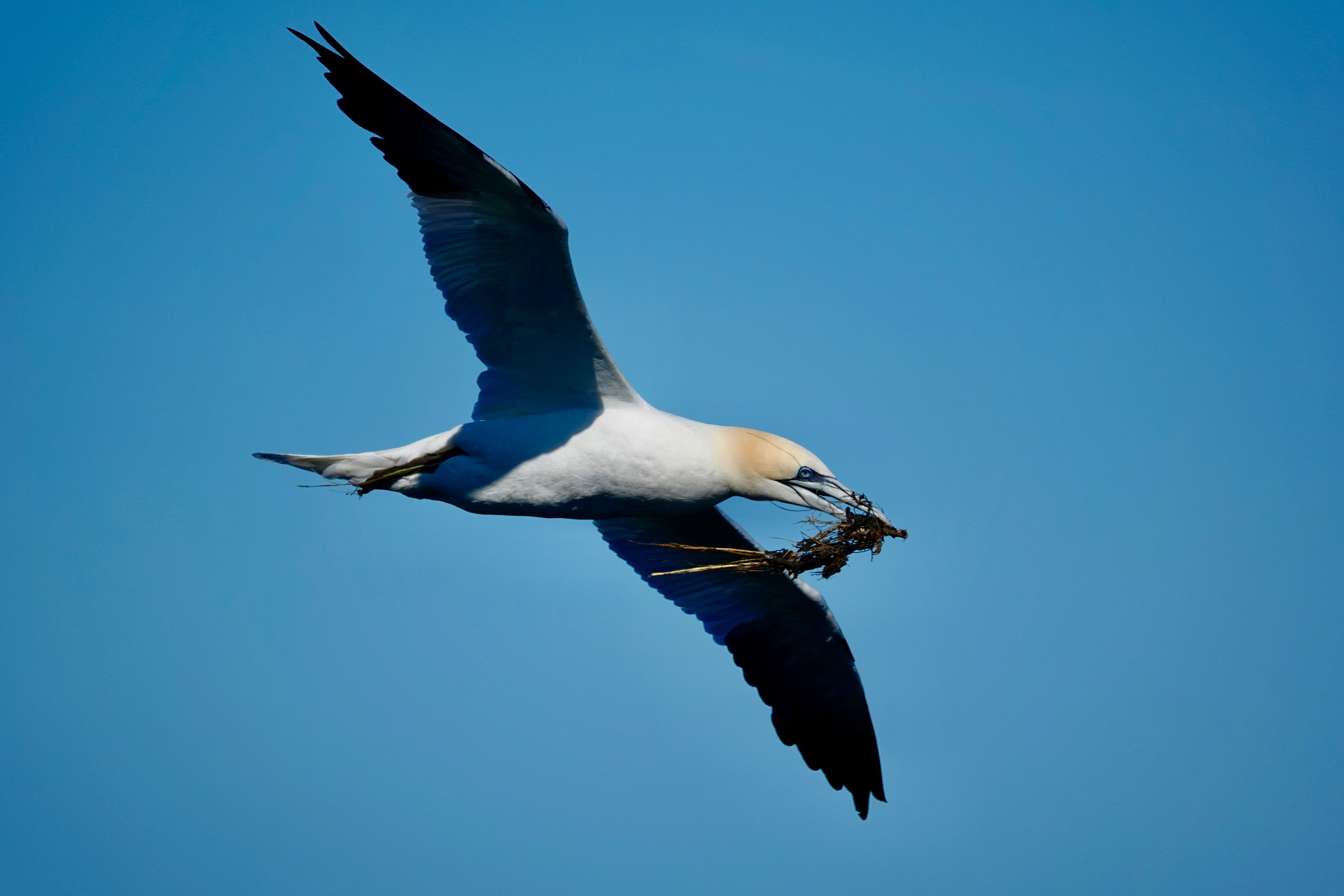
A Northern Gannet flying with a beakful of nest material against a blue sky

Bringing nest material home

Gannets build their nests from seaweed, grass and - increasingly and worryingly - bits of plastic and discarded fishing net. A pair will keep adding material throughout the breeding season, cementing it with droppings into a tall, sturdy mound.

How it fits into North Yorkshire wildlife

Gannets are woven into the North Yorkshire coast through the great seabird colonies of nearby cliffs and the feeding grounds of the North Sea. Their long wings, bright heads and spectacular plunge-dives make them one of the clearest signs of a living marine landscape.

How it interacts with the wider landscape

They depend on healthy shoals of fish and on productive seas that can still support huge breeding colonies. When fish shift or food thins out, gannets must work harder, travel farther and raise fewer young.

Seasonal rhythm

Spring and summer are the seasons when colonies fill, adults commute in long lines over the sea, and breeding success depends on steady food close enough to the cliffs.

Where to look and what to notice

Look for big white birds with black-tipped wings, long gliding arcs above the sea, and sudden arrow-like dives into feeding waters.