
Back to the illustration

Wildlife - Insects

Elephant Hawk Moth

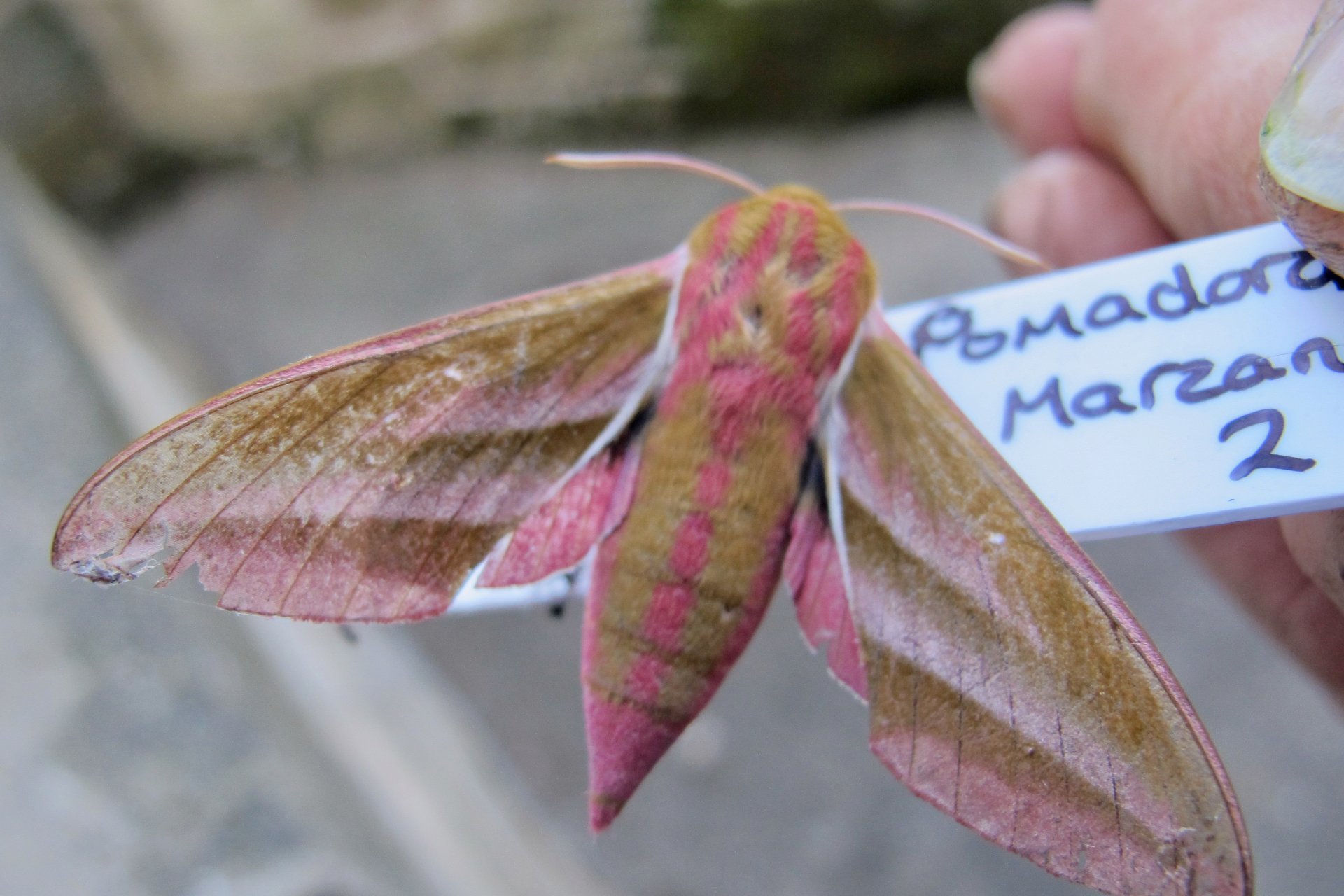
One of the UK's most spectacular moths - a rich olive-green and vivid pink, with a chunky torpedo-shaped body. Adults fly at dusk from May to July, feeding on honeysuckle and other tubular flowers. The name comes from the caterpillar, whose long trunk-like snout can retract into its body when startled.

Species description adapted from RSPB and BTO references - see links below.

North Yorkshire species profileGo to Wildlife Identification
An Elephant Hawk Moth with pink and olive-green wings held in a hand beside a labelled specimen tag

Insects - Photo ID

Elephant Hawk Moth - photo identification

One of the UK's most spectacular moths - a rich olive-green and vivid pink, with a chunky torpedo-shaped body. Adults fly at dusk from May to July, feeding on honeysuckle and other tubular flowers. The name comes from the caterpillar, whose long trunk-like snout can retract into its body when startled.

Photographs by Rob - taken in and around the North York Moors.

An Elephant Hawk Moth with pink and olive-green wings held in a hand beside a labelled specimen tag

Elephant Hawk Moth (Deilephila elpenor)

The extraordinary pink and olive colouring is a warning to predators that this moth is unpalatable. Caterpillars feed mainly on rosebay willowherb and bedstraws, and the huge grey-brown 'eye-spots' on their front segments make them look like a small snake when threatened - enough to startle most birds. Recorded here as part of a moth trap survey (the numbered label identifies the individual).

How it fits into North Yorkshire wildlife

This insect is one of the small workers keeping North Yorkshire alive. Insects pollinate flowers, recycle nutrients and feed birds, bats and other wildlife, so even tiny species can have an outsized effect.

How it interacts with the wider landscape

It supports pollination, pest control or freshwater balance, and in turn becomes food for birds, mammals and amphibians.

Seasonal rhythm

Warmth, flowering cycles and clean water or shelter all affect how strongly this species can appear from one season to the next.

Where to look and what to notice

Look around flowers, ponds, field margins and sunny sheltered spots where insects can feed, hunt or breed.