
Back to the illustration

Wildlife - Birds

Carrion Crow

All-black, sturdy and intelligent, the Carrion Crow is often confused with the Rook. Crows are usually seen alone or in pairs, with a heavy black beak and tight black feathering at the base of the beak. They are problem-solvers - some of the smartest birds in the UK.

Species description adapted from RSPB and BTO references - see links below.

North Yorkshire species profileGo to Wildlife Identification
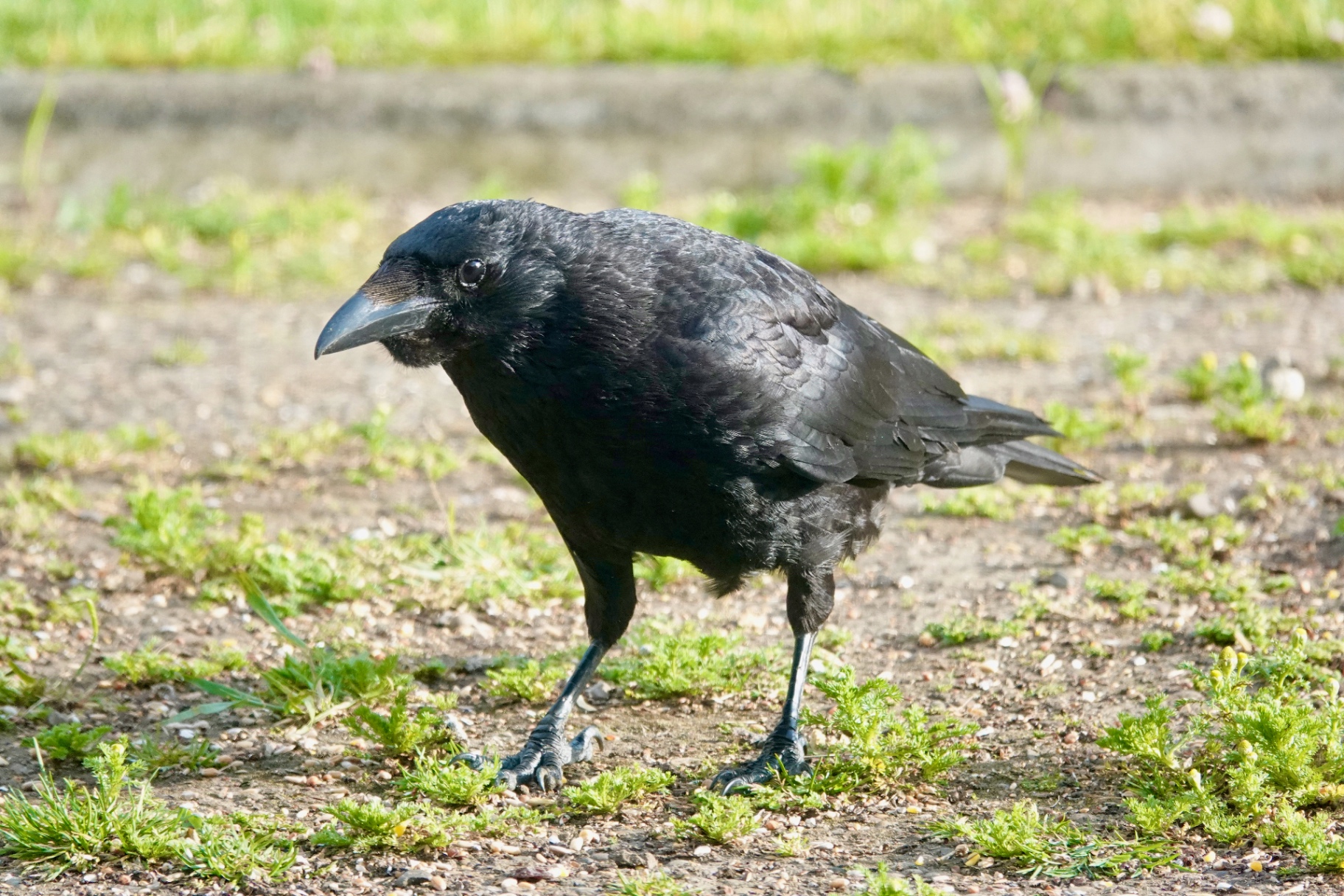
An adult Carrion Crow

Birds - Photo ID

Carrion Crow - photo identification

All-black, sturdy and intelligent, the Carrion Crow is often confused with the Rook. Crows are usually seen alone or in pairs, with a heavy black beak and tight black feathering at the base of the beak. They are problem-solvers - some of the smartest birds in the UK.

Photographs by Rob - taken in and around the North York Moors.

An adult Carrion Crow

Adult - glossy black, alone or in a pair

Unlike Rooks, which gather in noisy colonies, Carrion Crows are usually seen on their own or with a single partner. They mate for life and defend a territory together year-round.

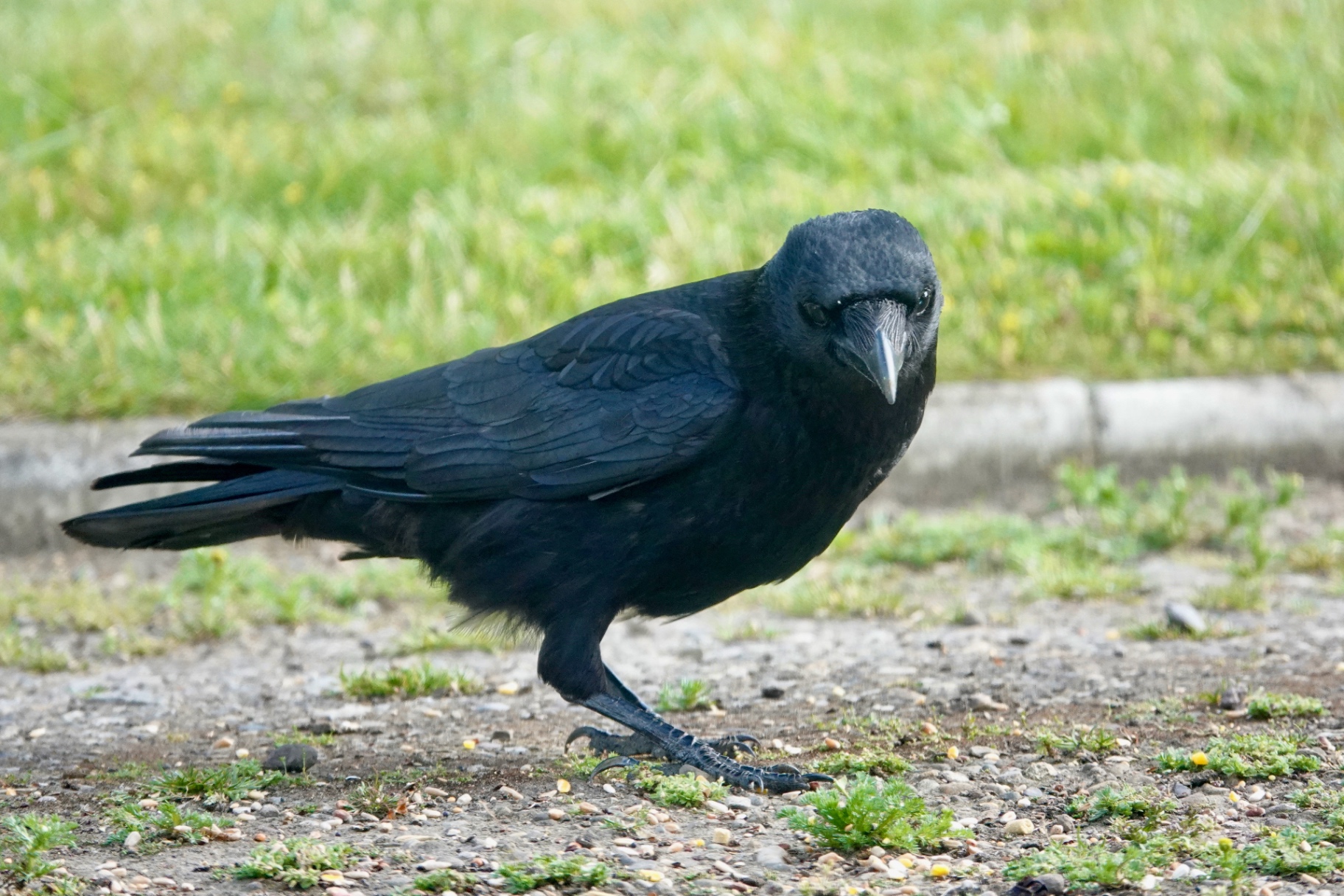
A juvenile Carrion Crow on grass

Juvenile - duller and browner than the adult

Young Carrion Crows have a slightly browner sheen and a pinker gape at the corner of the beak. They stay with their parents for several months while they learn to forage.

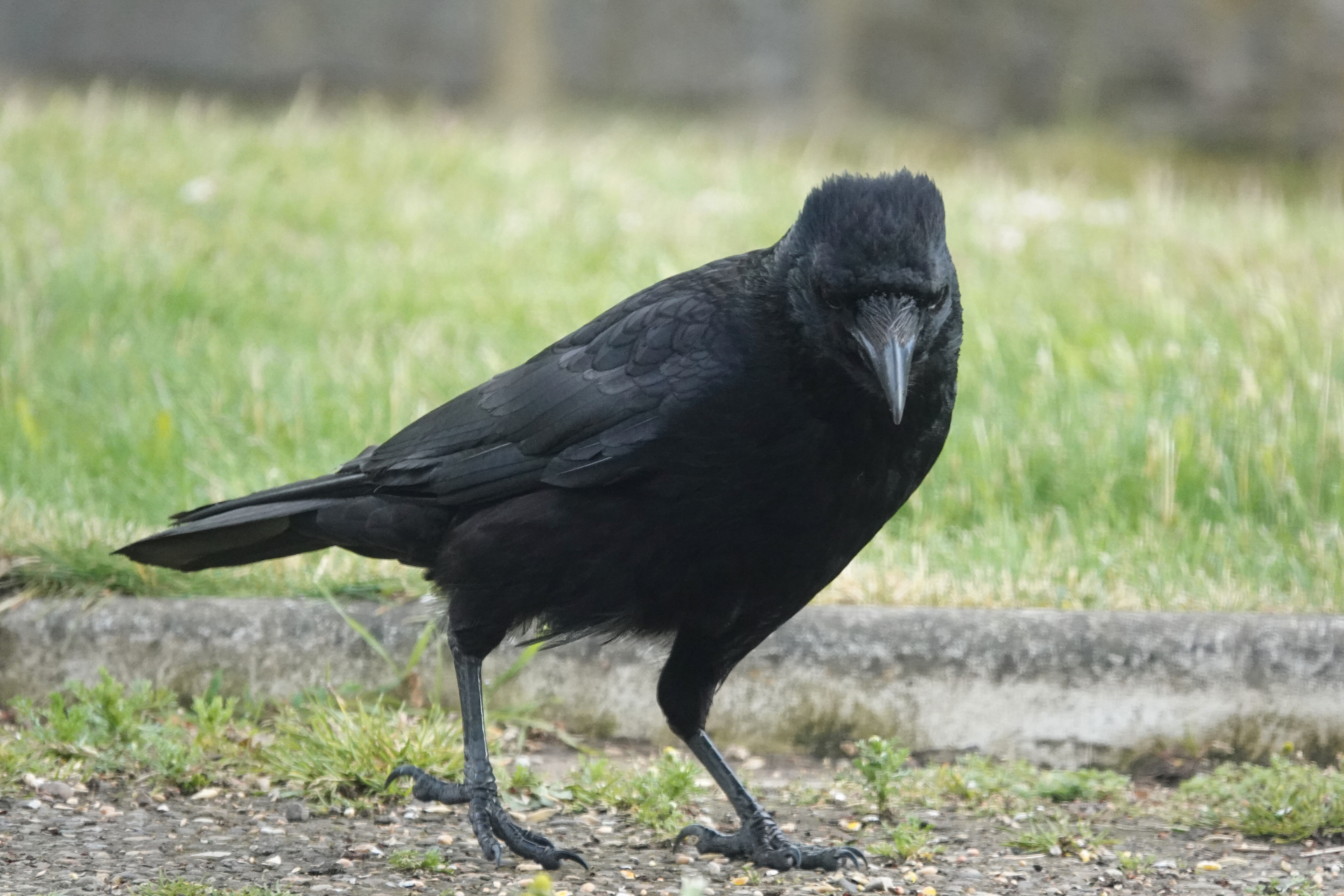
A second juvenile Carrion Crow

Another juvenile - same brood

Juveniles from the same brood often stay together through their first summer, exploring gardens and verges as a group while still calling for parental hand-outs.

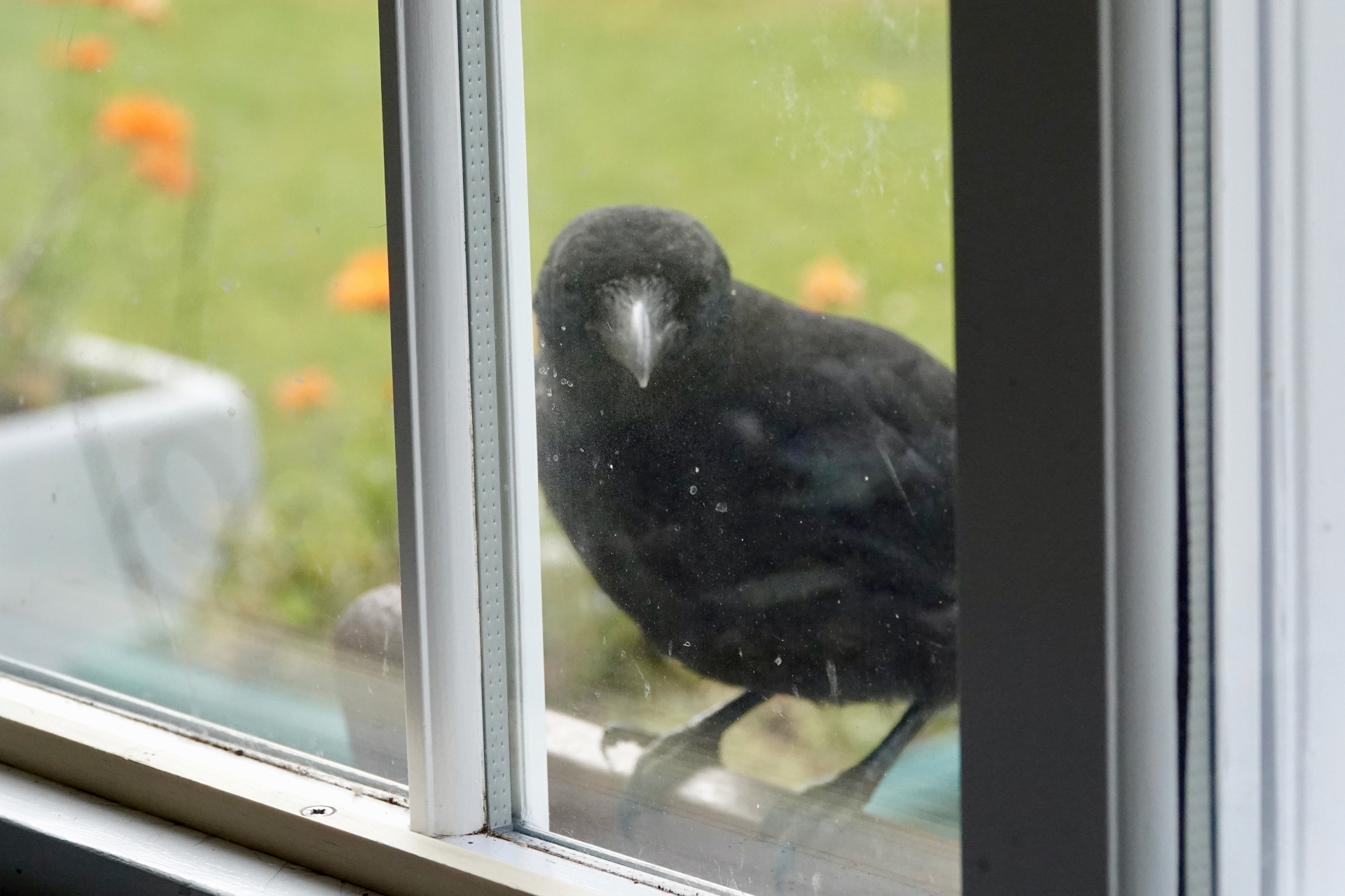
A juvenile Carrion Crow looking through a window

Curiosity at the window

Crows are extremely curious. This juvenile spent several minutes inspecting its own reflection - a behaviour linked to the same intelligence that lets crows use simple tools and remember individual human faces.

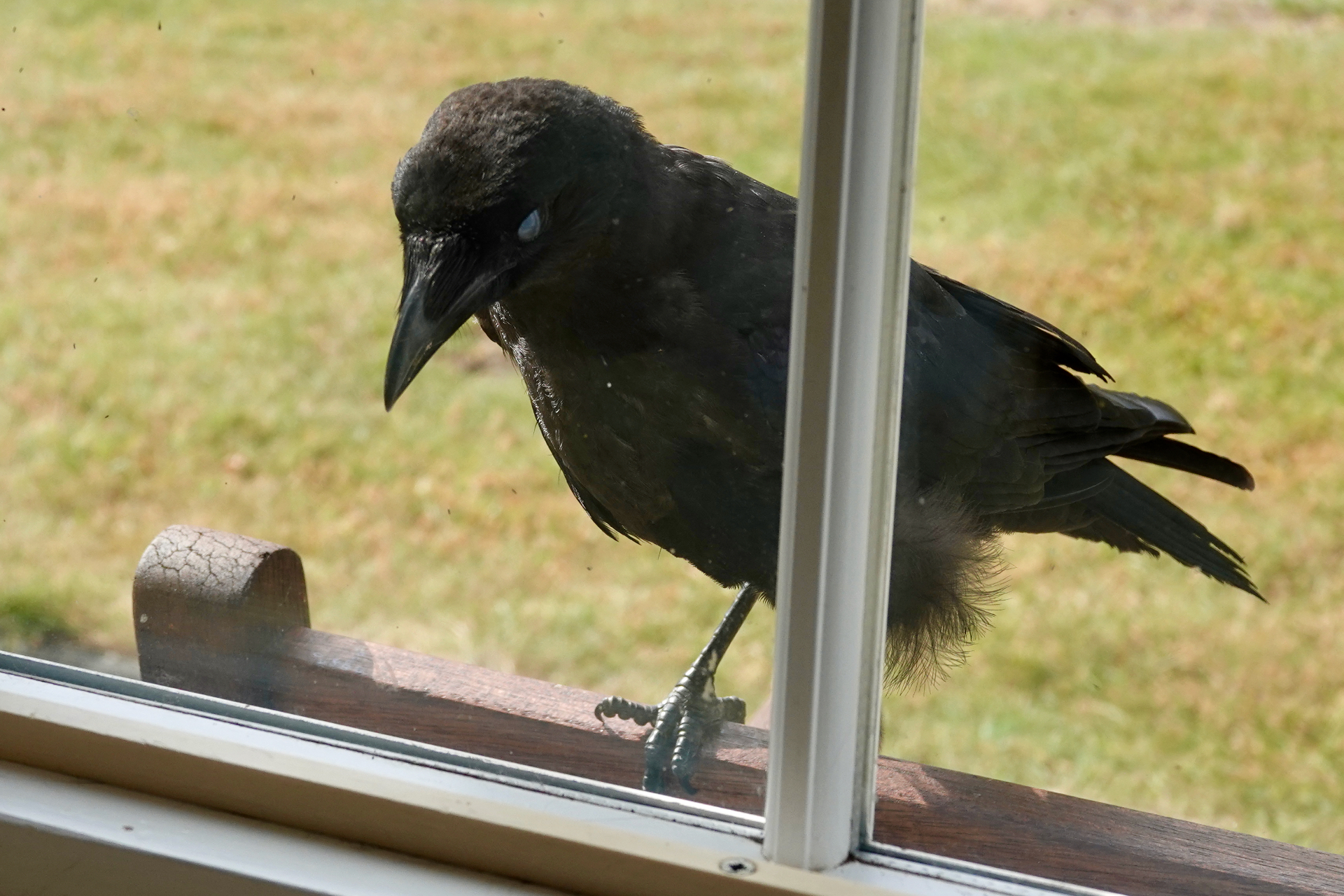
A Carrion Crow perched on a kitchen window sill, tapping on the glass

"Any breakfast going?" - a Carrion Crow at the kitchen window

This Carrion Crow landed on Rob's kitchen window sill and started tapping on the glass, clearly asking for food. Crows quickly learn which houses are worth a visit and will remember the individual people who feed them - and those who don't. Note the heavy black beak, the tight feathering at the base of the bill (no bare grey face patch, so it's a Crow and not a Rook), and the pale nictitating membrane half-drawn across the eye.

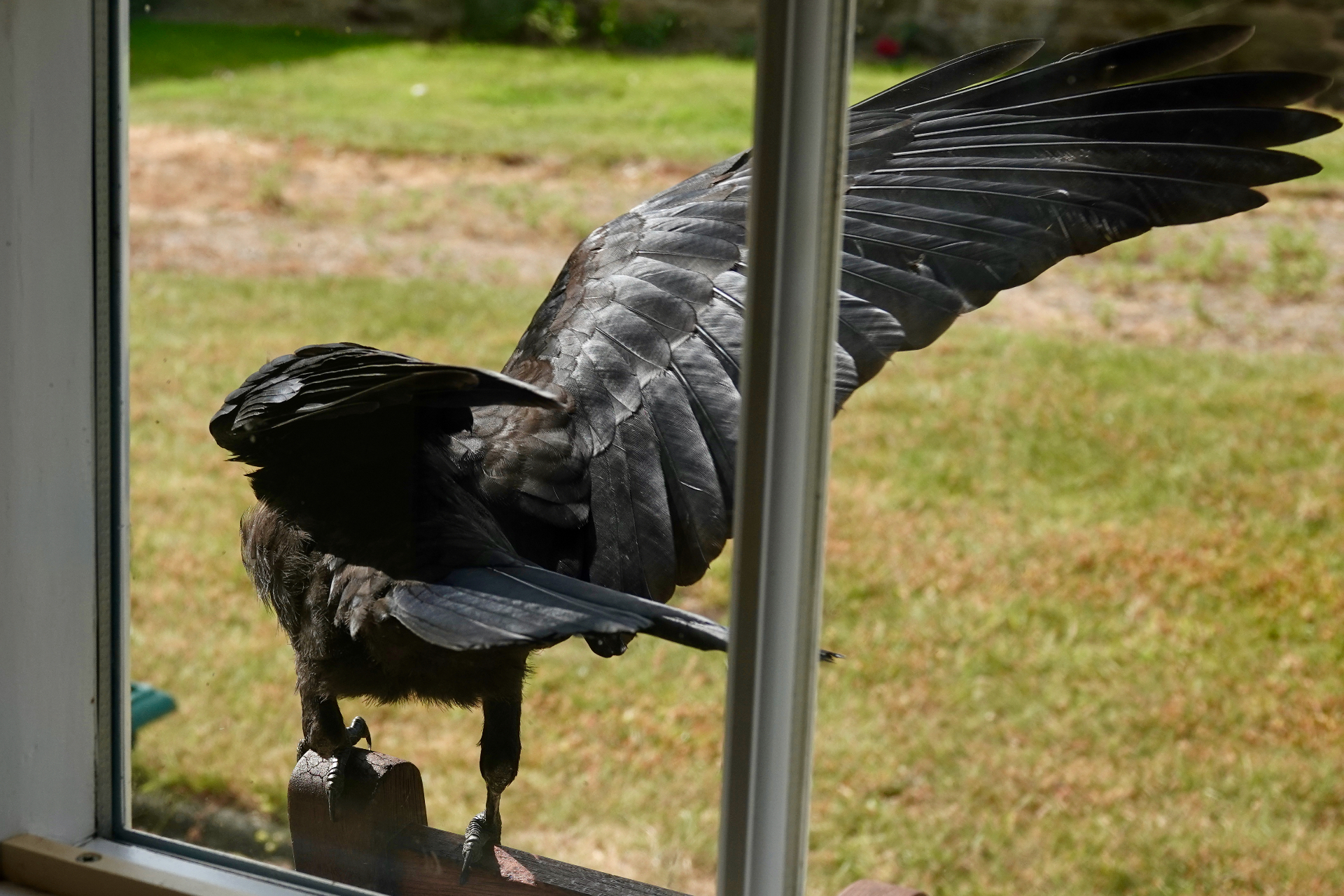
A Carrion Crow lifting off from the window sill with wings fully spread

No breakfast offered - taking flight a minute later

A minute or so later, with no food on offer, the Crow turned round and lifted off the sill. The fully spread wings show off the broad, fingered primaries and the clean, all-black plumage. Crows are strong, unhurried fliers with deep, steady wingbeats - very different from the flapping, cawing flocks of Rooks and Jackdaws you often see over open fields.

How it fits into North Yorkshire wildlife

This bird is part of the moving life of North Yorkshire, linking coast, woodland, farmland and gardens. Its success depends on enough food, safe nesting places and seasonal timing that still matches the landscape around it.

How it interacts with the wider landscape

Its place in the food web connects insects, seeds, small mammals, shrubs, trees or fish with the larger rhythms of weather and migration.

Seasonal rhythm

Spring and early summer are often the most important months, when breeding, migration and food availability need to line up.

Where to look and what to notice

Look for movement, calls, feeding behaviour and the kind of habitat this bird depends on, such as hedgerow, garden, moorland edge or sea cliff.