
Back to the illustration

Wildlife - Birds

Blackbird

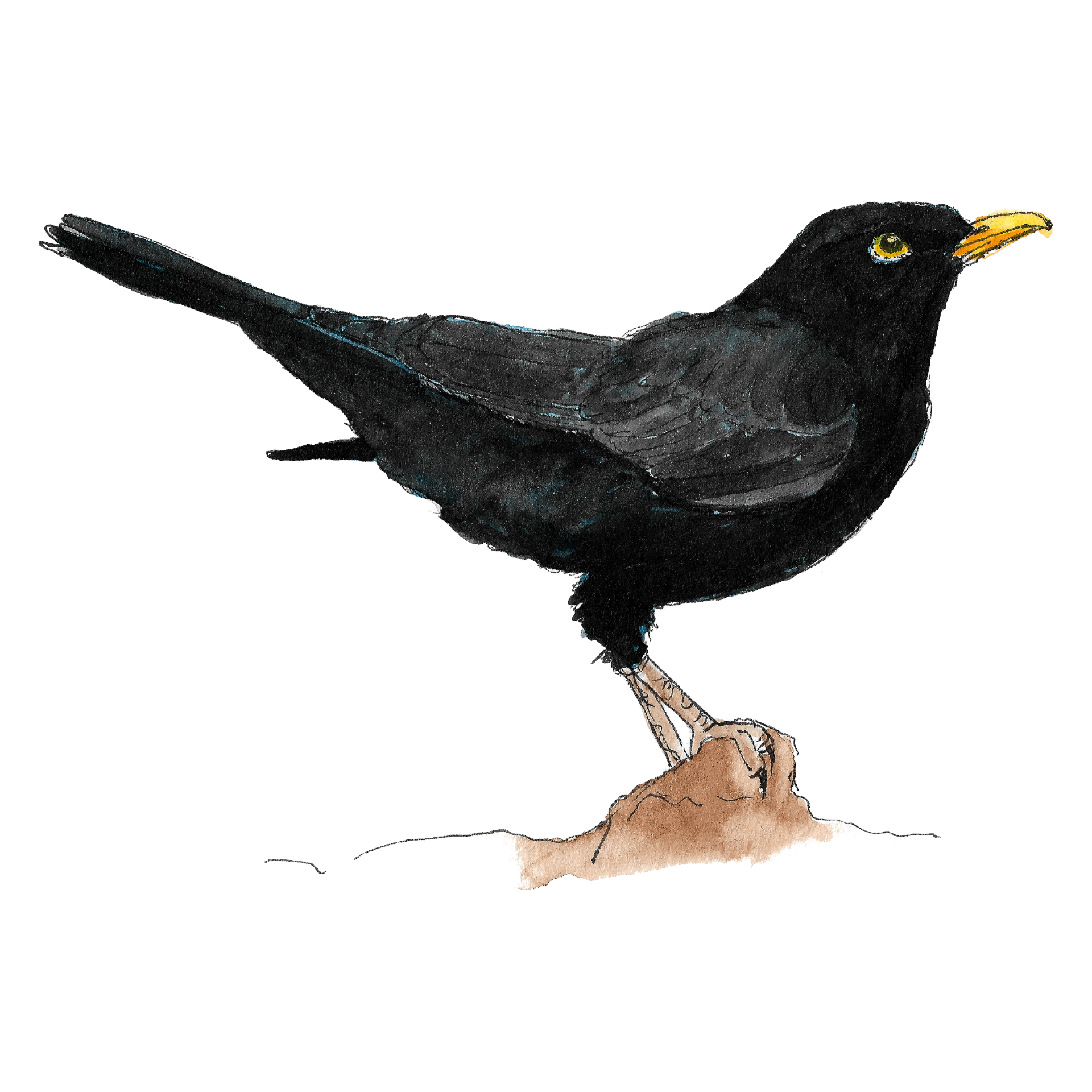
The blackbird's rich, fluting song is one of the most beautiful sounds in nature. Males are jet black with a bright orange beak; females are brown. Blackbirds feed heavily on earthworms.

Species description adapted from RSPB and BTO references - see links below.

Status: Green (stable, but under pressure)North Yorkshire species profileGo to Wildlife Identification
Watercolour illustration of a blackbird standing on a rock

Birds - Photo ID

Blackbird - photo identification

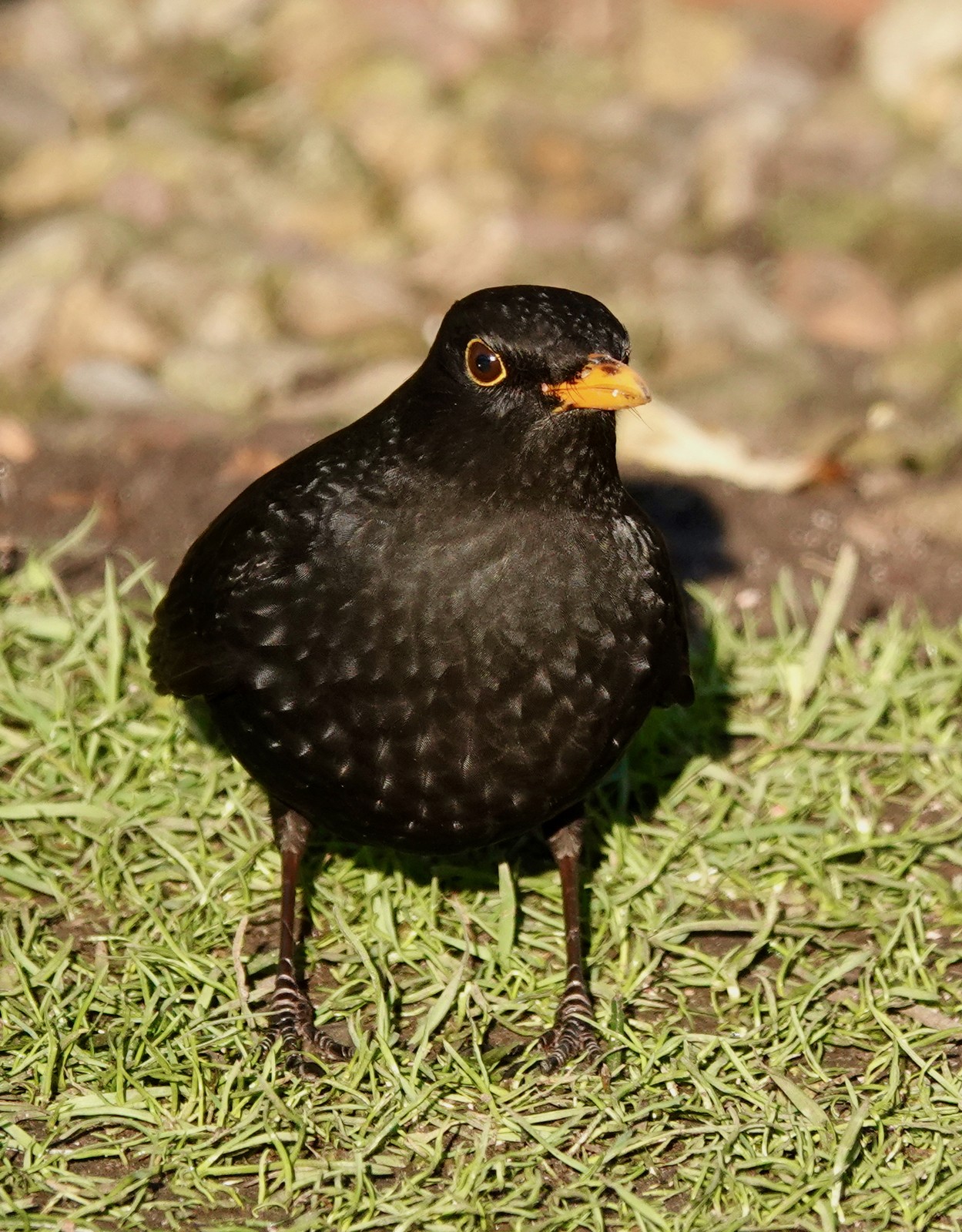
Male Blackbirds are black with a bright orange-yellow beak and yellow eye-ring. Females are brown, often with spots and streaks on their breasts and their beak varies from brown to yellow. The Blackbird is one of the most common UK birds and one of the most striking. Its song is also wonderful.

Photographs by Rob - taken in and around the North York Moors.

A male blackbird standing on grass

Adult male - glossy black with orange-yellow beak and eye-ring

Male Blackbirds can be heard singing well into dusk and it seems like they compete with Carrion Crows to be the last bird calling before bedtime. They are ground feeding birds and their main food source is grubs and worms that they dig out of the ground. Watching a Blackbird put its head on one side to listen for grubs and worms is fascinating.

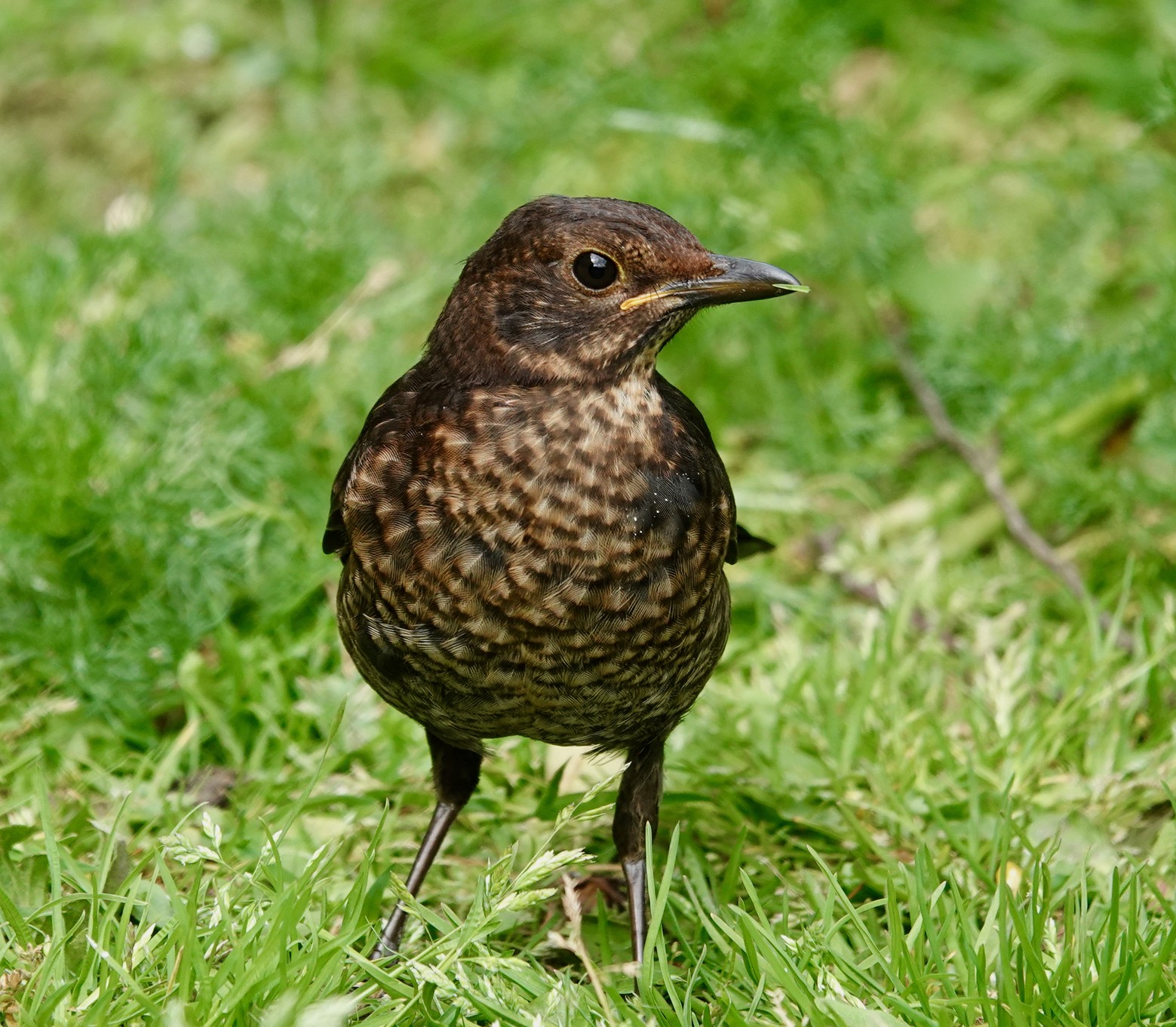
A juvenile blackbird standing in green grass

Juvenile - mottled plumage and a duller beak

Juvenile Blackbirds are quite similar to the adults, but their beaks are not as bright and plumage is more mottled. They can often be mistaken for Thrushes - not surprising, because Blackbirds are a member of the Thrush family.

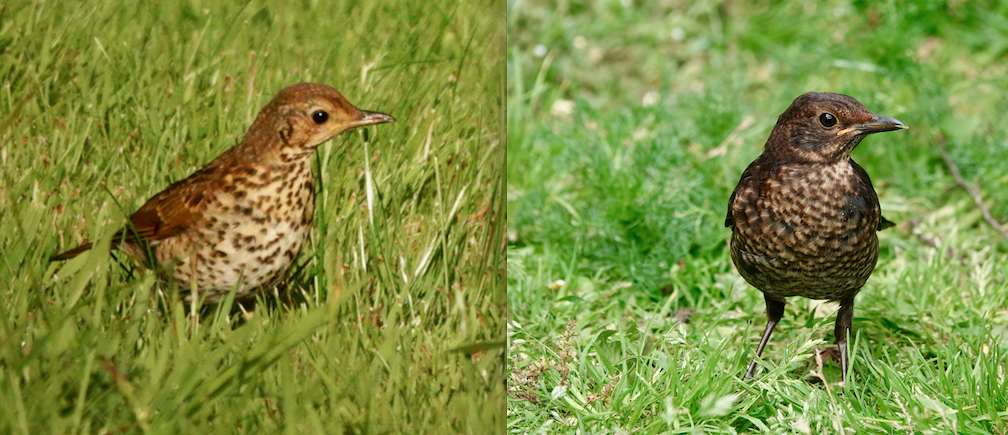
A side-by-side comparison of a Mistle Thrush and a juvenile Blackbird

Confusion species - Mistle Thrush vs juvenile Blackbird

Juvenile Blackbirds and Mistle Thrushes are very easy to mix up. The Mistle Thrush is larger, paler and stands more upright, with bold round spots on a creamy chest. The juvenile Blackbird is warmer brown with finer streaking and a darker face.

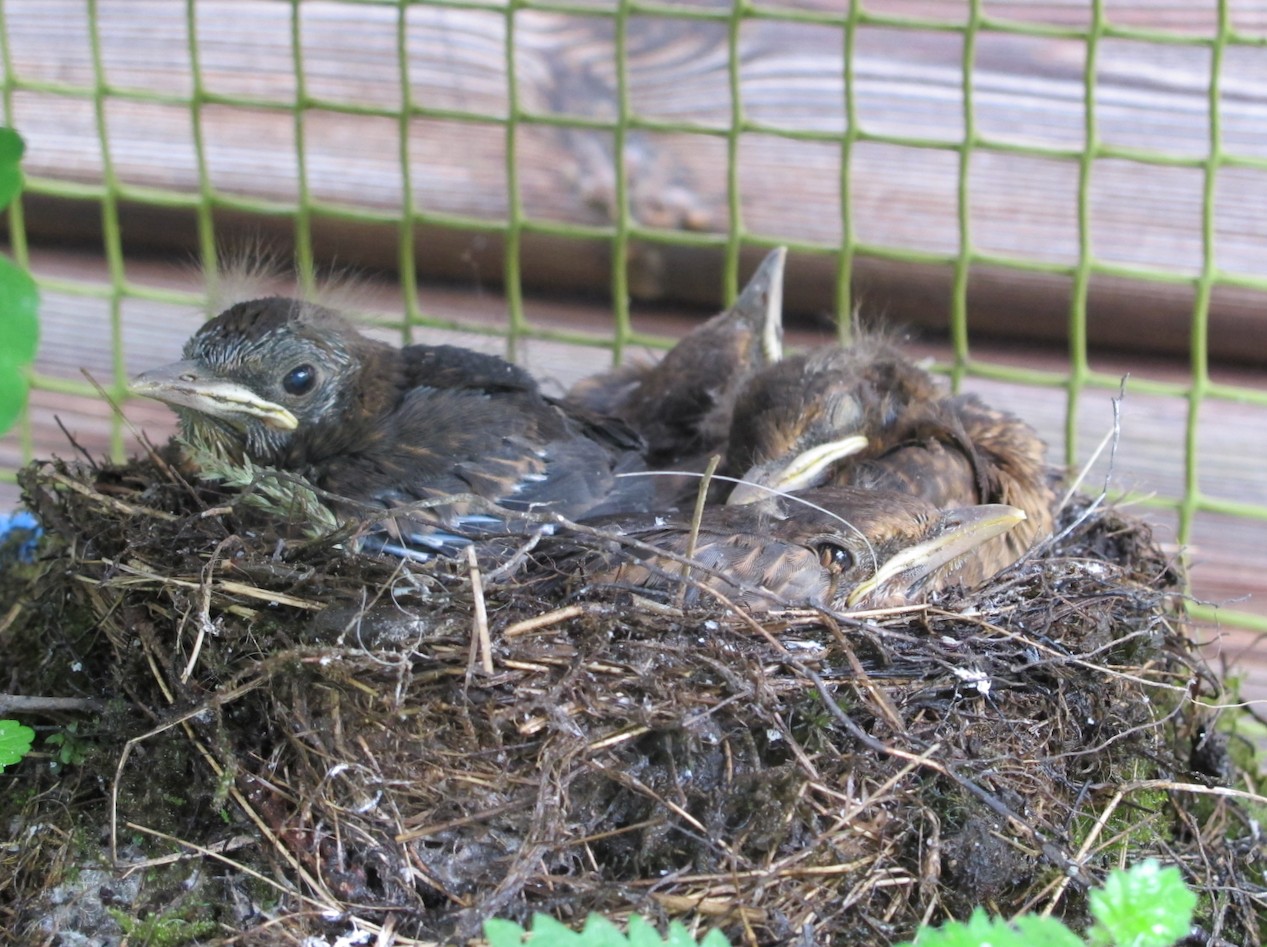
Four Blackbird chicks sitting in a nest

Four chicks in the nest

The female builds a beautiful nest in mature bushes and small bushy trees out of small twigs, pieces of grass and sometimes moss - completing the structure in 2-3 days with wonderful tenacity. Blackbirds usually raise 3 to 4 chicks per clutch and have 2-3 clutches per year.

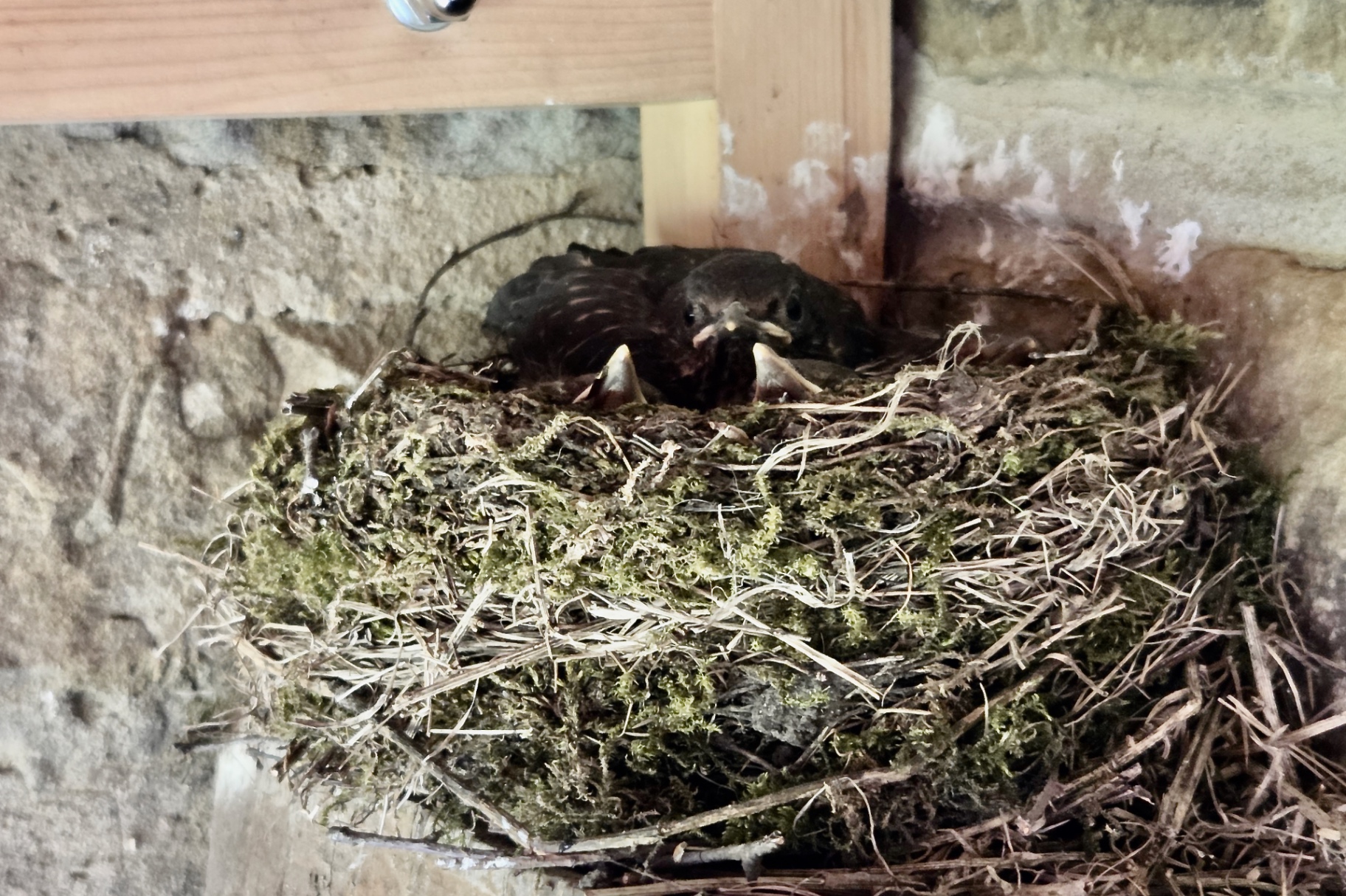
Blackbird chicks ready to fledge

Ready to fledge

Within two weeks of hatching the chicks fill the nest and start exercising their wings. Male and female parents stay close to fledgelings to ensure they can fend for themselves before leaving them to get on with their new lives.

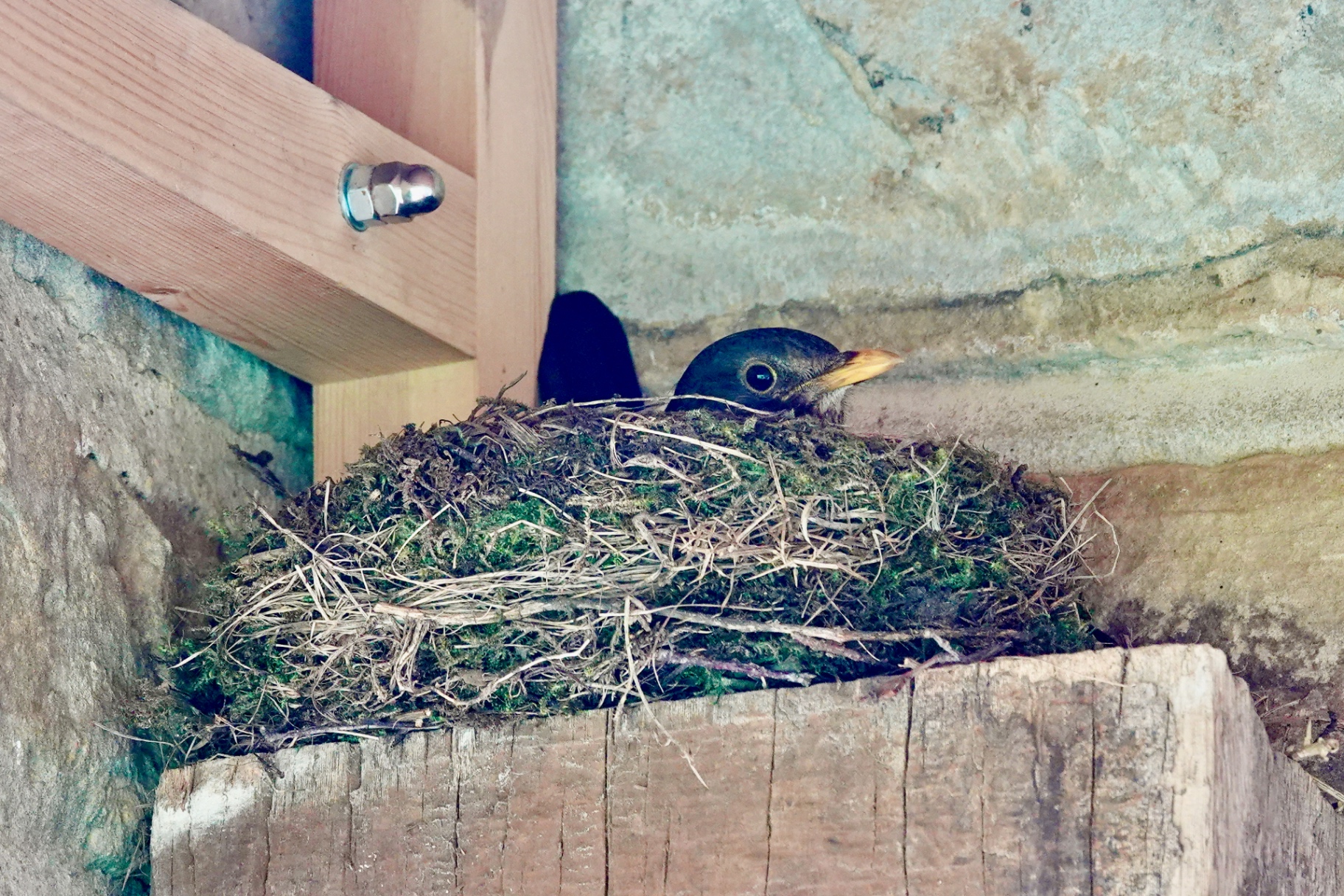
A blackbird perched on a wooden sleeper next to a nest

Adult on a sleeper beside the first nest

A pair will often re-use the same territory across the season, building a fresh nest for each brood. This adult is guarding the first nest of the year.

Watch - a tenacious blackbird gathering nest material

Nest building is relentless work. In this short clip you can see the female stuffing her beak with strands of grass and moss before flying back to weave them into the cup of the nest.

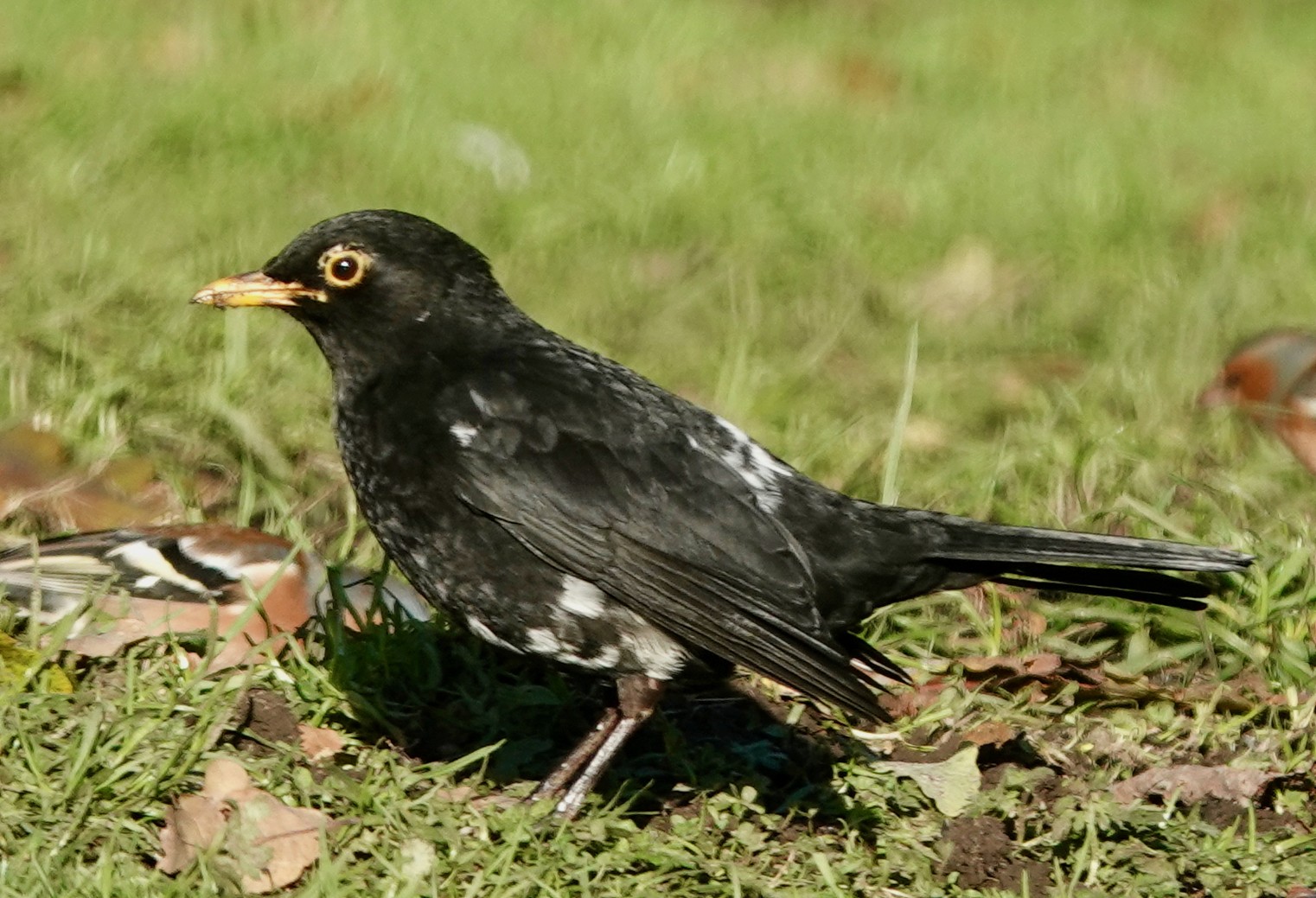
A Leucistic Blackbird with patches of white feathers

A Leucistic Blackbird - white patches caused by a genetic mutation

Occasionally, a Blackbird can be seen with white feathers here and there. This is a Leucistic Blackbird, which occurs because of a genetic mutation. Leucistic Blackbirds usually survive, but they are more susceptible to predation.

How it fits into North Yorkshire wildlife

Blackbirds thrive wherever North Yorkshire offers rich soil, berry-bearing shrubs and a little cover. They are as much a part of village gardens and churchyards as they are of woodland edge and hedgerow.

How it interacts with the wider landscape

By feeding on worms, beetles and fruit, blackbirds link soil life, insects and seed dispersal. Their dawn and dusk song is also part of the wider seasonal rhythm that tells people when spring is building.

Seasonal rhythm

Their song is strongest in spring and early summer, but blackbirds stay part of the soundscape for most of the year, especially in milder weather.

Where to look and what to notice

Look for birds turning leaf litter, hopping along lawn edges, or singing from a rooftop, hawthorn or sheltered branch.